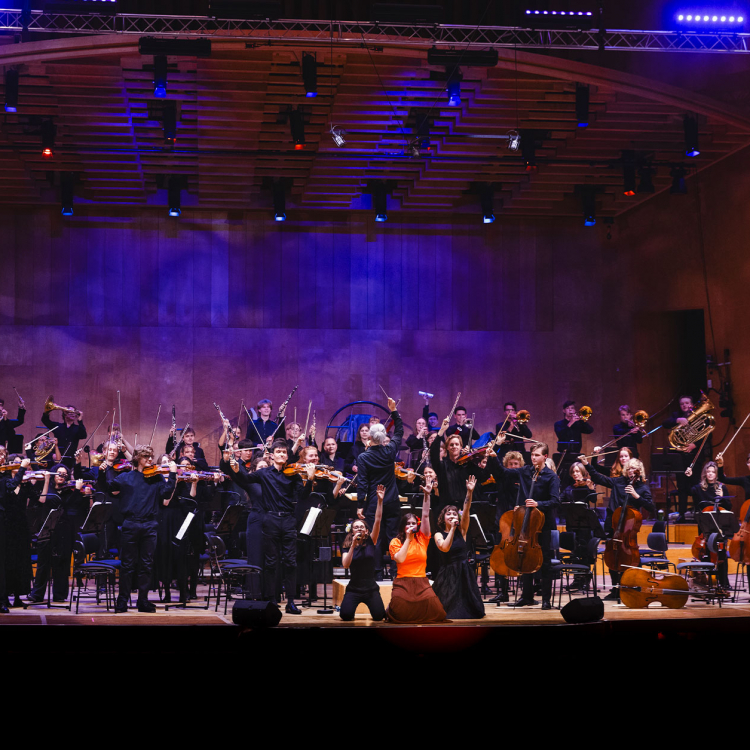
Join us on a musical journey to Vienna, hear Stravinsky’s Suite from the Firebird and Ravel’s darting Tzigane. Solist is violinist Victoria Stjerna.
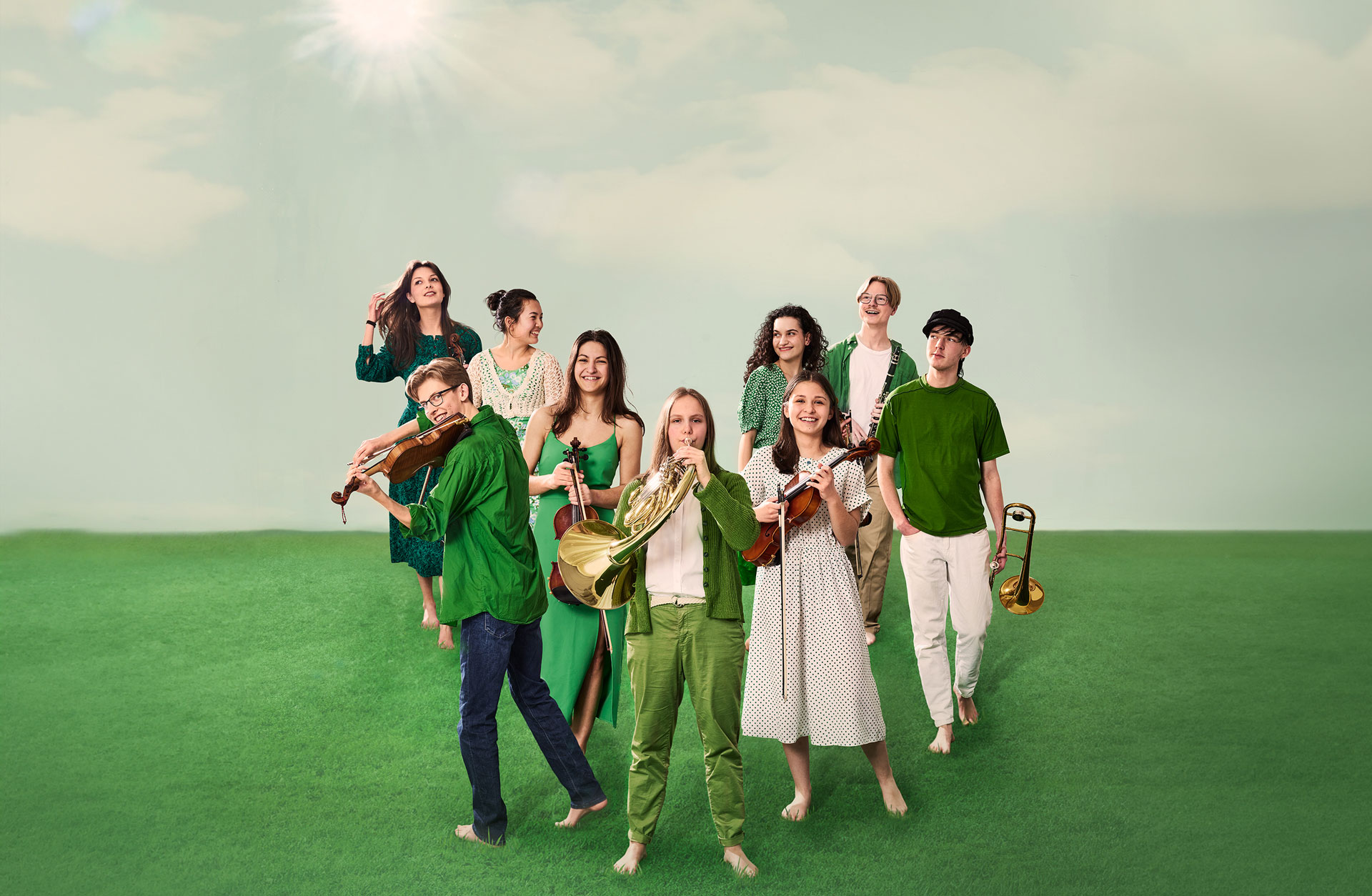
Famous pieces and grand symphonies – in the hands of VÄGUS, everything is performed with the unmistakable passion and energy that have become their special characteristics. The orchestra consists of around 80 young musicians from all over Västra Götaland aged 14-23, and for many VÄGUS will be a memory for life.
With music from:
Mozart: Eine kleine Nachtmusik
Mozart: The Marriage of Figaro
Haydn: Symphony No. 94
Beethoven: Symphony No. 3
Beethoven: Symphony No. 5
Strauss: "An der schönen blauen Donau"
Brahms: "Es tönt ein voller Harfenklang"
Brahms: Symphony No. 4
Bruckner: Symphony No. 4
Mahler: Symphony No. 6
Beethoven: Egmont Overture
Intermission25 min
CLAUDE DEBUSSY (1862-1918)
Prelude to the Afternoon of a Faun
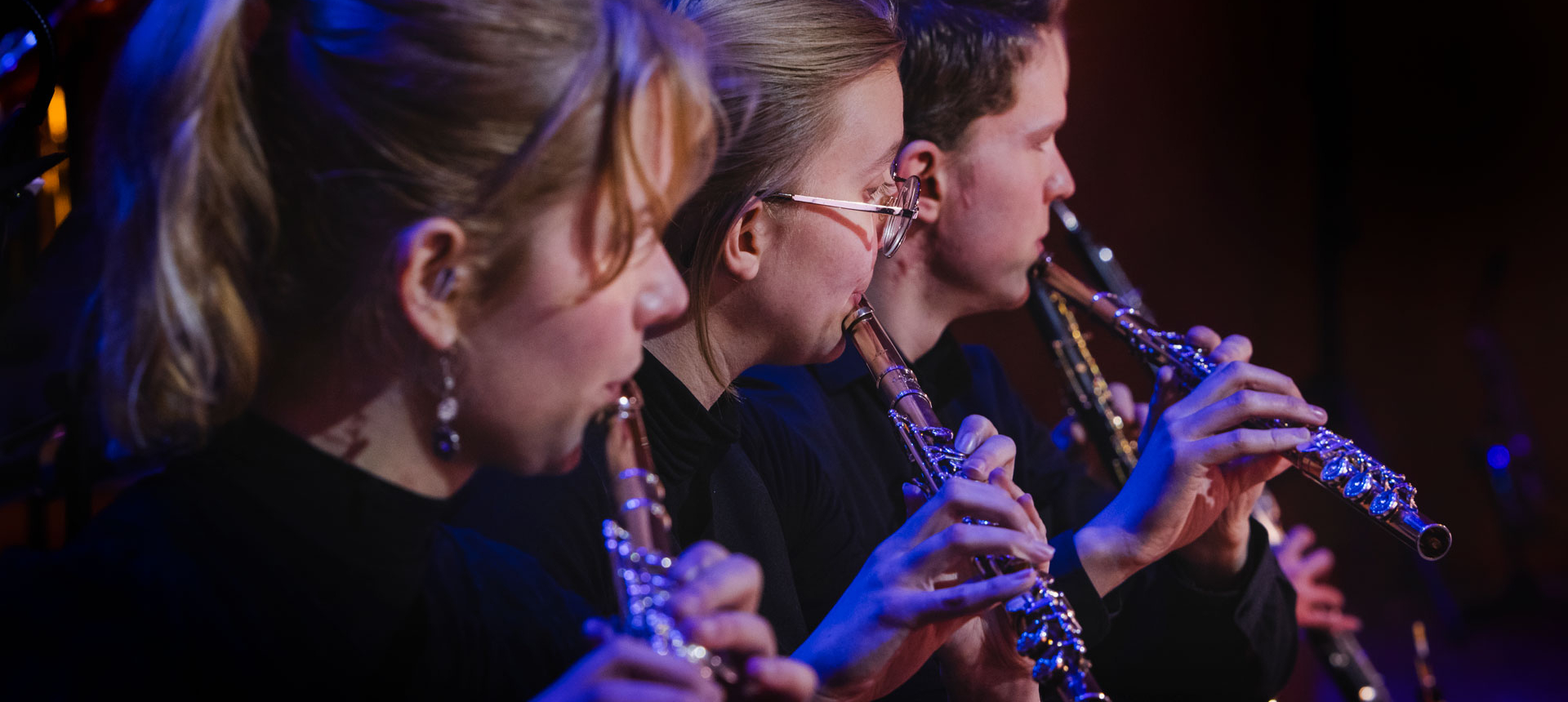
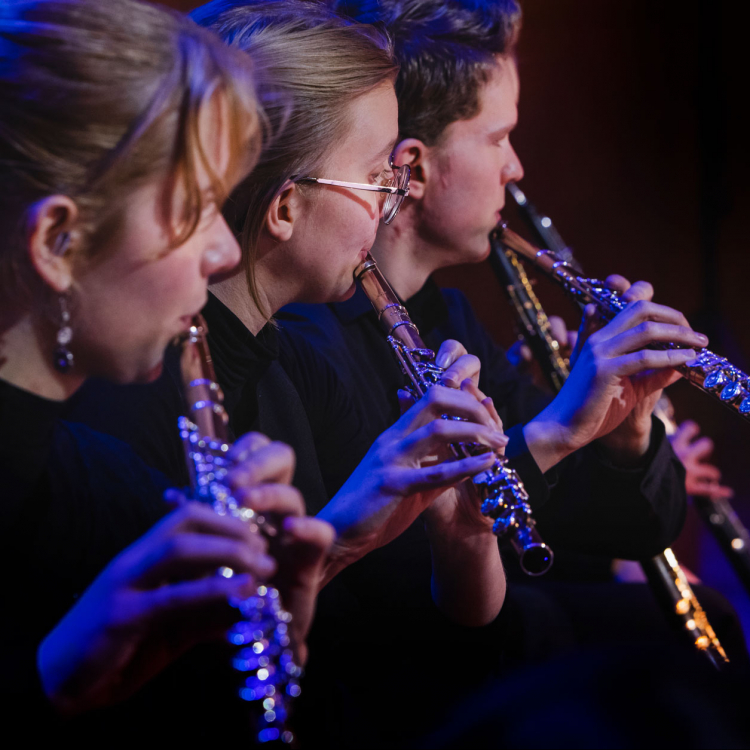
The 27-year-old Claude Debussy was impressed by gamelan orchestras from Java. This was before the era of the radio and the gramophone record and few people had heard this exotic and evocative percussion music with gongs, bells and drums accompanying dance and shadow theatre. Debussy was fascinated by the timbres and fifth-tone scales that became apparent in much of his future music. An example is Prelude to the Afternoon of a Faun with its falling flute motif and ancient cymbals, crotales, which play a small but important role in the piece. These little cymbals sparkle like stars with brilliant reverberations in the shimmering orchestral chords.
Debussy's 1894 orchestral piece was inspired by the poem L'après-midi d'un faune by Stéphane Mallarmé, the Symbolist poet with an unrivaled sense of linguistic nuances and timbres (he himself saw his poetry as music). That the piece was titled "prelude" is because, according to some sources, Debussy planned a three-movement suite with prelude, interlude and paraphrase finale, but only completed the prelude.
Maurice Ravel (1875-1937)
Tzigane
Tzigane comes from the Hungarian cigány, gypsy. Ravel gets straight to the point in his title: his piece with its slow, rhapsodic opening and accelerating ending where the strings vibrate with both beautiful singing and pizzicato is his own free expression of the violin art that in the 19th century was developed to new virtuosic levels by roma violinists in mainly Hungary. Their orchestras became touring star ensembles, conquering audiences with speed and fanfare with verbunkos music and captivating csardas (dances).
Ravel wrote his piece for one of the more prominent violinists of the time, Hungarian Jelly d'Aranyi. To have a work written by Ravel – after Debussy's death in 1918 the greatest living French composer at the time – was quite a feat. Ravel worked slowly and his output was hardly large. From 1924 until his death in 1937, he composed only a handful of works: Bolero, the two piano concertos, the violin sonata, a couple of smaller orchestral pieces and a few songs.
The first version of Tzigane was written for violin and luthéal, a device by the Belgian organ builder Georges Cloetens. This iron structure was mounted over the strings of a grand piano and could, with a number of different registrations, be made to sound like a harpsichord and parade instrument cimbalom, the stringed instrument played with mallets and producing a colorful and harmonic sound. (Modern listeners have also drawn comparisons to the Fender Rhodes, the electric piano!) Some of these tonal effects have been carried over by Ravel in the orchestration he made later that year. The harp substitutes here and there as a luthéal disguised as a cimbalom.
When Jelly d'Aranyi played Tzigane in Paris in 1924, a reviewer thought that Cloeten's invention most resembled "a rattling music box". But the orchestral version was well received at the premiere on November 30, and the concert rhapsody is still a lure for violinists without nerves.
Igor Stravinsky (1882-1971)
Suite from The Firebird (1919)
The 1919 suite uses a smaller orchestra - the original score's 1911 orchestra was, in Stravinsky's own words, "wastefully large" - and contains only the absolute best melodies. It is therefore easier to perform and has guaranteed to lead to more concert performances of the music, which pleased Stravinsky in several ways. He may have been a revolutionary composer, but as a freelancer he was a capitalist to the hilt. It may seem like a strange combination, but if you are an artist with great integrity, a high valuation of your own creation and its market potential automatically follows. Or as he himself said during a recording in the mid-1960s: "I like my own music. Excuse me."
The Firebird was an unparalleled success for the Russian Ballet in Paris and even Stravinsky was at the top of the list. What a luxury to make use of the giant orchestra impresario Djagilev placed at his disposal with the ulterior motive of creating a sensation - "biggest, best and most beautiful!" The trick worked. Even today, The Firebird in its various forms is Stravinsky's most played work. His own memories of the premiere are fragmentary: "The first Firebird! I stood in the dark in the opera during eight orchestral rehearsals with Pierné as conductor. The stage and the entire theater sparkled at the premiere and I don't remember anything else".
Monday, 27 January 2025: The event ends at approx. 22.00
Participants
Västra Götalands Ungdomssymfoniker
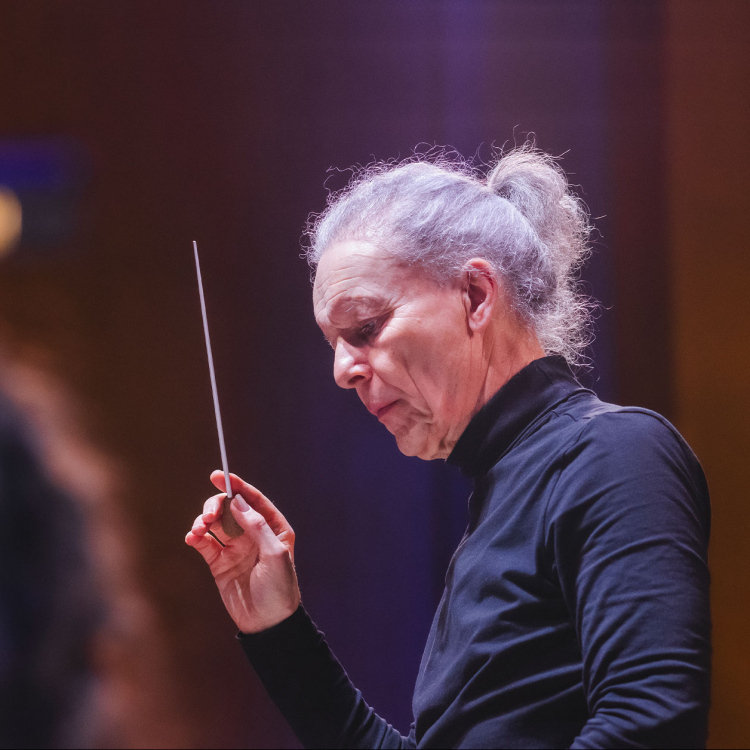
Kim Phipps has been conductor and artistic director of Västra Götaland's Youth Orchestra since the start in 2000. He has also been artistic director of Läcköoperan since 2003 and is conductor of the award-winning Swedish Chamber Orchestra, which he also founded.
Kim Phipps was born in London and received his early musical training as a chorister at New College, Oxford. He took his B.A. as a Choral Scholar at King's College, Cambridge and went on to study singing at the Guildhall School in London. Conducting studies in Munich and Manchester followed and he made his professional debut at the Gothenburg Opera in 1985. The next ten years were largely devoted to opera with engagements at Sadlers Wells and English National Opera in London, Krefeld in Germany, and Malmö in Sweden. In 1994 Phipps moved to Sweden and has since then lived in Gothenburg. Although opera is still an important feature of his career, orchestral and choral work is now equally important. Kim Phipps has conducted most of the professional orchestras in Sweden including the Gothenburg Symphony.
Violinist Victoria Stjerna is an active Concert Violinist playing in multiple different settings around Sweden, Europe and most recently for projects in the US. She is a frequently invited guest concertmaster, leader and chamber musician. She is the previous associate concertmaster of the Swedish chamber orchestra Musica Vitae. She is also one of the founding members of the distinguished O/modern Chamber Orchestra and tours regularly in Europe. Victoria Stjerna has performed at prestigious halls such as the Musikverein Vienna, Carnegie Hall and Royal Albert Hall with orchestras like the Gothenburg Symphony, Royal Philharmonic and the Swedish Radio Orchestra. She continues to explore a broad repertoire in chamber music which is her passion. She recently released a cd playing piano trio music by the Swedish composer Laura Netzel. Victoria Stjerna plays in a variety of contexts, including chambermusic festivals, recitals, premieres of contemporary pieces, and even explores improvisation in the crossover fields between classical and jazz. She is a graduate of the Edsberg Music Institute, the Royal Academy of Music in Stockholm and also has a Soloist Diploma from the Accademia di Santa Cecilia in Bergamo, Italy.
 031-726 53 00
 biljett@gso.se