Göteborgs Konserthus
University of Gothenburg Symphony Orchestra
Event has already taken place. Music by R Strauss, Nielsen and Saint-Saëns with musicians from the Master's program in Symphonic orchestra playing at the University of Stage and Music. Conductor Jurjen Hempel, Raquel Hernandez Olmo flute, Árpád Solti organ.
Concert length: 2 h incl. intermission
Stage: Stora salen
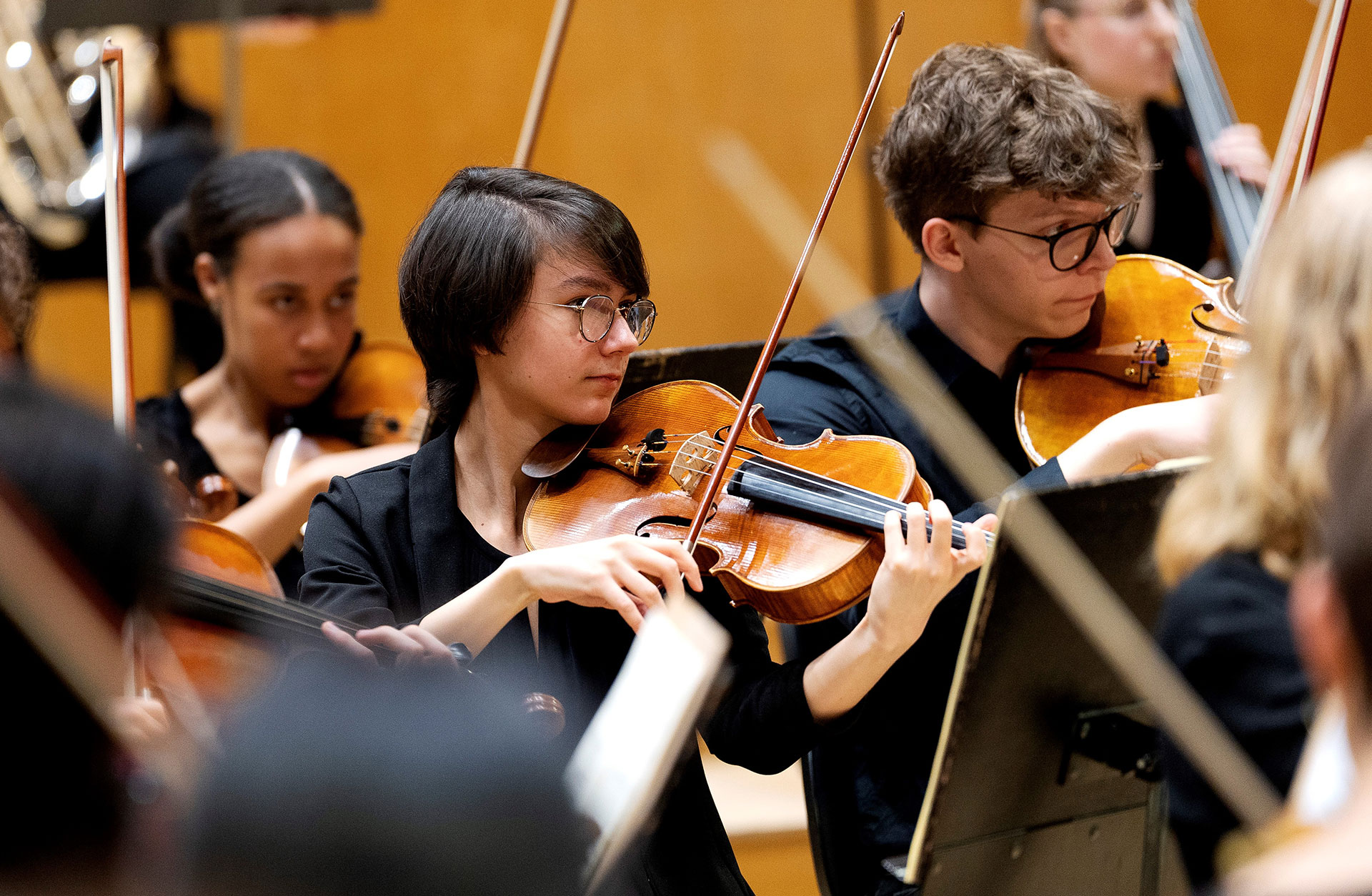
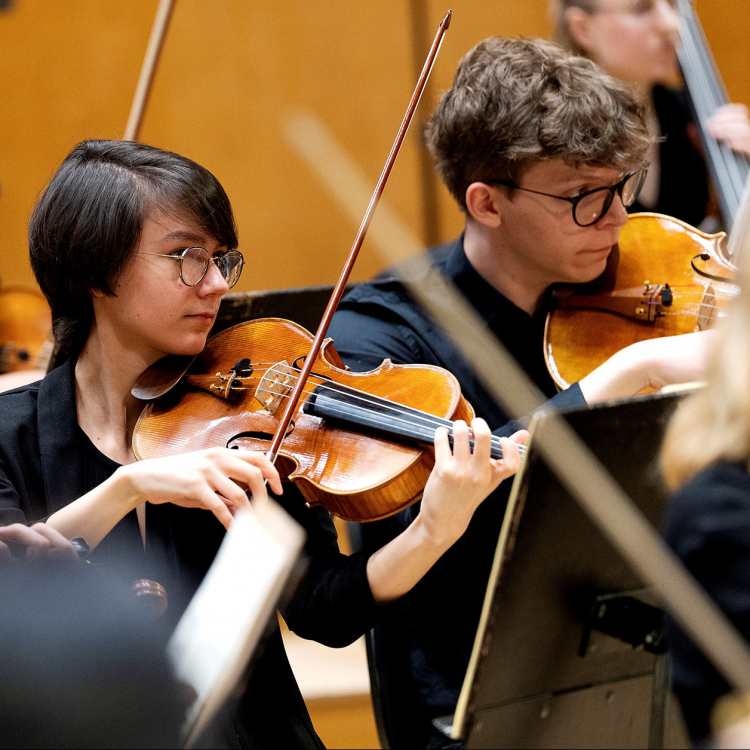
Meet the orchestra, which consists of musicians from the master’s program in symphonic orchestra playing at the University of the Arts and Music. The training is conducted in collaboration with Gothenburg Symphony and Gothenburg Opera.
The concert offers music by Richard Strauss and Nielsen’s lively flute concerto. Finally, the mighty organ symphony by Camille Saint-Saëns. With conductor Jurjen Hempel, Raquel Hernandez Olmo flute and Árpád Solti organ.
Programme
Richard Strauss (1864-1949)
Don Juan Op 20
Richard Strauss wrote his first symphony at the age of 16 and the second followed just a few years later. He was thus well prepared when, at the age of 22, he began writing the impressive series of symphonic poems that began with Aus Italien and continued with Don Juan, Macbeth, Tod und Verklärung, Till Eulenspiegel and others.
Strauss composed the music for Don Juan between the autumn of 1887 and the summer of 1888, and he himself premiered his work as a conductor during a concert in Weimar on November 11, 1889. In a letter, the satisfied 24-year-old informed his father that it was all "great fun". Strauss had already found the style and opulent instrumentation that would mark the rest of his rich output.
Carl Nielsen (1865-1931)
Flute Concerto
Nielsen tailored the music to the intended musician, and since the flutist Holger Gilbert-Jespersen was a tasteful and elegant man with a Gallic temperament, his concert was bright and chamber-musical, but with unexpected outbursts. The music is characterized by vitality and good mood. In a typical Nielsen way, the music eventually finds its way to the right key. Originally it was in D major, but immediately after the premiere on 21 October 1926 at the Salle Gaveau in Paris, the composer reworked the concerto and had it end in E major. The flute has then been out on many tonal excursions and now seems to have difficulty finding home; by chance, the boozy bass trombone enters the game and happens to be right - and therefore also takes credit from the soloist.
One readily agrees with the Swiss composer Arthur Honegger, who was present at the premiere of the concert: "It has small dimensions but is filled with beautiful combinations, such as the dialogues between flute and timpani or bassoon. It is piquant, flowing and not without humor."
Intermission25 min
Camille Saint-Saëns (1835-1921)
Symphony No 3 c-moll "Organ Symphony"
The fact that Camille Saint-Saëns composed five symphonies is probably unknown to most people, because only the one with the order number three is played regularly. Saint-Saëns had been thinking about a new symphony for a long time and had also played several possible themes for his good friend Franz Liszt. But he did not get down to business in earnest until he received an invitation from the Royal Philharmonic Society in London in 1885 to give a concert, an invitation which was extended by an order for a symphony. The first performance took place on 19 May 1886 at St James Hall in Piccadilly where there was an organ. The composer was worried that his unconventional work would frighten the audience, but it was in fact a formidable success, which was also repeated when the work premiered in Paris the following year.
The music is particularly sonorous, and contains the same passionate tone as some of Liszt's symphonic poems. It was also intended that the symphony should be dedicated to Liszt, but just over two months after the premiere, Liszt died, which is why the symphony was instead dedicated to his memory. Saint-Saëns has given the symphony a different form. It has two main movements, but within that framework there is a traditional four-movement structure. The slow opening soon turns into a lively orchestral part, but the organ is saved for just over ten minutes to gently introduce the first movement's slow ending with all its dreamy tones.
Saturday, 1 March 2025: The event ends at approx. 17.00
Participants
The core of the orchestra is made up of the students of the 2 year international master's program in symphonic orchestra playing at the University of Gothenburg's School of Theater and Music. The training is unique in its kind and is conducted in collaboration with the Gothenburg Symphony Orchestra and the Gothenburg Opera. The orchestra projects also include students from the bachelor's program in classical music – a 3 year program where the student focuses on chamber music playing and individual development on their instrument. Students from other music colleges are invited to participate in and supplement the orchestra. Each academic year, the University of Gothenburg Symphony Orchestra performs eight orchestral productions. Internationally well-known conductors and soloists are engaged. Recently, Simon Crawford-Phillips, Jurjen Hempel, Vince Mendoza and Daniela Musca have been guests of the orchestra. Among the soloists are pianist Christian Zacharias, cellist Amalie Stalheim and violinist Isabelle van Keulen. The orchestra also collaborates with the opera education at the University of Theater and Music. UGSO is an ambassador for the University of Gothenburg, which supports the concert and tour activities.


 031-726 53 00
 biljett@gso.se