Event has already taken place. In this unique world premiere, we hear Laura Bowler’s composition inspired by The White Book by Nobel Prize-winner Han Kang. The work was commissioned for Principal Guest Conductor Barbara Hannigan, who also sings at this performance. With the Gothenburg Symphony Orchestra and choir.
Concert length: 2 h incl. intermission
Stage: Stora salen
400-560 SEKStudent 200-280 SEK
Young up to 29 200-280 SEK
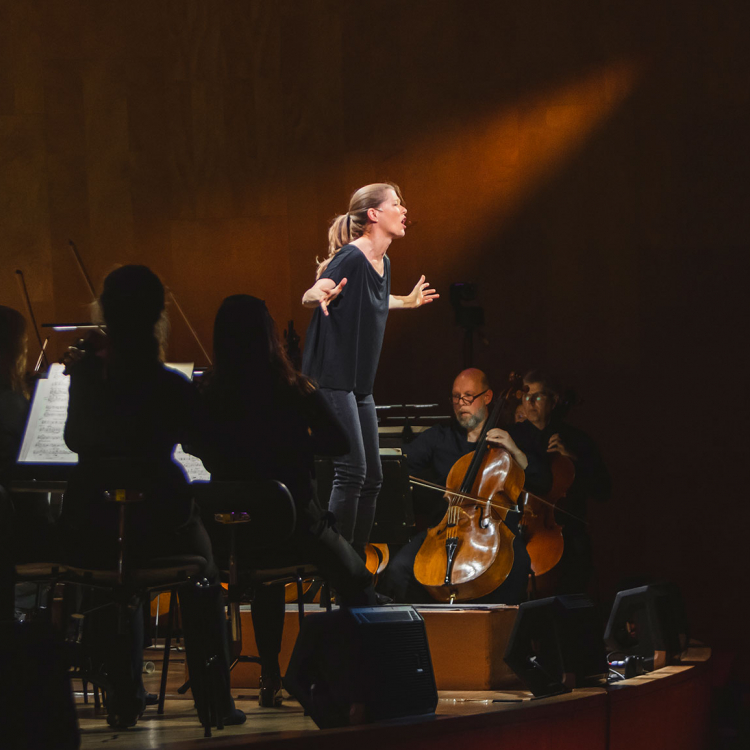
In this unique world premiere, we hear Laura Bowler’s composition for soprano and orchestra, The White Book , a setting of selected texts from Nobel Prize-winner Han Kang’s novel of the same name. The work was commissioned for Principal Guest Conductor Barbara Hannigan, who also sings at this performance.
The White Book is a stunningly beautiful novel of sorrow and loss. This music composed by Laura Bowler and inspired by the book will now be premiered by the Gothenburg Symphony Orchestra.
South Korean author Han Kang was awarded the 2024 Nobel Prize in Literature for her “intense poetic prose that confronts historical traumas and exposes the fragility of human life.”
British composer Laura Bowler, born in 1986, is acclaimed for her multi-disciplinary work, which includes theatre and opera performances. With this composition written specifically for Barbara Hannigan inspired by the poetic novel The White Book, we experience a meeting of three of the foremost artists of the international scene.
Next, Barbara Hannigan leads the orchestra in one of Messiaen’s most controversial and groundbreaking works. He stirred emotions with an illustrative sound that broke away from the traditional approach to expressing religious messages.
Experience the remarkably ghostly instrument ondes Martenot, a massive percussion section and strings paired with a female choir. Sharing the stage with her mentor is also rising star conductor Bar Avni.
Barbara Hannigan is Principal Guest Conductor of the Gothenburg Symphony Orchestra since 2019. With her unsurpassed dramatic sensibility, she is among the absolute leading artists when it comes to artistic innovation. Her concerts are thought to be exciting, holistic experiences in which the end result is greater than the sum of its parts.
Introduction to the concert
Take a seat in the Great Hall one hour before the concert begins and learn more about the music you will soon experience! You will get the stories behind the music, knowledge of the composers and own reflections about the classical pieces. The introduction last for about 30 minutes, it is free and free seating in the hall. Welcome!
Programme
Laura Bowler (b. 1986)
The White Book (commissioned by the Gothenburg Symphony Orchestra)
The White Book by South Korean Nobel Prize winner Han Kang was published in English in 2017. It is a poetic novel about grief, the color white and the human soul. The lyrics and music in the song are created by Laura Bowler, a British composer, singer and artistic director who specializes in theater, interdisciplinary work and opera. Her works have been commissioned by ensembles in the UK, Canada, Austria, France and Australia, including the BBC Symphony and the London Philharmonic Orchestra.
Recent projects include Feminine Hygiene, a multimedia work for large ensemble and singer (herself), and Damned Mob of Scribbling Women, a 20-minute musical theater song cycle for Lucy Goddard that was nominated for the British Composer Award. She has also written Antarctica, a 50-minute multimedia work for orchestra and voice commissioned by Manchester Camerata and BBC Radio 3. Bowler is also a singer in Ensemble Lydenskab based in Aarhus, and has written works for voice and nyckelharpa.
The White Book is a joint commission by the Gothenburg Symphony Orchestra, the London Symphony Orchestra and the Copenhagen Phil.
Intermission25 min
Clocks and Clouds (1972) moves at the junction of the measurable and the intangible – a music in which György Ligeti lets two different perceptions of time share time and space. The title alludes to the philosopher Karl Popper’s distinction between “clocks”, which follow clear and regular patterns, and “clouds”, which change organically. Ligeti, who during this period became increasingly interested in perception and how we perceive time, here makes these ideas audible through a sound world that is both strictly organized and at the same time floating.
The work, written for a female choir and a condensed orchestral movement, is built up of long and rhythmically complex clusters that seem to dissolve the boundary between individual voices. From this sonic fog, more regular pulses sometimes rise – the “clocks” – giving the music an almost mechanical depth, before they dissolve again into the soft unpredictability of the “clouds”. In Clocks and Clouds we encounter a Ligeti who does not seek drama but refined perception: how small changes in time, density and voice can create a feeling that the listener is in the middle of a constantly transforming landscape. It is music that does not point forward or backward, but continues to expand in the very moment of listening.
Esaias Järnegard
Olivier Messiaen (1908-1992)
Trois petites liturgies de la présence divine
-Anthem of the Inward Conversation
-Sequence of the Word, Divine Canticle
-Psalmody of Ubiquity through Love
In a time of war and spiritual emptiness, Olivier Messiaen created Trois petites liturgies de la Présence Divine (1944), a jubilant hymn of praise “to the presence of God in the world.” Translating the religious message into musical elements is a central driving force behind Messiaen’s music, and so is this work, where the three movements depict different aspects of God’s presence (in the human heart, communion through the Eucharist, and in creation). The work is written for female choir, solo piano, strings, percussion, and the then-futuristic instrument ondes Martenot, whose ethereal sound gives it an angelic glow.
The intensity and mystery of the music reflect not only Messiaen's Catholic faith, but also his deep fascination with color, rhythm, and foreign scales. He lets the piano and vibraphone work together as a small chamber ensemble, similar to the Balinese gamelan. Set against the choir's sensual, rich singing and rhythmic cries, accompanied by powerful percussion, the strings weave the whole together, creating a rich, shimmering tapestry.
Andreas Konvicka
Wednesday, 14 January 2026: The event ends at approx. 21.00
Thursday, 15 January 2026: The event ends at approx. 21.00
Participants
The Gothenburg Symphony was formed in 1905 and today consists of 109 musicians. The orchestra's base is Gothenburg Concert Hall at Götaplatsen that has gathered music lovers since 1935. Since the 2019-2020 season, Barbara Hannigan is Principal guest conductor. We are also a proud partner of Barbara Hannigan's Equilibrium mentoring program focusing on young singers at the start of their careers. The title Principal Guest Conductor is shared by Pekka Kuusisto from 2025.
Wilhelm Stenhammar was the orchestra's chief conductor from 1907 to 1922. He gave the orchestra a strong Nordic profile and invited colleagues Carl Nielsen and Jean Sibelius to the orchestra. Under the direction of conductor Neeme Järvi from 1982-2004, the orchestra made a series of international tours as well as a hundred disc recordings and established themselves among Europe's leading orchestras. In 1996, the Swedish Riksdag appointed the Gothenburg Symphony as Sweden's National Orchestra.
In recent decades, the orchestra has had prominent chief conductors such as Santtu-Matias Rouvali, Mario Venzago and Gustavo Dudamel, following Kent Nagano as Principal Guest conductor. Anna-Karin Larsson is CEO and artistic director, Gustavo Dudamel honorary conductor and Neeme Järvi chief conductor emeritus. The orchestra's owner is the Västra Götaland Region.
The Gothenburg Symphony works regularly with conductors such as Herbert Blomstedt, Joana Carneiro, Jukka-Pekka Saraste, Christian Zacharias and Anja Bihlmaier.
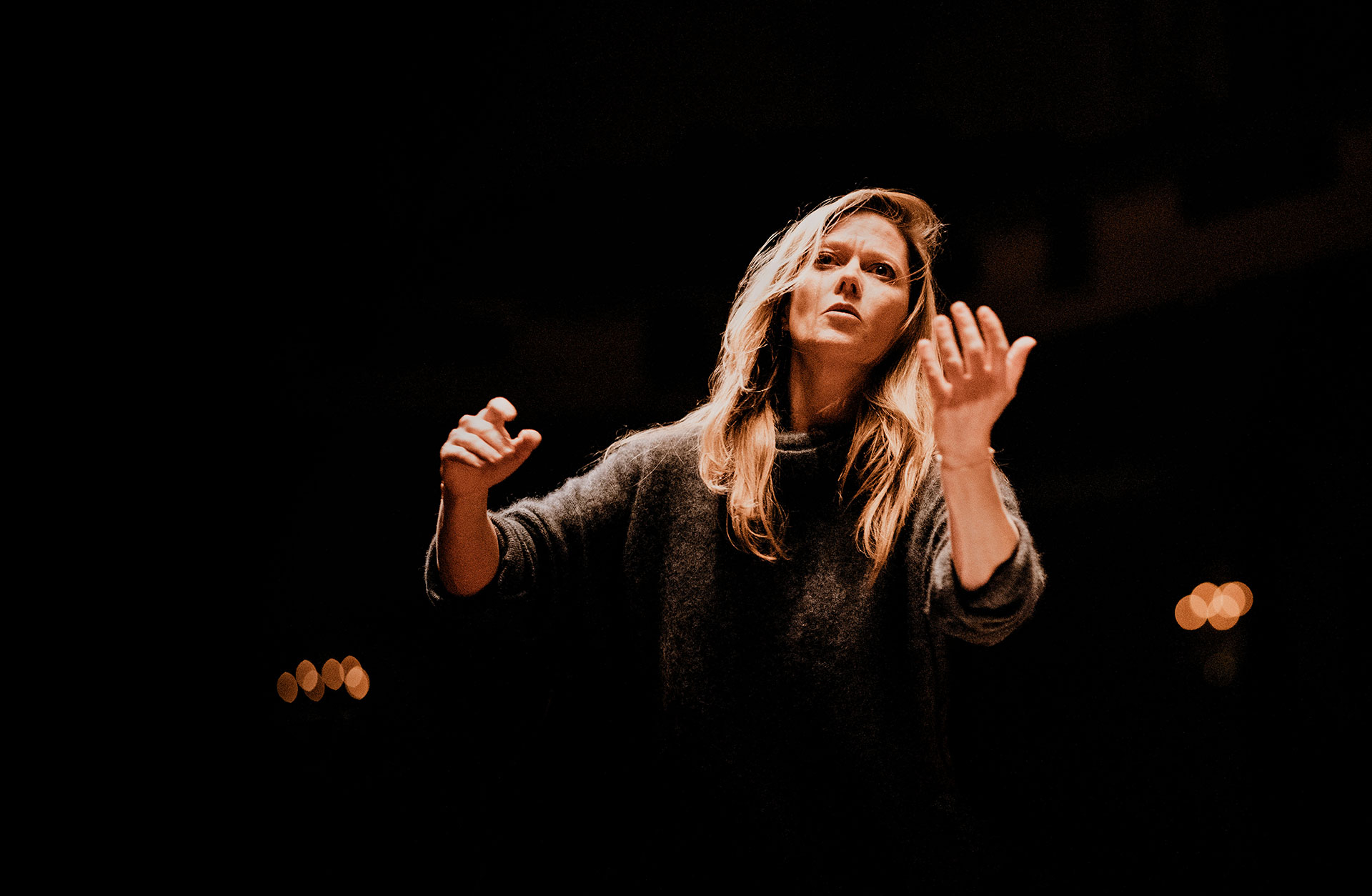
Soprano and conductor Barbara Hannigan is Principal Guest Conductor of the Gothenburg Symphony since 2019. Embodying music with an unparalleled dramatic sensibility, Barbara Hannigan's pioneering work was rewarded with the Polar Muisc Prize 2025. Her artistic colleagues include John Zorn, Krszysztof Warlikowski, Simon Rattle, Sasha Waltz, Kent Nagano, Vladimir Jurowski, Andreas Kriegenburg, Andris Nelsons, Esa Pekka Salonen, Christoph Marthaler, Antonio Pappano, Katie Mitchell, and Kirill Petrenko. The late conductor and pianist Reinbert de Leeuw has been an extraordinary influence and inspiration on her development as a musician.
The Grammy Award winning Canadian musician has shown a profound commitment to the music of our time and has given the world première performances of nearly 100 new creations. Hannigan has collaborated extensively with composers including Boulez, Zorn, Dutilleux, Ligeti, di Castri, Stockhausen, Khayam, Sciarrino, Barry, Dusapin, Dean, Benjamin and Abrahamsen. A passionate musician of unique and courageous choices, Hannigan is renowned for creating innovative orchestral programs, combining new and older repertoire.
In recent years she has been conducting world class orchestras including the Concertgebouw and Cleveland Orchestras, Montreal Symphony, Rome's Accademmia Nazionale di Santa Cecilia, has ongoing relationships with festivals including Aix en Provence and Spoleto, and has had starring soprano roles on opera stages including London's Covent Garden, Teatro San Carlo in Naples, Paris Opera's Palais Garnier, New York's Lincoln Center, and the opera houses of Berlin, Hamburg and Munich.
The past few seasons have brought a new presentation of Poulenc's opera La Voix Humaine, and recent world premieres include Golfam Khayam's I am not a tale to be told with Iceland Symphony Orchestra, John Zorn's Split the Lark and Star Catcher, Zosha di Castri's In the Half Light with the Toronto and Montreal Symphony Orchestras, new works by Sandström and Sciarrino, and a project with pianists Katia and Marielle Labeque inspired by the life and music of Hildegard von Bingen with new music from David Chalmin and Bryce Dessner.
In the 2024-2025 season with the Gothenburg Symphony she performed the program Americana, which depicts USA in the making, as well as Mozart's Requiem and Berg's Violin Concerto with Veronica Eberle. She performed chamber music by Schönberg, Fauré and Chausson. She also guested London Symphony, Munich Philharmonic, Orchestre Philharmonique de Radio France, Danish Radio Symphony Orchestra, Iceland Symphony, l'Orchestre de Chambre de Lausanne and Kollegium Musicum WInterthur. In 2026 she will take the helm of Iceland Symphony Orchestra as their chief conductor and artistic director.
Barbara’s commitment to the younger generation of musicians led her to create the mentoring initiatives Equilibrium Young Artists (2017), and Momentum: our Future Now (2020), both initiatives offering both guidance and performing opportunities to young professional artists. She was recently named the Reinbert de Leeuw Professor of Music at London's Royal Academy of Music and has been visiting professor at the Juilliard School in New York.
On record, Barbara Hannigan’s fruitful relationship with Alpha Classics began in 2017 with the release of Crazy Girl Crazy, winning a Grammy and a Juno. More critically-acclaimed recordings followed, including Vienna: fin de siècle with pianist Reinbert de Leeuw, La Passione featuring works by Nono, Haydn and Grisey and Infinite Voyage, joining her colleagues of the Emerson String Quartet. In 2024 she released the ecstatic vocal works of Messiaen with pianist Bertrand Chamayou and a live recording of John Zorn’s compositions with pianist Stephen Gosling.
Barbara Hannigan resides in Finistère, on the northwest coast of France.
Cécile Lartigau calls herself an “ondist” and plays the rare instrument ondes Martinot. She works at the intersection of contemporary music, experimental improvisation and the large orchestral repertoire. She has performed with prestigious ensembles such as the Vienna Philharmonic, the Boston Symphony Orchestra, the Berlin Philharmonic, Filarmonica della Scala, Israel Philharmonic, Orchestre symphonique de Montréal and the Orchestre de la Suisse Romande. In 2024, Cécile recorded Olivier Messiaen’s Turangalîla-Symphonie for Deutsche Grammophon.
In addition to her orchestral work, she is deeply involved in interdisciplinary projects that combine music, performance, theatre and video. From 2018 to 2025, she participated as an improviser in Heiner Goebbels’ major production Everything That Happened and Would Happens, a hybrid stage work that toured all over Europe.
Cécile Lartigau also has a rich solo and chamber music career, regularly collaborating with specialized ensembles as well as with contemporary composers. She has contributed to the rediscovery of the first known piece for ondes Martenot and orchestra, the Poème Symphonique by Dimitri Lévidis from 1928.
Juan Zurutuza is a pianist trained in Mexico and the Netherlands. He studied with Rian de Waal at the Royal Conservatory in The Hague from 2001-2008. He has played solo and chamber music concerts with members of the Rotterdam Philharmonic Orchestra and the Concertgebouw Orchestra in Scandinavia, Europe and North America. Since 2022, Juan Zurutuza is pianist in the Gothenburg Symphony.
He is currently studying with pianist Robert Durso, thanks to several scholarships received from Göteborgs Symfoniker Friend Association, the Marianne & Ary Paley Scholarship Fund, the Eduard Magnus Music Fund and the Mary von Sydows Donation Fund.
In 2024, Bar Avni won the major La Maestra competition in Paris. This success led to a fruitful collaboration with the Paris Mozart Orchestra and its founder Claire Gibault. She works with mentors such as Yoav Talmi, Barbara Hannigan and Ayelet Geva. An important part of her artistry is shaping concerts as complete experiences. Her debut album will be released in February 2026, with works by Charlotte Sohy, Darius Milhaud, CPE Bach and Igor Stravinsky.
In the 2025-2026 season, Bar Avni returns to the Orchestre de Paris and the Orchestre National Bordeaux Aquitaine, and makes her debuts with the WDR Symphony Orchestra, the Warsaw Philharmonic Orchestra, the Netherlands Radio Orchestra, the Stuttgart Radio Orchestra, the Lausanne Chamber and the Gulbenkian Symphony Orchestra.
2021-2024 she was Chief Conductor of the Bavarian Philharmonic. She is a trained percussionist and studied conducting with Yoav Talmi, Martin Sieghart and Ulrich Windfuhr. She has assisted conductors such as Gustavo Dudamel, Klaus Mäkelä, Myung-Whun Chung and Matthias Pintscher.
 031-726 53 00
 biljett@gso.se