Göteborgs Konserthus
Royal Stockholm Philharmonic Orchestra and Nina Stemme
Event has already taken place. A moving guest performance with the Royal Stockholm Philharmonic Orchestra; Ryan Bancroft, conductor; and Nina Stemme, soprano.
Concert length: 2 h incl. intermission
Stage: Stora salen
390-550 SEKStudent 195-275 SEK
Young up to 29 195-275 SEK
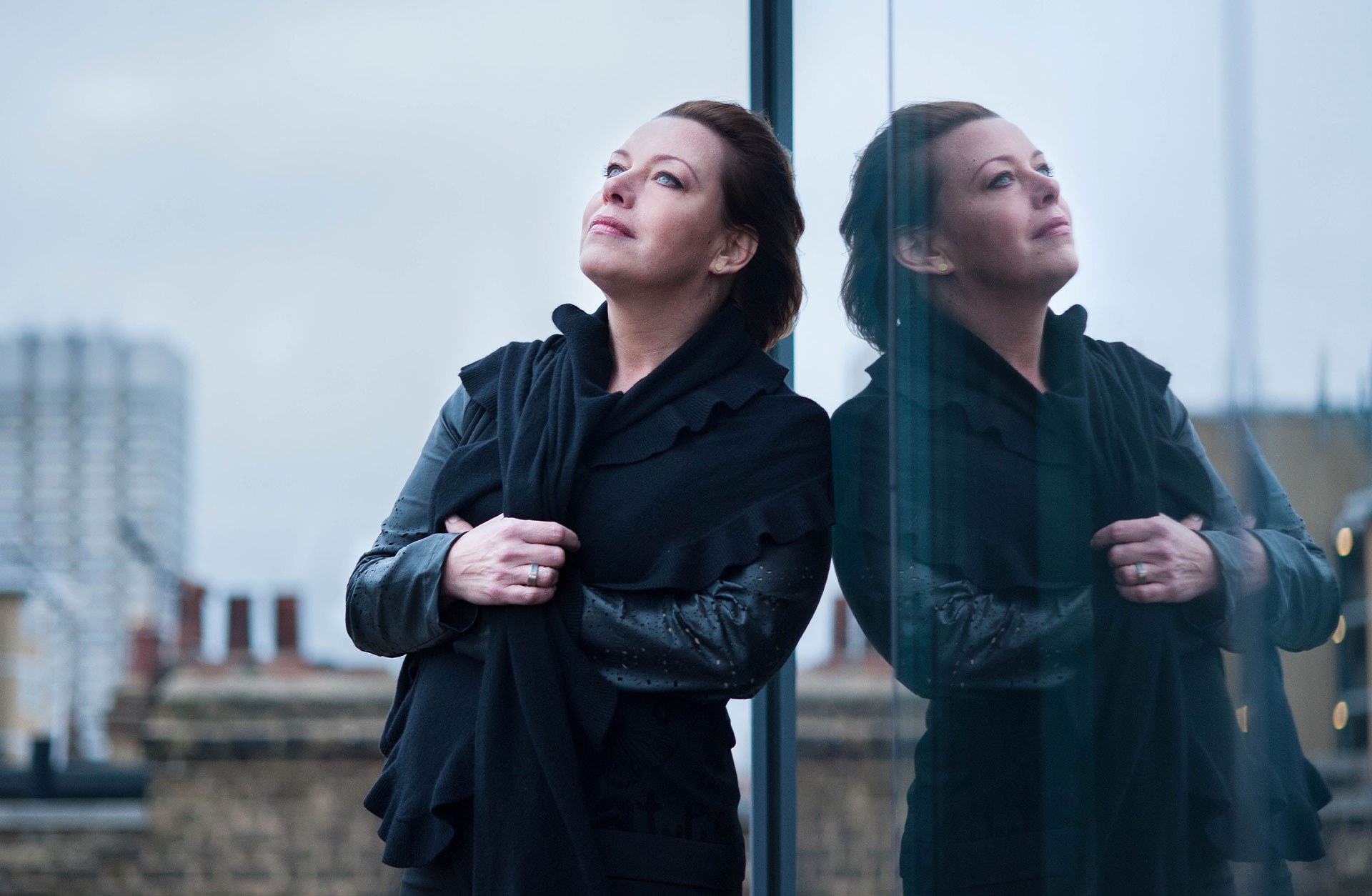
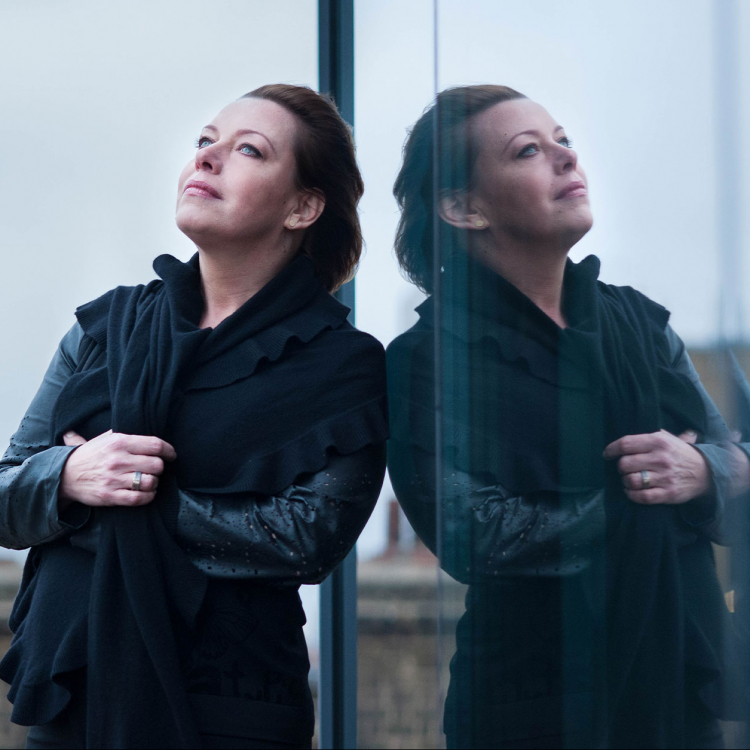
Nina Stemme is one of Sweden’s most internationally acclaimed stars of opera. She was awarded the world’s largest prize in music, the Birgit Nilsson Prize, and has been celebrated on stages such as the Metropolitan Opera House in New York, Vienna State Opera and La Scala in Milan. Hear her in Mahler’s moving Kindertotenlieder – Songs about dead children. The work has tragic similarities with Mahler’s own life, and the composition would also appear as a foreshadowing: a few years later, Mahler’s eldest daughter Maria died.
Sweden’s Andrea Tarrodi is also internationally acclaimed for her beautiful music that shifts in colour and tone. Her piece Liguria is inspired by the idyllic fishing villages on the Ligurian Sea, off the northwest coast of Italy. The concert is crowned with Tchaikovsky’s fifth symphony, a magical and humble-sounding masterpiece whose “fate motif” recurs in all four movements.
This guest performance by the Royal Stockholm Philharmonic Orchestra is led by their chief conductor Ryan Bancroft.
Listen
Get to know the music.
Get to know composer Andrea Tarrodi.
Introduction to the concert
Take a seat in the Great Hall onehourbefore the concertbegins and learnmoreabout the musicyouwillsoonexperience! Youwill get the storiesbehind the music, knowledgeof the composers and ownreflectionsabout the classicalpieces. The introductionlast for about 30 minutes, it is free and freeseating in the hall. Welcome!
Programme
Andrea Tarrodi (f 1981)
Liguria
On the northwest coast of Italy by the Ligurian Sea are five small fishing villages clinging to the steep cliffs. These are called Riomaggiore, Manarola, Corniglia, Vernazza and Monterosso, and between the villages are paths connecting them through the mountains. In August, 2011, I visited this area and as soon as we arrived I knew that I wanted to write music about it. The result is a work that can be described as a “walking tour” among the small villages: Riomaggiore with its high waves; Manarola with its clock tower; Monterosso, where sunbathers stressedly hurried to secure a place on the beach and open up their colorful beach umbrellas, as if in a scene in a Fellini film; Vernazza, with its watchtower and cliffs; and lastly, Corniglia, where the night sky was filled with stars.
Andrea Tarrodi 2012
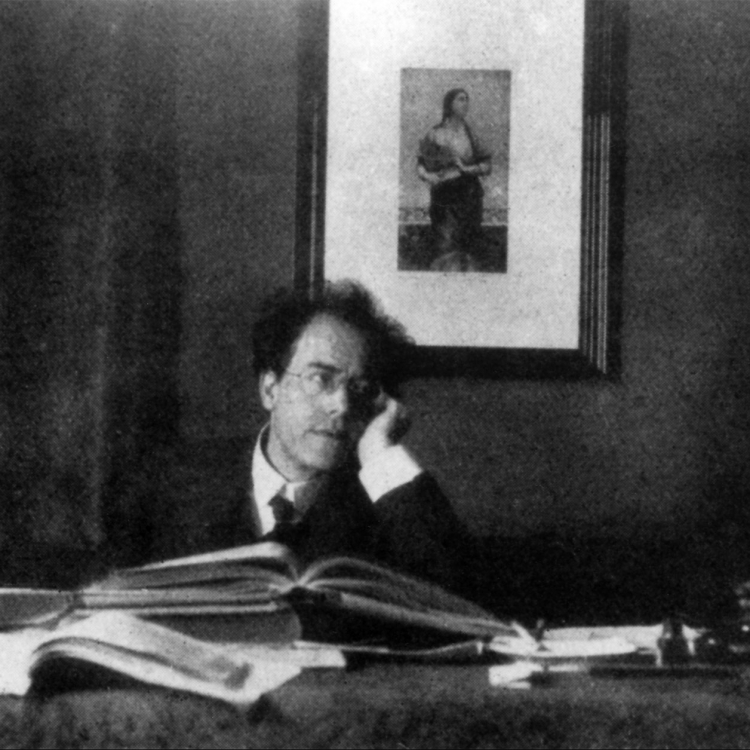
Gustav Mahler (1860-1911)
Kindertotenlieder
In the score for his five Kindertotenlieder, Wagner emphasized that they were intended as "a single and indissoluble whole". As far as is known, they were designed from the beginning for orchestra and are also almost never performed with piano. The lyrics were taken from Friedrich Rückert, one of the most popular poets of early Romanticism. After the loss of two children to scarlet fever, he had dictated his collection as a work of mourning.
Mahler began setting some of them to music shortly before his marriage. Three years later he had daughters himself, and his wife Alma was astonished that he could devote himself to this charged subject. After another three years the older girl died and it was said that Mahler must have had some premonition. But the fact that he was so taken by Rückert's words may have something to do with the fact that he lost his own brother Ernst at the age of 13.
The five songs were Mahler's last and were followed a few years later by the great symphonic vocal cycle Das Lied von der Erde, where, after being told of an incurable heart defect, he said goodbye to the world and life.
Intermission25 min
Pyotr Tjajkovskij (1840-1893)
Symphony No 5
Pyotr Tchaikovsky had been financially independent for a long time when, in the summer of 1888, he set out on his fifth symphony. A wealthy widow, Nadezjda von Meck, had been so captivated by his compositions that she gave him a generously increased annual maintenance, freeing him from private tuition and other lucrative but time-consuming pursuits. He was now able to compose full-time, and he also quickly achieved mastery.
The Fifth Symphony is proof of this. It had been ten years since the fourth symphony and in the meantime he had managed to write five operas, including the famous Eugene Onegin, the string serenade, Capriccio Italy, the second piano concerto, the 1812 overture and much more; that is, several of his most famous works. He had also managed to complete his first European tour as a conductor, but also entered into the disastrous marriage with Antonia Miliukova, tried to kill himself in the icy waters of the Moscow River and moved to Switzerland.
After four months of work on the symphony, he wrote to Madame Meck that he was almost finished with his 'symphony of fate'. In surviving manuscripts, he likens his work to a complete resignation to fate - and this is certainly connected to the emotional problems surrounding his homosexuality. In contrast to the brutal character of the Fourth Symphony, the motif of fate in the Fifth comes creeping in the low register of the clarinets. You are immediately captivated by the simplicity and harmony by sensitively placed wind solos.
The second movement allows two emotionally charged motifs to alternate with each other. One is presented by the horn and the other by the oboe. But here too, the motif of fate comes into play. The third movement contributes contrast in the form of a well-polished elegant waltz, the dance form that so many times has drawn masterpieces from Tchaikovsky's pen. It begins as if it were a ballet scene and only gradually does the music take on a symphonic character. The dark thoughts do not escape even in the whirlwinds of the ball. In the finale, the fate theme undergoes a transformation. The tempo becomes more march-like and shifts in major - it gradually even becomes grandiose. From being too introverted it has now become almost outwardly aggressive, and this tells a lot about the inner emotional life of the tormented author.
Friday, 21 March 2025: The event ends at approx. 20.00
Participants
The Royal Philharmonic Orchestra was founded in 1902 and Stockholm Concert Hall has been the orchestra's home since 1926. Chief conductor since 2023 is award-winning American Ryan Bancroft. Among the guest conductors are greats such as Riccardo Muti, Andris Nelsons, Herbert Blomstedt, Nathalie Stutzmann, Gianandrea Noseda and honorary conductors Sakari Oramo and Alan Gilbert. Sakari Oramo was the orchestra's chief conductor in the years 2008–2021. Together, over the years, they gained a lot of attention for both recordings and international tours. The German daily Die Welt described the Royal Philharmonic as "one of the world's best orchestras".
The Royal Philharmonic has received a lot of attention for its recordings. Among these can be mentioned Carl Nielsen's six symphonies on three CDs (BIS), which were praised by critics worldwide and the CD with symphonies no. 1 and 3 was awarded the BBC Music Magazine Award for best classical orchestral production. Two CDs with recordings of Anders Hillborg's music have both been awarded Grammis, and they have also released a CD with the American star soprano Renée Fleming. The recording of Nielsen's and Sibelius' violin concertos together with Johan Dalene was awarded a Grammis in 2023.
Ryan Bancroft is the Royal Philharmonic's Principal conductor since 2023. He grew up in Los Angeles and first came to international attention in 2018 when he won the prestigious Malko competition for young conductors. During 2024-2025, his second season with the Royal Philharmonic Orchestra, he shows continued strong commitment to Swedish music as well - with, among other things, Wilhelm Stenhammar's Serenade and two Swedish premieres. Last season he premiered, among other things, a symphony by Daniel Börtz, and was responsible for the European premiere of Anders Hillborg's The MAX Concerto. Among the repertoire works he conducted can also be mentioned an unison acclaimed interpretation of Mahler's fifth symphony in autumn 2023 and next season he will take on, among other things, the huge third symphony by Mahler.
In the spring of 2025, Ryan Bancroft and the Royal Philharmonic Orchestra make their very first joint European tour and perform in Gothenburg, Munich, Cologne, Hamburg, Dortmund, Luxembourg and Vienna.
He has worked with the distinguished Nieuw Ensemble in Amsterdam and the French Ensemble Intercontemporain, he has assisted Pierre Boulez in a performance of his Sur Incises in Los Angeles, and he has premiered works by Sofia Gubaidulina, John Cage, James Tenney and Anne LeBaron. He has also worked closely with improvisational musicians such as Wadada Leo Smith and Charlie Haden.
Ryan Bancroft studied trumpet at the California Institute of the Arts and graduated in conducting from the Royal Conservatoire in Scotland and the prestigious Nationale Master Orkestdirectie in the Netherlands.
Soprano Nina Stemme has been singing lead roles in operas by Wagner, Strauss, Puccini and Verdi for a long time in the biggest opera houses, such as the Wiener Staatsoper, Covent Garden, La Scala, Metropolitan and Bayreuth. Her repertoire includes Isolde in Tristan and Isolde, Senta in The Flying Dutchman, Marshallin in Der Rosenkavalier, Sieglinde in Die Walküre, Margareta in Faust as well as Jenufa and Salome. The London staging of Tristan and Isolde, directed by Christoph Loy, earned two Lawrence Olivier statuettes, both for Best Production and Best Performance by a Cast. Recent successes include Brünnhilde at La Scala, Fidelio with Claudio Abbado at the Lucerne Festival (opposite Jonas Kaufmann in a highly praised recording), Leonora in Fidelio at Covent Garden, Elisabeth in Tannhäuser in Paris and not least Brünnhilde in San Francisco.
On disc, she can be heard in Wagner's Tristan und Isolde (opposite Placido Domingo, EMI), Wesendonck songs (BIS) and The Flying Dutchman (Chandos), as well as Beethoven's Fidelio (Decca) and Richard Strauss's Vier letzte Lieder (EMI). On DVD: Der Rosenkavalier, Aida, Jenufa and Tristan and Isolde.
Nina Stemme, who was named the best singer of the year by the German magazine Operwelt, has been a court singer since 2006 and received the Litteris et Artibus in 2008. She has been awarded both the honorary prize among the government's export prize and the Birgit Nilsson prize (2018). In the spring of 2022, she has sung both Siegfried and Valkyrian at the Wiener Staatsoper. In addition she played the leading role of Elektra in Strauss's opera at The Metropolitan Opera in New York.
"Sometimes she was forced to brace herself for the role's most punishing outbursts. Yet she delivered them as if with a dragon's breath," wrote the New York Times of Stemme's performance. In the fall of 2024, she will sing in Jenufa at the Royal Opera in Stockholm and The nurse in Die Frau ohne Schatten at the Metropolitan, before she joins the Roya Philharmonic on their european tour in spring 2025.
 031-726 53 00
 biljett@gso.se