Göteborgs Konserthus
Organ music through thick and thin
Event has already taken place. A programme of love and sorrow, with masterpieces by Liszt and Duruflé. American star Nathan Laube returns to the large concert hall organ.
Concert length: 2 h incl. intermission
Stage: Stora salen
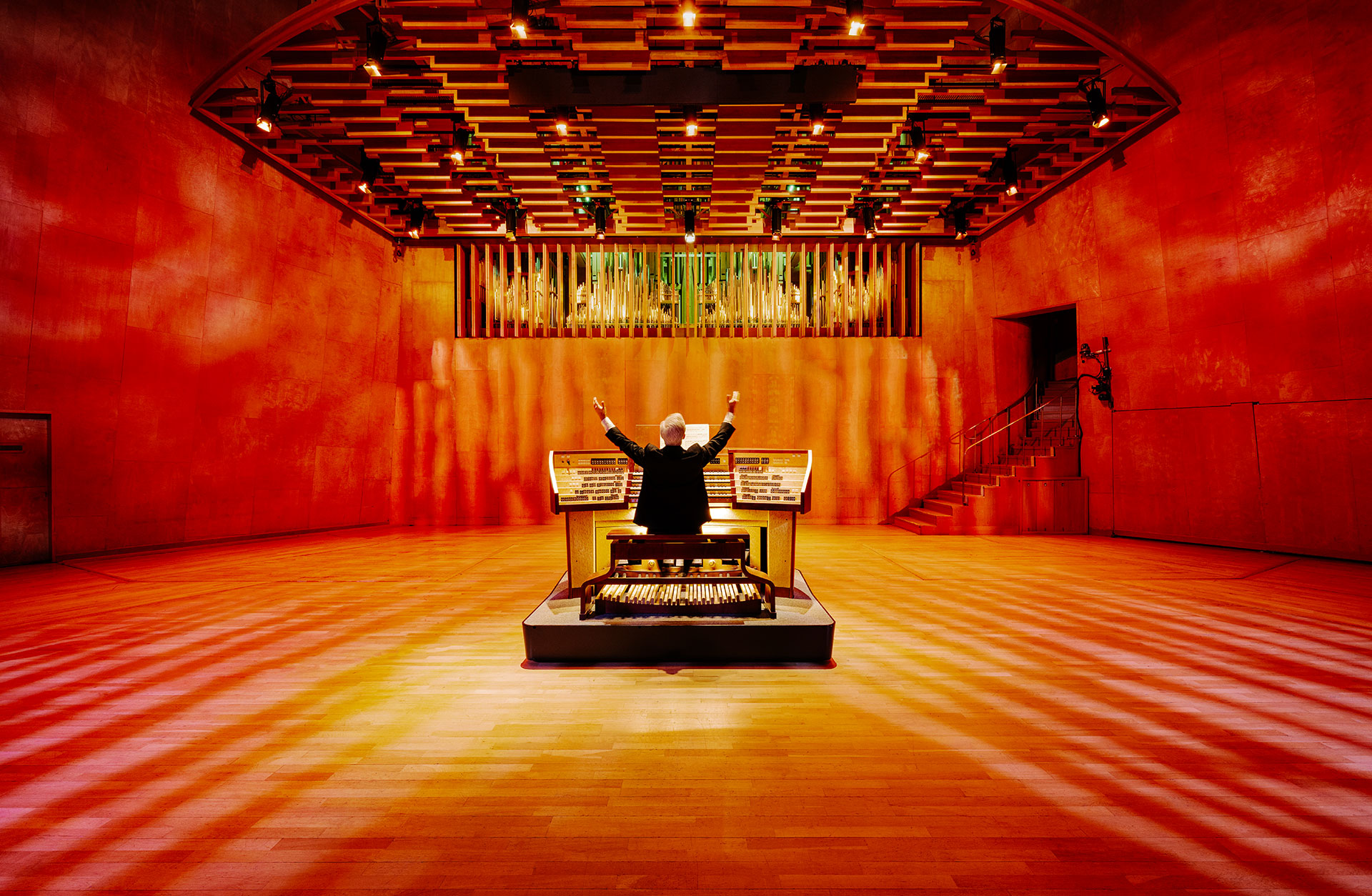
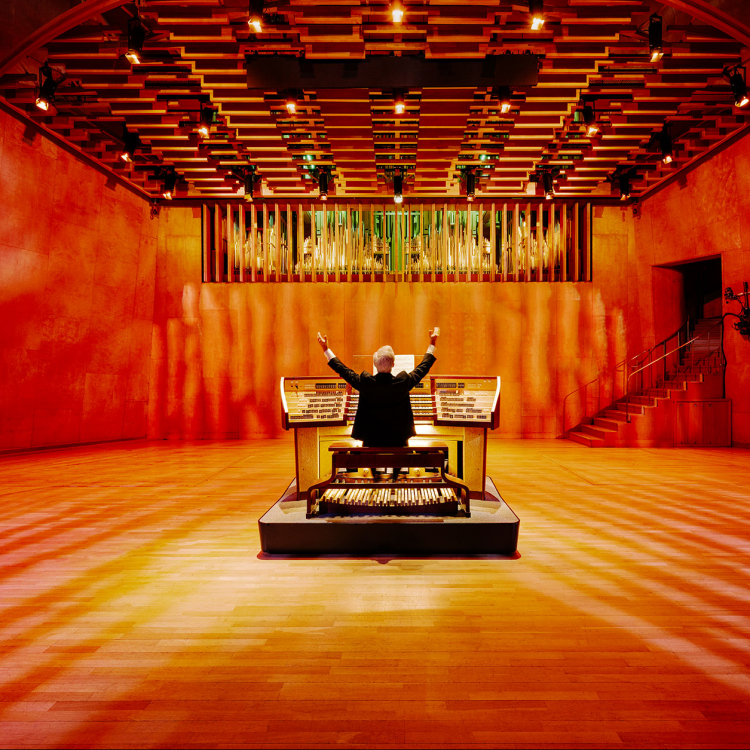
Hear masterpieces by Liszt and Duruflé in a programme containing both love and sorrow. American star Nathan Laube returns to the large concert hall organ. In collaboration with the Gothenburg International Organ Festival.
Pianist and composer Franz Liszt was a bit of a rock star in his time, delighting audiences with spectacular pieces. His symphonic piece Les Préludes is based on a poem, in which broken hearts and crushed dreams lead to seeking out peace in the countryside. This version for the large concert hall organ has space for every register and all kinds of emotions.
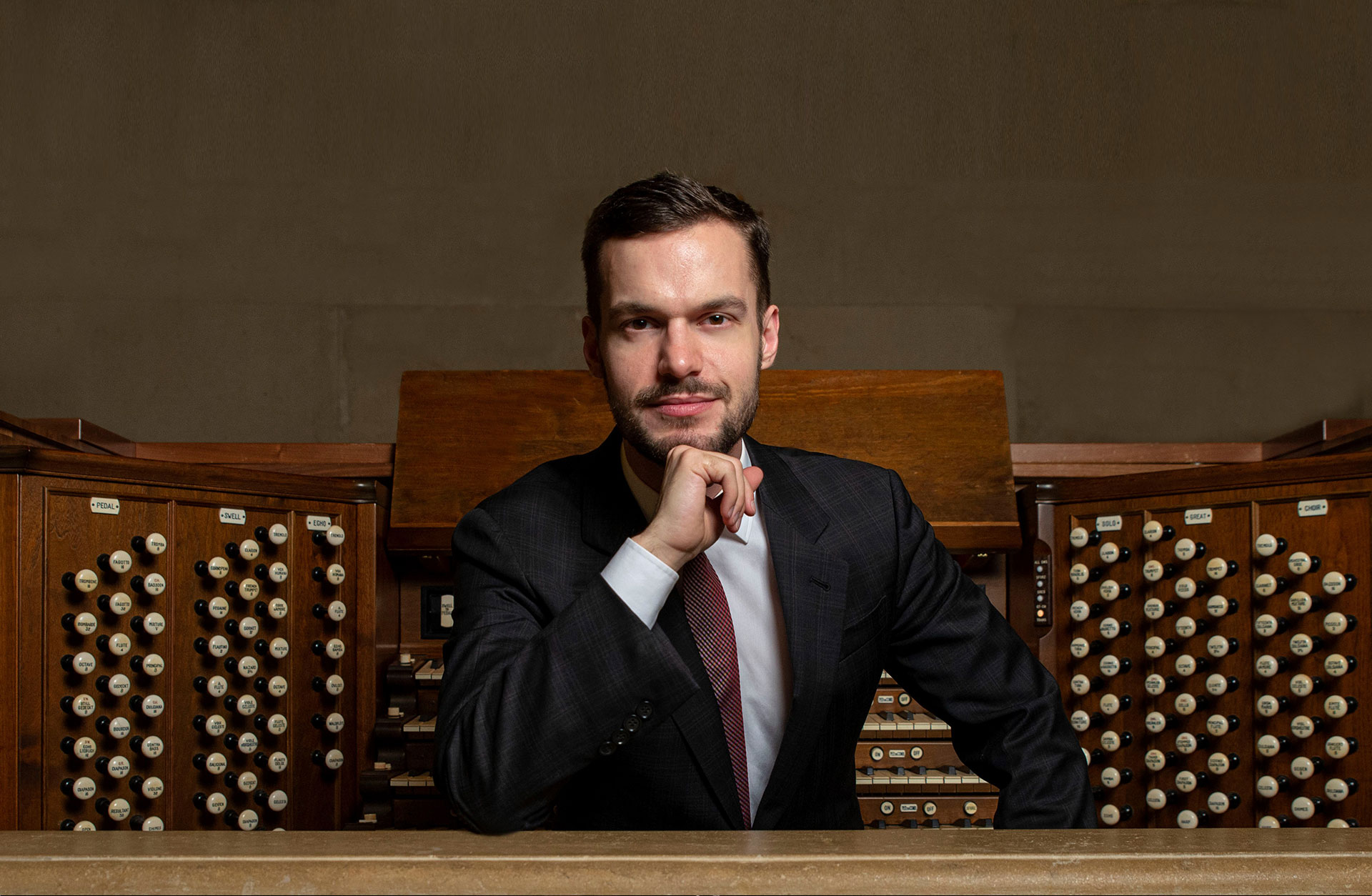
American organist Nathan Laube is a prominent soloist and mentor in the organ world. He participated in the inauguration festivities for the new concert hall organ in Gothenburg in 2021. At this evening’s performance, he also takes a deep dive into the music of French organ masters such as Maurice Duruflé and Marcel Dupré, and his student Jeanne Demessieux.
“Love is the enchanted dawn of all existence; but what fate is there whose first delights of happiness are not interrupted by some storm?” de Lamartine: Les Préludes
The Gothenburg International Organ Festival runs 8–19 October and welcomes guests of all ages to a world of passion and sound. Numerous major musicians will be holding workshops and concerts at the Gothenburg Concert Hall and in Gothenburg’s biggest churches.
Programme
Alfred Hollins (1865-1942)
Concert Overture No. 1 in C minor
The British organist Alfred Hollins, blind from birth, showed exceptional musical talent early on and later, through world-wide tours, became a household name both as an organist and pianist, although few today have heard of him. From 1897 he was organist at St. George’s Church in Edinburgh. At his concerts he showed an unusual pedagogical side for his time when he gave oral comments on the works he played. Among his approximately 50 organ works are three concert overtures, the first of which in C minor was composed in 1885.
The work is orchestral and written in an improvisational sonata form where influences from Felix Mendelssohn are noticeable in the energetic main theme while the softer side theme points more towards the popular operetta style of the time. Hollins summarized his life in a 1936 autobiography with the slightly self-deprecating title A blind organist looks back.
Maurice Duruflé (1902-1986)
Prélude et Fugue sur le nom d'ALAIN
Despite a limited list of works, Maurice Duruflé is considered one of the most important French composers of the first half of the 20th century. Prelude et Fugue sur le nom d’Alain was composed in 1941 in memory of his colleague and friend Jehan Alain, who died in the early stages of World War II.
The prelude, whose main theme is based on Alain’s name according to a system created by Duruflé, has a fleeting, virtuoso character with a contrasting theme that is a reversal of the theme in Alain’s famous Litanies from 1937. At the end of the prelude, the entire theme is heard in its correct form at a slow tempo. The fugue is a double fugue where the first theme contains the same notes as the main theme of the prelude while the second consists of continuous 16th-note movements. The two themes are combined early on and the whole thing develops towards the end into a powerful toccata-like tutti. The musical language is modal with impressionistic elements.
Healey Willan (1880-1968)
Introduction, Passacaglia and Fugue
Healey Willan was born in England but spent most of his life in Toronto, Canada. He wrote music in most genres, but it is his organ music that is played today, especially his monumental Introduction, Passacaglia and Fugue, composed in 1916. The inspiration for the work came from listening to a memorial concert after Max Reger's death, when Reger's great work Op 127 with the same title was played. Willan's work in the dark key of E flat minor is a masterpiece, orchestral inspired, where the composer makes maximum use of all the resources of the great Anglican organ type. The introduction, heavy and ominous, leads improvisationally to the passacaglia, the theme of which is first presented in the pedal.
We hear 18 exciting and varied variations on this theme. The lively fugue, whose theme is based on the beginning of the passacaglia theme, develops increasingly in a virtuoso direction before, as a conclusion, the passacaglia theme returns with full force in the pedal.
Intermission25 min
Jeanne Demessieux (1921-1968)
Te Deum for organ
The late French composer Jeanne Demessieux was one of the foremost organist talents of the 20th century, and her long-time teacher Marcel Dupré saw her as his natural successor. For some unknown reason, however, contact between the two was brutally severed when her international career took off in the mid-1940s. In 1962, she became organist at the Madeleine Church in Paris and was one of the first organists with a significant career as a gramophone artist.
Demessieux's organ compositions place very high technical demands on the interpreter. Te Deum, based on an old church hymn, was written in 1959 and is her most frequently performed organ work. It is a multi-part fantasy characterized by a powerful musical language carved in stone, where a softly swaying chorale movement in the middle creates temporary calm.
Marcel Dupré (1886-1971)
Cortége et Litanie
Cortége et Litanie by Marcel Dupré was originally part of a collection of four pieces for piano. After first being rearranged for organ and orchestra, the work was given its now well-known form for organ solo in 1922. Initially, we hear solemn, chorale-like processional music, which is followed by a second part with a restless sixteenth-note theme that is repeated ostinato-style, an image of a heartfelt prayer that is uttered over and over again. After a suggestive charge, the two parts are combined and the work is rounded off with heavy chord masses that alternate between the two hands in a toccata-style manner and give a vision of church bells.
Franz Liszt (1811-1886)
Les Préludes, arr. Nathan Laube
Franz Liszt's famous symphonic poem Les Préludes served in an initial version as an overture to a four-movement choral work, Les quatre élémens. In 1853, Liszt revised the work, now as a standalone orchestral piece, and gave it the title we know today after a poem by the French poet Alphonse de Lamartine. However, the fact that it is based on his poem is a post-construction as there is no major difference between the original and the final version.
Les Préludes is a magnificent, highly romantic work with striking, majestic themes and effective contrasts that include a central dramatic storm scene followed by a quiet pastoral. Nathan Laube plays the virtuoso work in his own transcription for organ. Les Préludes was, incidentally, one of Alfred Hollin's favorite works, which he enjoyed playing at his organ concerts.
Sunday, 12 October 2025: The event ends at approx. 20.00
Participants
American Nathan Laube is a leading organist and teacher who is appreciated all over the world. His extensive concert career includes major venues such as the Wiener Konzerthaus, Hamburg Elbphilharmonie, Berlin Philharmonie, Maison Radio France in Paris, Auditorium Maurice Ravel in Lyon, Béla Bartók National Concert Hall in Budapest, Palau de la Música Catalana in Barcelona and Sejong Center in Seoul.
He has appeared in Europe's most famous churches and cathedrals, including Notre-Dame Cathedral and Saint-Sulpice in Paris, St. Paul's Cathedral in London, Frauenkirche in Dresden and Berliner Dom. In 2022 he performed at the BBC Proms at the Royal Albert Hall in London.
He is passionate about organ design and aesthetics and also acts as a consultant for new instruments. He participated in the construction of the Gothenburg Concert Hall organ in 2021 and inaugurated the organ in Musiikkitalo in Helsinki in 2024. In 2020 he played a solo concert on Austria's largest pipe organ built by Rieger in St. Stephen's Cathedral in Vienna, and in 2023 in the cathedral in Graz.
His recording of Stephen Paulus' Grand Concerto with the Nashville Symphony was awarded a Grammy in 2016. In April 2019, Nathan Laube launched the radio program All the Stops, where he explores famous organs in Europe and the United States.

 031-726 53 00
 biljett@gso.se