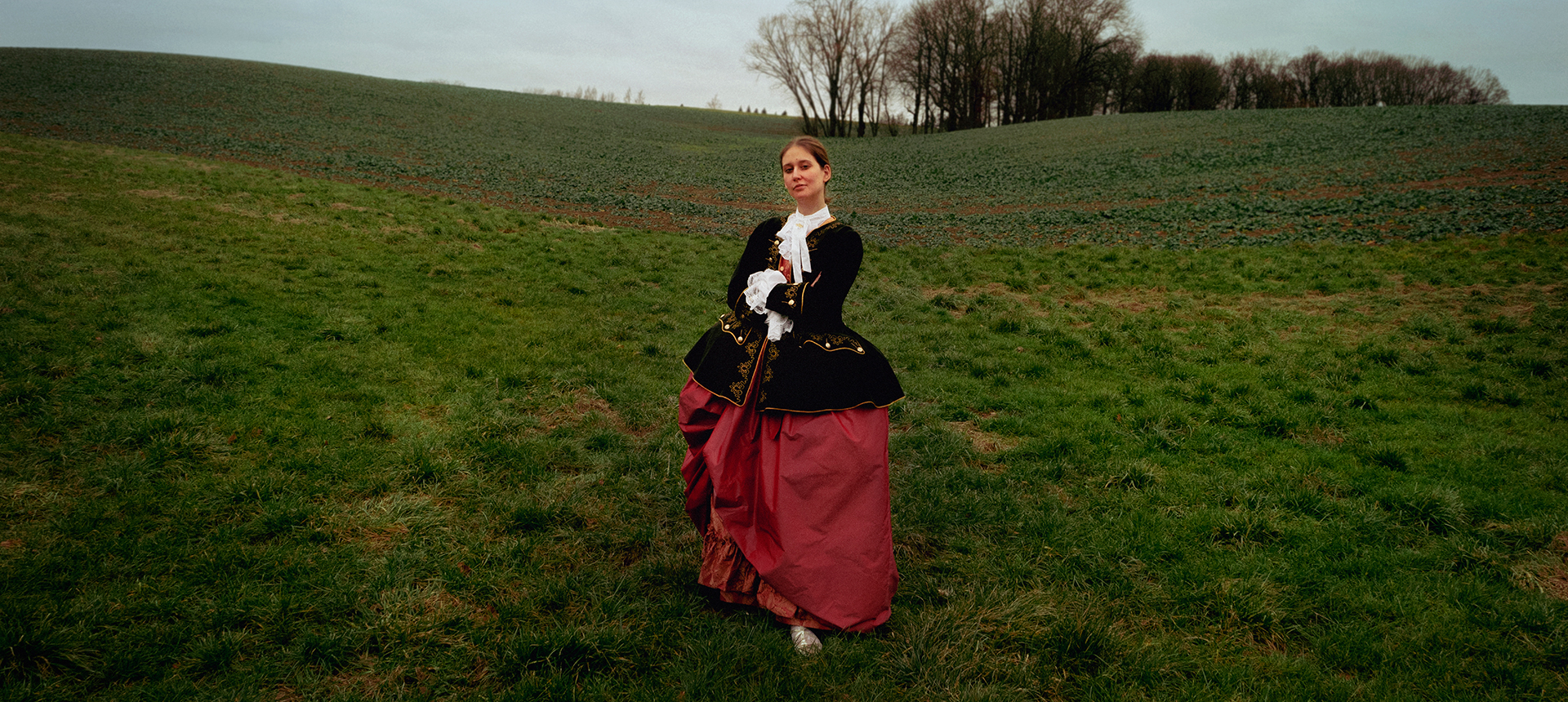
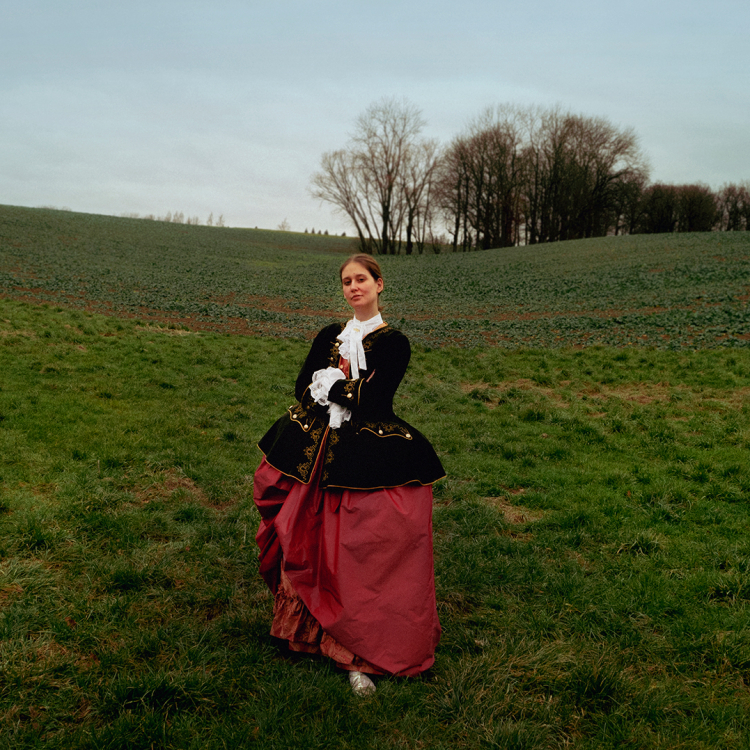
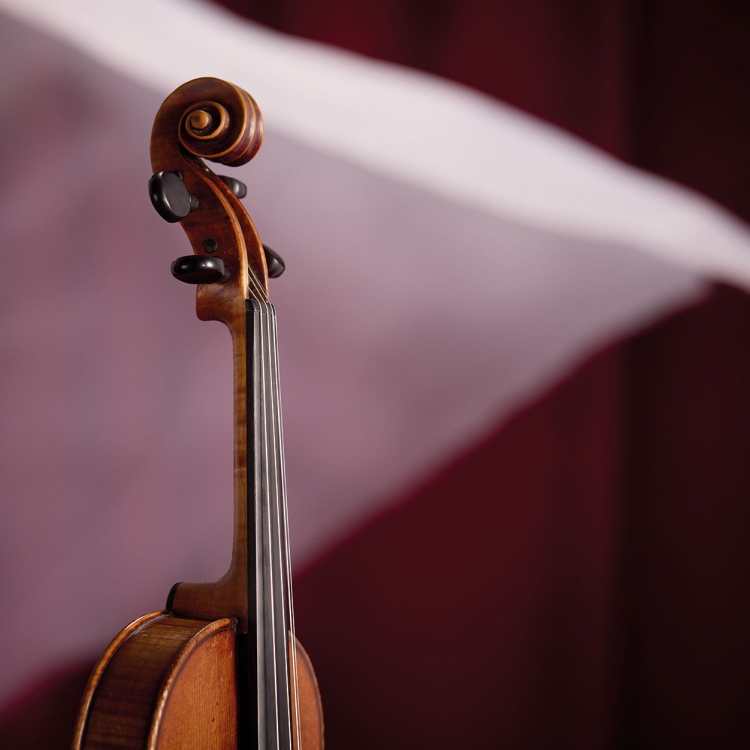
To the music of pioneer Élisabeth Jacquet de La Guerre, we are brought into the royal chambers of Versailles. The ensemble Les Jardiniers offers French baroque music with both playfulness and heartbreaking melancholy.
Élisabeth Jacquet de La Guerre was a musical prodigy, born into a family of court musicians in Paris. As a five-year-old, she sang and played the harpsichord at Louis XIV’s court, protected by the Sun King’s mistress, Madame de Montespan. When Jacquet de La Guerre married at 19 to a musician, she left the court and became increasingly famous. She dedicated most of her music to Louis XIV, who patronized her until his death. Jacquet de La Guerre wrote sonatas, cantatas and an opera, one of the first women ever to write one.
From the same gilded salons comes the music of Julie Pinel, Visée, Marais and not least François Couperin. The French piano master contributes with a graceful tribute to the muse of poetry and dance, Terpsichore.
Finally, we hear one of Élisabeth Jacquet de La Guerre’s many cantatas, and this one is about the adventures of Odysseus.
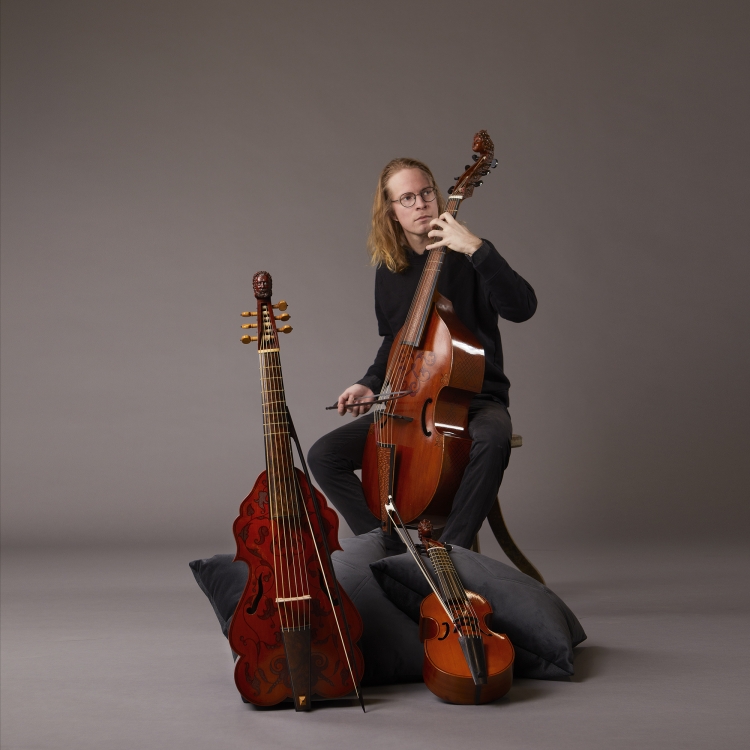
The music is performed by Ensemble Les Jardiniers consisting of musicians from the Gothenburg Symphony, harpsichordist Adrienn Illes, flute player Georgia Williams, soprano Ingrid Berg and Dohyo Sol on theorb.
Listen
Get to know the composer Élisabeth Jacquet de la Guerre.
Programme
Élisabeth Jacquet de La Guerre was one of the most significant female musical personalities in France during the late 17th and early 18th centuries. In the magazine Mercure Galant in July 1677 you could read:
“She sings the most difficult music straight from the sheet. She accompanies herself on the harpsichord, which she plays incomparably. She composes pieces and plays them in the key you ask her to. I can testify that for four years I have experienced her extraordinary qualities, and yet she is only ten years old."
Although the writer is misinformed about her age (she was 12 at the time), she was nonetheless a musical prodigy. But then she had also grown up in a family whose members were court musicians in Paris and valued instrument makers. At the age of 15, she came under the protection of Louis XIV and his mistress, Madame de Montespan, in Versailles. In 1684 she married Marin de La Guerre, composer, music teacher, harpsichordist and organist. As the reputation of her overwhelming art grew, she continued to dedicate almost all of her works to the king. She maintained contact with the court throughout her career.
She mainly composed piano pieces and chamber music, but also songs and cantatas, as well as an opera. It is believed that she was the first female composer to compose an opera in France, it was called Céphale et Procris and was written for the French Musical Academy in 1694. The first of her compositions to leave the printing press were a collection of Pièces de clavessin (1687), this was still very unusual even for male composers. A new collection appeared in 1707 and contains Sonatas for violin and harpsichord. The work shows that she very well understood the character of the violin and shows some influences from Italian instrumental music through its fast runs, harmonic sequences and having the instruments imitate each other's themes. Very little of all this has survived, and she withdrew from the public eye early on.
As the final number of the concert, we hear her cantata about the adventures of Odysseus (1715), dedicated to Crown Prince Maximilian II of Bavaria. (Summary below)
Stig Jacobsson
Jacquet de La Guerre Trio Sonata in G minor10 min
This concert features entirely music that originated in the court of Louis XIV at Versailles. Julie Pinel did not grow old, and not much is known about her life, but she too was raised in a musical family whose members were involved in court circles. The fact that she received an eight-year contract in 1736 for her music to be published was of no importance because she died the following year. But a collection of 31 serious arias and drinking songs was published. Other works by her are the cantatil (little cantata) Le printemps (Spring), which is performed here. It was dedicated to the Prince of Soubize, probably Charles de Rohan, her family's patron.
Jacquet de La Guerre Prélude in D minor3 min
Jacquet de La Guerre Sonata in D minor15 min
Intermission25 min
Visée was a guitarist and lutenist at the French court and had a great influence on contemporary music. The baroque guitar differs in several respects from today's guitar. His own compositions have proved to have great vitality, and he wrote in particular a large number of suites and stand-alone pieces for his own instruments. They are collected in a number of suites. A chaconne was a kind of variation piece.
Marin Marais studied music with Jean-Baptiste Lully and in particular composed music for the viola da gamba, an instrument he himself mastered to perfection. He is remembered for no less than 600 compositions for the gamba in various constellations. In 1675 he was employed at the court in Versailles as a court musician with several honorary titles. He called the work that is now on the program La Rêveuse, that is, the dreaming woman.
Françoise Couperin was already nicknamed "le grand" during his lifetime, and he is undeniably one of the leading figures in early French music history. He was organist at court, and was knighted for his efforts. In addition to large organ masses, he also wrote countless small character pieces for harpsichord. They were generally written for Louis XIV to brighten up the generally rather dull evenings at the stately Versailles, which was, after all, so rurally situated. A lot of music was needed here, and Couperin tried to lighten the mood with small humorous genre pictures, often with folk content. They have been collected in 4 books of a total of 27 "Ordre", suites, a total of a couple of hundred small pieces, which were written between 1713 and 1730. We find his composition La Terpsichore as number five in the second suite of the first book. Many of these pieces have picturesque titles, and the current piece is an elegant tribute to the muse of poetry and dance, Terpsichore.
Stig Jacobsson
Le sommeil d’Ulisse (The Sleep of Ulysses)
Cantata with sinfonia, recitative and arias.
On his way home from the Trojan War after thousands of toils during ten years of wandering, the tireless King Odysseus and his men end up in a terrible storm at sea. Odysseus has angered the sea god Poseidon in his attempt to escape the storm and hide his ship from him. His efforts are in vain. Odysseus trembles with terror when he sees Poseidon; guided by the winds, he sails according to his will and rules like a king over the waves of the stormy and deep sea.
With roaring thunder with brilliant lightning, the sea god makes the sky shine and rumble. The universe fears another shipwreck. All the unleashed winds fight against the waves. The ship gives way to the storm, it capsizes and disappears into the sea, which swallows it and its heroes.
The mighty goddess of war Minerva, whose laws Odysseus has always been faithful to during his many hardships, flies to his rescue! The goddess puts him into a mysterious, deep sleep that eases his pain and lets him rest from the din of the tumult.
In the dreams, Minerva presents a happy destiny that awaits him. King Alkinoos who reigns in these latitudes, a very wise and magnanimous king who takes up arms only for the purpose of maintaining peace on earth, he will come in Odysseus' way and help him, so that he may return alive and victorious to his beloved homeland Ithaca and his people.
Sunday, 12 November 2023: The event ends at approx. 20.00
 031-726 53 00
 biljett@gso.se