Event has already taken place. Romantic piano music, Polish folk rhythms and melodic finesse with acclaimed pianist Peter Jablonski and musicians from the Gothenburg Symphony.
Concert length: 2 h incl. intermission
Stage: Stenhammarsalen
245-315 SEKStudent 123-158 SEK
Young up to 29 123-158 SEK
Frédéric Chopin is the undisputed master of romantic piano music. We hear acclaimed pianist Peter Jablonski in some of his imaginative mazurkas, as well as chamber music by Grażyna Bacewicz and Szymanowski, composers in Chopin’s musical succession. Participants are musicians from the Gothenburg Symphony.
Peter Jablonski’s album with piano music by Grażyna Bacewicz has been highly praised by international critics. The Guardian wrote: “The exciting Polish composer’s work combines energy with folk rhythms that pianist Peter Jablonski magically brings to life.”
To this is added music by Karol Szymanowski, the composer after Chopin who most tangibly incorporated the Polish musical heritage into his music. From that, at the beginning of the 20th century, he created something extremely personal with everything from opulence and intimacy to elevated beauty and melodic finesse.
Listen
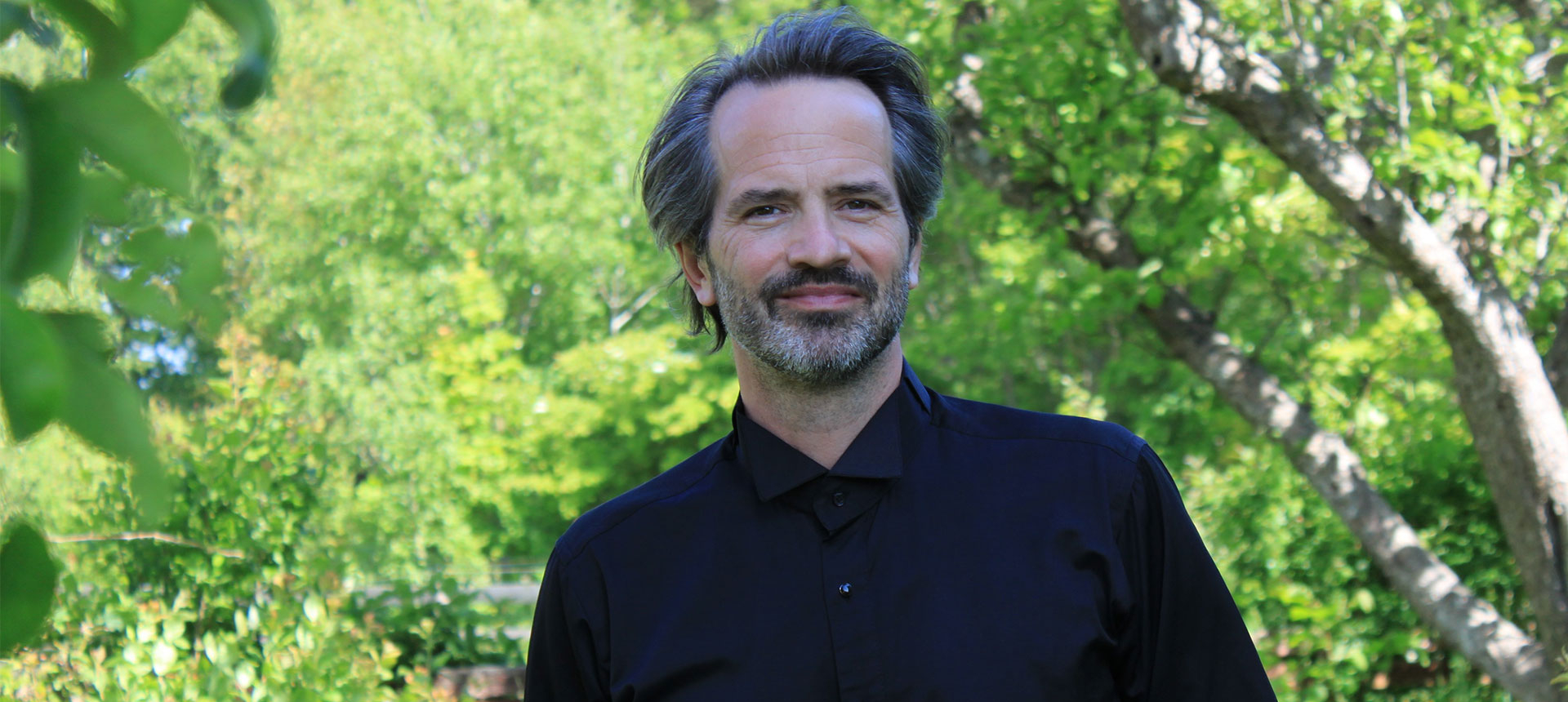
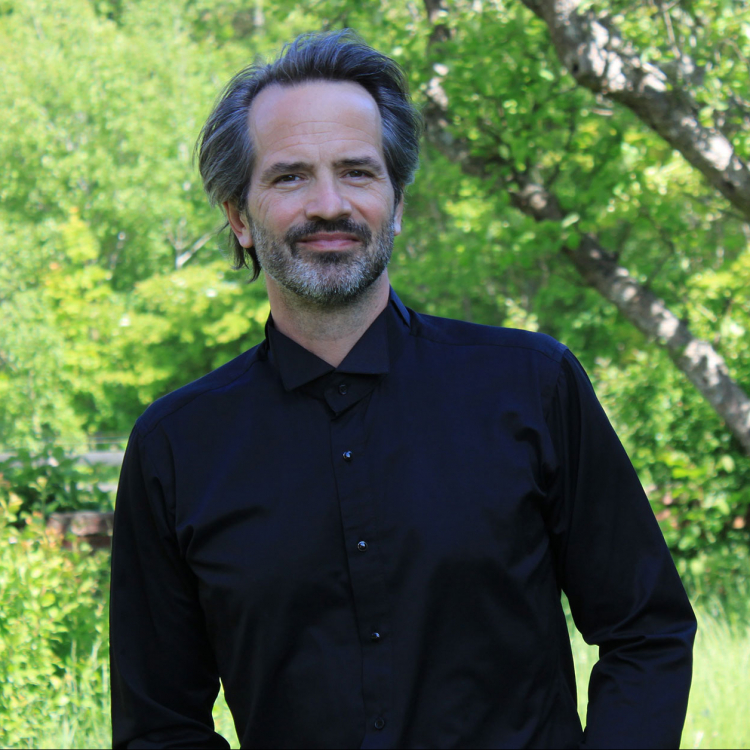
Get to know Peter Jablonski.
Programme
Karol Szymanowski (1882-1937)
Sérénade de Don Juan from Masques op 34
Karol Szymanowski grew up in a wealthy family in a small village outside Ukrainian Kiev, which was then part of Poland. The father was a landowner and the mother the Swedish baroness Anna Taube. At home, the Szymanowski children were allowed to pursue artistic activities. All the siblings became important: Feliks became a pianist and composer, Stanislawa became a singer, Zofia a poet, Hula a painter and Karol one of Poland's leading composers. Musical life in Poland at this time was rather backward, and there was not a single professional symphony orchestra, but there was no lack of music in the home. Many international champions who came to Ukraine visited the Szymanowski family. Already at the age of 13, Karol had fallen in love with Wagner's music in Vienna, and it became a lasting inspiration, although he was later also influenced by Impressionism and Stravinsky. His own early works were performed in London and in major German cities. In 1935, doctors advised him to seek treatment for his tuberculosis in Paris. From there he was sent to Grusse, and in 1937 he died in the sanatorium in Lausanne.
During the First World War, Szymanowski stayed in his home village in Ukraine and remained there until the Russian Revolution in 1917. During that time, he composed his piano piece Maski ("Masks"), which is about three important figures from literature who hide their real identities: Scheherazade, Tantris , which is a caricature and anagram of Tristan, as well as the Spanish seducer Don Juan. Don Juan's serenade is just over six minutes long and contains some Spanish tones. It was dedicated to the well-known Polish pianist Artur Rubinstein, who sailed up as a new star in the piano sky.
Stig Jacobsson
Frédéric Chopin (1810-1849)
Mazurkas
Few piano pieces are as well known to both professionals and beginners as Chopin's mazurkas. They exist as small short etudes as well as virtuosic concert pieces, in total the Polish piano master wrote 59 of these. The time signature is 3/4 or 3/8 with the accent on the second beat. The music is taken from the folk dance that originated in Masuria in eastern Poland in the 16th century and which spread to the Polish court. It was after the Polish uprising of 1830 that Chopin began to compose traditional mazurkas for the piano, as part of the emerging nationalism. To the country tunes he added counterpoint and fugues and changed harmonies. They are no longer as danceable but at least as catchy. The earliest in Op. 24 are full of charm and emotional melodies. He wrote the last mazurkas in 1846, three years before his death. 12 mazurkas were also arranged for song by Chopin's friend Pauline Viardot.
Peter Jablonski has dedicated a new album project in two volumes to recording Chopin's and other mazurkas, with the second album coming later this fall (Ondine). These will be some of the favorites we will hear this evening.
Jenny Svensson
Grazyna Bacewicz (1909-1969)
Although Grazyna Bacewicz is known for her experimental approach to music, she also had a strong interest in form, stating that "music requires careful construction, so that it can stand on its own legs". In her work from the early 1950s there is a strict neoclassical tendency, something that is particularly noticeable in her first piano quintet from 1952. Piano Sonata No. 2, composed the following year, was one of Bacewicz's personal favorite pieces. If the piano quintet is characterized by formal density, this is if possible even more evident in the sonata, whose three movements contain both dramatic turning points, complex rhythms, a fine-tuned chorale and a variation on the Polish folk dance oberek. At the premiere in Warsaw in December 1953, Bacewicz herself played the solo part. Peter Jablonski, recorded the piano sonata on disc in 2022.
Ten years later, Bacewicz composed her quartet for the original setting of four cellos, and she herself wrote about the power of the cello sound: "...an ensemble with four cellos is an unimaginable treasure chest for a contemporary composer. In the piece, I have refrained from the most common cello expressions, for example broad cantilena. I will probably return to the setting - but then with a completely different approach."
Hedvig Ljungar
Intermission25 min
Bacewicz Quartetto per 4 violoncelli14 min
Bacewicz Piano Quintet No.125 min
Sunday, 24 September 2023: The event ends at approx. 20.00
Participants
Musiker ur Göteborgs Symfoniker
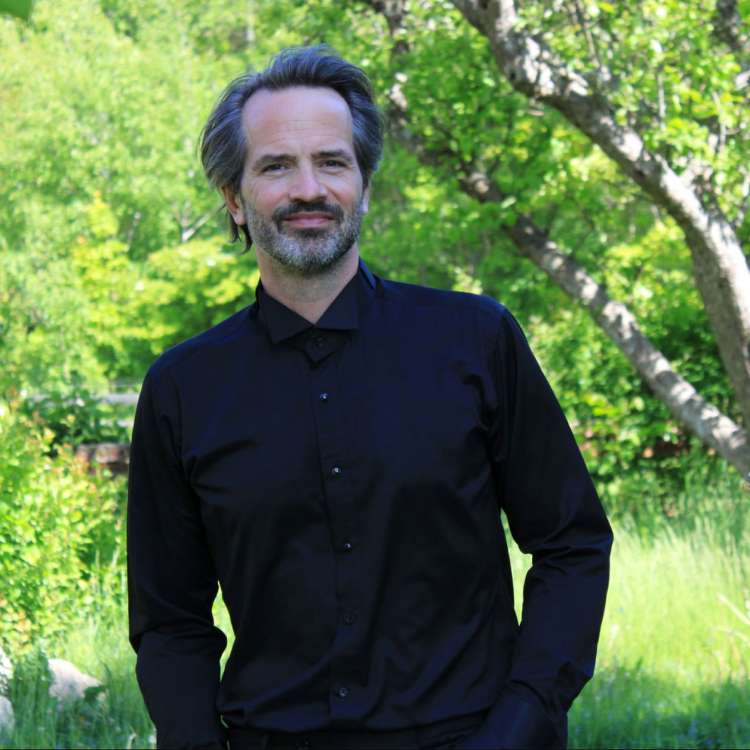
The last time we heard Peter Jablonski play with the Gothenburg Symphony was in 2009 and we are very happy to have him back. Peter Jablonski is one of the leading pianists of his generation and a well-known profile in Swedish musical life. For 30 years, he has performed with over 150 orchestras and given over 2 000 concerts. Signed to Decca at the age of 17, he began performing and recording with many of the world's leading orchestras such as the BBC Symphony Orchestra, Royal Philharmonic Orchestra, Swedish Royal Philharmonic Orchestra, Leipzig Gewandhausorchester, La Scala Philharmonic, Orchester Nationale de France and Tonhalle Zurich.
He has performed in venues such as the Royal Festival Hall and Barbican in London, Suntory Hall Tokyo, Philharmonie Berlin, Hollywood Bowl Los Angeles, Salle Pleyel Paris, Musikverein Vienna and Concertgebouw in Amsterdam among many others. He has performed and recorded all the piano concertos by Beethoven, Tchaikovsky, Rachmaninov and Bartók, and all the piano sonatas by Prokofiev. During his three-decade career, he has developed a diverse repertoire that includes works by Barber, Gershwin, Szymanowski and Stenhammar, with later additions such as Valborg Aulin, Elfrida Andrée, Alexey Stanchinsky and Grazyna Bacewicz. Peter Jablonski has worked with composers such as Witold Lutoslawski and Arvo Pärt, and has had a number of works written for him, including Wojciech Kilar's Piano Concerto for which he won the Orpheus Prize at the Warsaw Autumn Festival.
In 2022 he joined a project where he will perform and record the music of composer Karol Szymanowski as well as participate in a film about Szymanowski's life and work.
Sara Trobäck violin
Daina Mateikaite violin
Lars Mårtensson viola
Johan Stern cello
Cellist Claes Gunnarsson has toured all over the world as a soloist, chamber musician, orchestral musician and teacher. He debuted at a young age as a soloist in Dvorak's Cello Concerto together with the Gothenburg Symphony and was subsequently invited as a solo cellist. A position he has held since 1998.
As an active chamber musician, Claes Gunnarsson has collaborated with the violinists Leonidas Kavakos and Nikolaj Znaider, the pianists Christian Zacharias, Peter Jablonski and Hélèn Grimaud, but above all has given concerts for 20 years together with his colleagues Sara Trobäck and Per Lundberg in the piano trio Trio Poseidon.
Claes Gunnarsson is also a teacher at the College of Stage and Music at the University of Gothenburg. He plays a cello built in 1707 by David Tecchler, a generous loan from the Järnåker Foundation.
 031-726 53 00
 biljett@gso.se