Göteborgs Konserthus
Spring Concert with Imaginative Flute
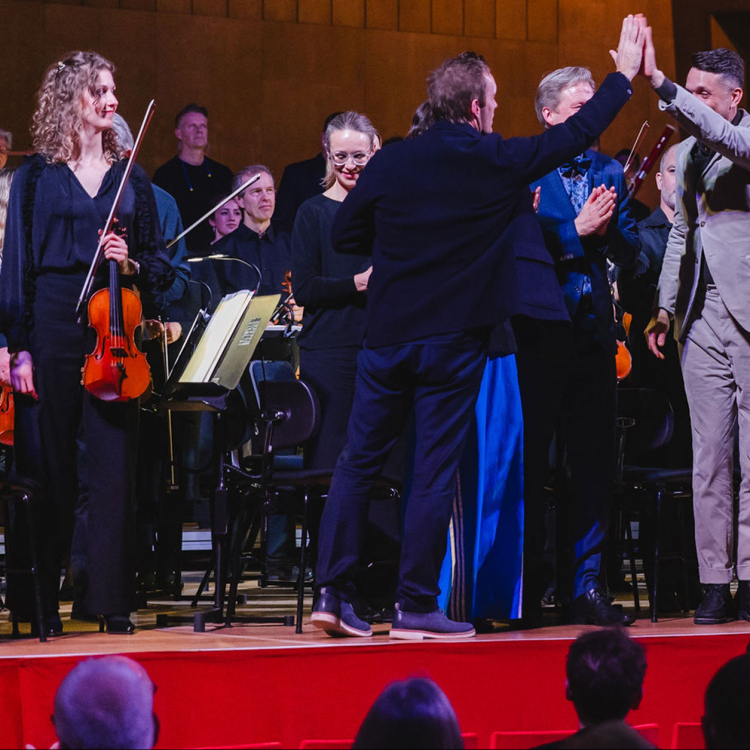
Event has already taken place. An exuberant fresh spring program with Gothenburg Symphony Orchestra, Pekka Kuusisto conductor and Laura Michelin flute.
Concert length: 1 h no intermission
Stage: Stora salen
380-540 SEKStudent 190-270 SEK
Young up to 29 190-270 SEK
A concert with flowing tones from young rising star Laura Michelin, flutist and winner of the Soloist prize. She performs Jacques Ibert’s cheerful flute concerto. Pekka Kuusisto also conducts the Gothenburg Symphony in Tchaikovsky’s dramatic Romeo and Juliet.
It is difficult to sit still when the flute competes with eager strings in frantic windings in Ibert’s flute concerto. This is music from the 1930s in the spirit of Ravel. The demanding final is a challenge that is guaranteed to prove why the outstanding 27-year-old Laura Michelin from Norrköping took home the Soloist Prize 2020. Since then, she has played with both Musica Vitae and the Norrland Opera Symphony Orchestra and is now section leader in the Swedish Radio Symphony Orchestra.
Conductor and violinist Pekka Kuusisto performed an acclaimed concert with violinist Ava Bahari in January 2023. Now he’s back in Gothenburg with an exuberant fresh spring program framed by Shakespeare! First, music by the popular Anna Clyne, who wrote the chamber piece Sound and Fury with a title taken from the play Macbeth. To conclude, Tchaikovsky’s beloved version of the tale of Romeo and Juliet. Music full of drama and passion that echoes far into the spring evening.
Listen
Get to know the classical pieces.
Get to know the composer Anna Clyne.
Programme
Anna Clyne (b. 1980)
Sound and Fury
Popular British composer Anna Clyne takes aim at both Haydn's Symphony No. 60, "Il Distratto," and William Shakespeare's play Macbeth in her 2019 piece Sound and Fury. Musically, her work follows Haydn's symphony, while the title is borrowed from the gasp-hugging moment in Shakespeare's play when Macbeth learns that his wife has died. In addition to the metaphorical richness of Shakespeare, Clyne was inspired by the rhythmicity of his language. She herself writes that her intention with Sound and Fury was to take the listener on a both invigorating and thoughtful journey.
In working on the piece, Clyne made a survey of Haydn's piece. From each movement, she then selected a couple of musical elements that she transformed into the six sections that make up her piece. In the fifth section, she has looped a chord sequence from the adagio movement in Il Distratto, and against this appears Macbeth's last monologue, which ends with the fateful lines "It is a tale / Told by an idiot, full of sound and fury, / Signifying nothing. "
Hedvig Ljungar
Quoted text:
Tomorrow, and tomorrow, and tomorrow,
Creeps in this petty pace from day to day,
To the last syllable of recorded time;
And all our yesterdays have lighted fools
The way to dusty death. Out, out, brief candle!
Life's but a walking shadow, a poor player,
That struts and frets his hour upon the stage,
And then is heard no more. It is a tale
Told by an idiot, full of sound and fury,
Signifying nothing.
Jacques Ibert (1890-1962)
Flute Concerto
Allegro
Andante
Allegro scherzando
City dweller and world traveler Jacques Ibert did not belong to any phalanx. His music is as he lived: elegant, intelligent, open, free, volatile. Apart from a stationary post as director of the Villa Medici in Rome as early as 1937 and a short time as director of the Paris Opera in the 60s, Ibert devoted himself to his creative work in most genres. His interest in wind instruments is documented in his highly regarded saxophone concerto, chamber music for wind instruments and the flute concerto from 1934 dedicated to Marcel Moyse, a prominent flutist of his time.
The allegro movement rushes in sixteenths over chamber musical tunings. From its high notes, the flute creeps in the andante into the cantabile legato playing of its low notes. It freely steps across key boundaries, all the while seconded by soft orchestral structure.
Stefan Nävermyr
Peter Tchaikovsky (1840-1893)
Romeo and Juliet
Naturally, 29-year-old Russian composer Peter Tchaikovsky was flattered and inspired when his composer friend and fellow teacher Balakirev suggested Romeo and Juliet as a possible subject for composition. The first version from 1869 was premiered in 1870 in Moscow and was conducted by the well-known Nikolaj Rubinstein, but it was still coldly received, as were a couple of other attempts. The final version came ten years later and all the work and pain paid off. Tchaikovsky's Romeo and Juliet is and remains a masterpiece. He was also grateful for Balakirev's involvement in, above all, the compositional process of the early years and dedicated to him his popular work, which he was often asked to include in his program when he toured as a conductor later in life.
Tchaikovsky called Romeo and Juliet a Fantasia Overture because it was freer in its blend of the Western European classical sonata and overture forms, and also had the hallmarks of the symphonic tone poem. The music rather depicts the emotional moods of the drama than purely program musical action. And of course Tchaikovsky's own interpretations of the music of the Russian folk soul are included in the version that still applies today. He made attempts to write an opera with the same title but never got very far with it.
The slow-moving, choral-like introduction of the fantasy overture in woodwinds is taken over by strings and you already get the feeling that something is waiting, that the bright and positive must change. Fierce rhythms and a fanfare-like theme accelerate into a life-and-death battle, as English horns and coordinated violas lead into one of Tchaikovsky's most lyrical and masterful love motifs. But the struggle continues between the different moods of the drama. To the painfully sad and inevitable ending.
Gunilla Petersén (excerpt)
Thursday, 11 April 2024: The event ends at approx. 20.30
Participants
The Gothenburg Symphony was formed in 1905 and today consists of 109 musicians. The orchestra's base is Göteborgs Konserthus, the funk gem at Götaplatsen that has gathered music lovers since 1935. Since the 2017-2018 season, Santtu-Matias Rouvali has been Chief conductor of the Gothenburg Symphony. Since the 2019-2020 season, Barbara Hannigan is Principal guest conductor. We are also a proud partner of Barbara Hannigan's Equilibrium mentoring program focusing on young singers at the start of their careers.
Wilhelm Stenhammar was the orchestra's chief conductor from 1907 to 1922. He gave the orchestra a strong Nordic profile and invited colleagues Carl Nielsen and Jean Sibelius to the orchestra. Under the direction of conductor Neeme Järvi from 1982-2004, the orchestra made a series of international tours as well as a hundred disc recordings and established themselves among Europe's leading orchestras. In 1996, the Swedish Riksdag appointed the Gothenburg Symphony as Sweden's National Orchestra.
In recent decades, the orchestra has had prominent chief conductors such as Mario Venzago and Gustavo Dudamel, following Kent Nagano as Principal Guest conductor. Anna-Karin Larsson is CEO and artistic director, Gustavo Dudamel honorary conductor and Neeme Järvi chief conductor emeritus. The orchestra's owner is the Västra Götaland Region.
The Gothenburg Symphony works regularly with conductors such as Herbert Blomstedt, Joana Carneiro, Jukka-Pekka Saraste, Christian Zacharias and Anja Bihlmaier.
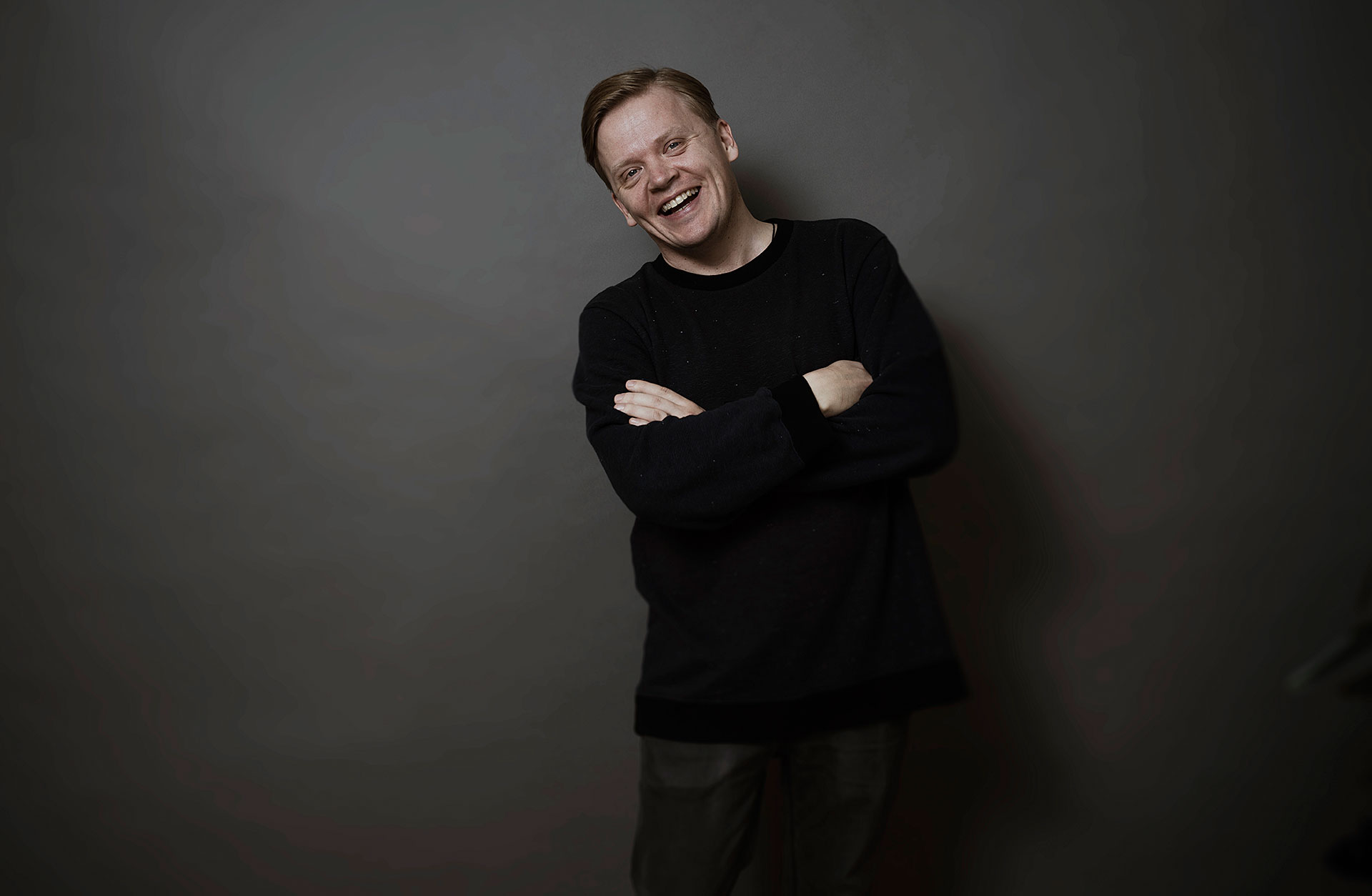
Finnish violinist Pekka Kuusisto has been described as "one of a kind" and is known for his curiosity and exploration of his repertoire. He has a special feeling for conducting ensembles from his violin.
Pekka Kuusisto is Artistic director of the Norwegian Chamber Orchestra. From and during the 2023-2024 season, he is principal guest conductor and artistic co-leader of the Helsinki Philharmonic Orchestra. He is Artistic Partner of the Mahler Chamber Orchestra and the San Francisco Symphony as well as Artistic Best Friend of Deutsche Kammerphilharmonie in Bremen. He is an advocate of contemporary music and performed the 2021 world premiere of Bryce Dessners Violin concert with HR Sinfonieorchester. He has also premiered works of Sauli Zinovjev, Daníel Bjarnason, Anders Hillborg, Philip Venables and Andrea Tarrodi.
In the 2022-2023 season, Kuusisto debuted as a soloist with the Berliner Philharmoniker and performed with the Tokyo Metropolitan Symphony Orchestra. He returned to orchestras such as The Cleveland, Cincinnati Symphony, San Francisco Symphony and Philharmonia and also visited the Gothenburg Symphony as conductor.
His recent releases include Ades’ Violin Concerto Concentric Paths recorded with Aurora and Nicolas Collon for Deutsche Grammophon, Hillborg’s Bach Materia and Bach’s Brandenburg Concertos Nos.3 and 4 with the Swedish Chamber Orchestra and Thomas Dausgaard for BIS and Daniel Bjarnason’s Violin Concerto with Iceland Symphony Orchestra with the composer conducting for Sono Luminus.
Pekka Kuusisto plays the Antonio Stradivari Golden Period c.1709 ‘Scotta’ violin, generously loaned by a patron through Tarisio.
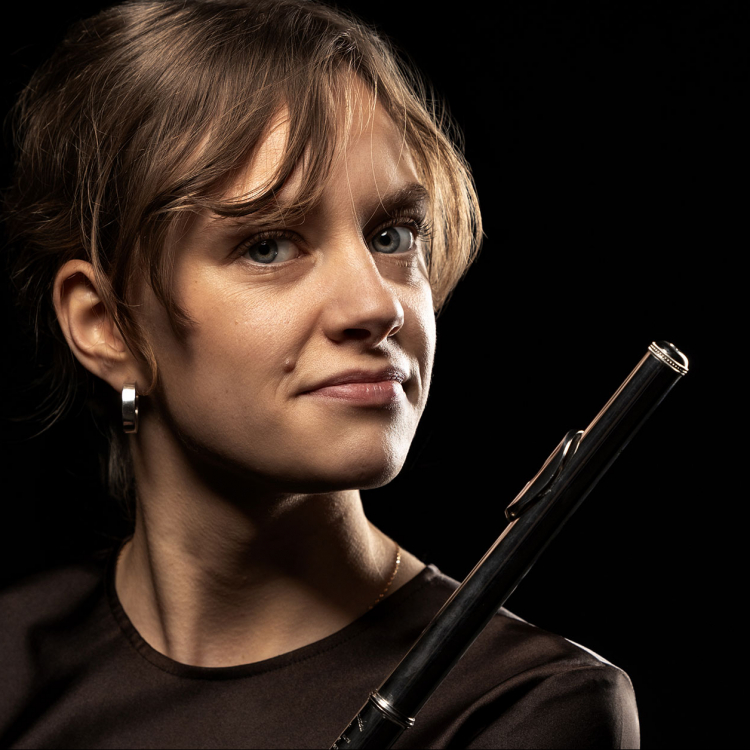
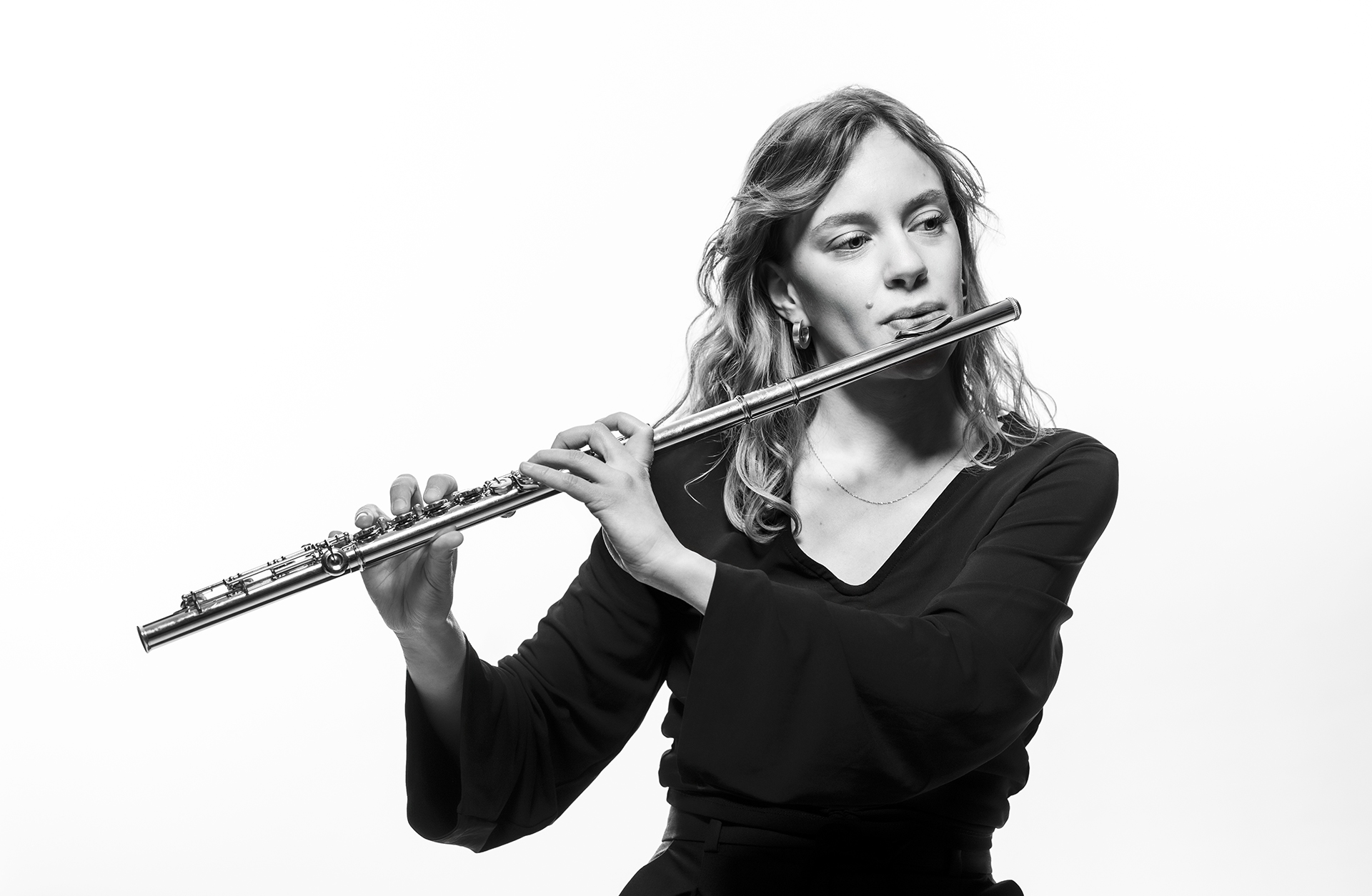
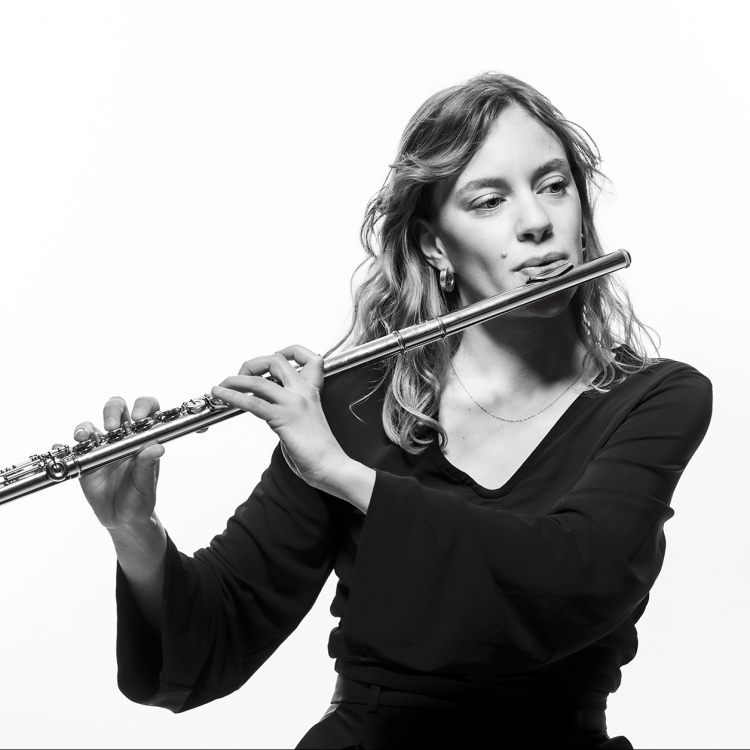
Flutist Laura Michelin (born 1996) has distinguished herself nationally and internationally since a young age and is in demand both as a soloist and as a chamber and orchestral musician. She was born in Norrköping and educated in Stockholm and Munich with valuable mentors such as Tobias Carron and Andrea Lieberknecht.
Laura Michelin debuted as a soloist with the Swedish Radio Symphony Orchestra in 2020 when she won the prestigious Soloist prize - Sweden's biggest prize for young instrumentalists and singers. This award was a kick-start in his career, which at this point is bordered by soloist assignments with the majority of Sweden's orchestras and ensembles. She has appeared on chamber music stages all over the country, playing a wide repertoire – including newly written music dedicated to Laura Michelin herself – and is also seen as a solo flutist in Scandinavia's most prominent symphony orchestras. Since 2023, she has been section leader in Sweden's Radio Symphony Orchestra. The coming seasons include soloist assignments with flute concertos by Britta Byström and Jacques Ibert as well as a premiere of Benjamin Staern's new concerto for flute and chamber orchestra. A disc of Swedish music for flute and piano will also be published.
Of the scholarships awarded to Laura Michelin can be mentioned those from GT Bäckman, the Royal Academy of Music and the Swedish Masonic Order.


 031-726 53 00
 biljett@gso.se