Event has already taken place. As the summer draws to a close, we pre-start the season with the Gothenburg Symphony Orchestra. Welcome to a nice prelude filled with classical favourites together with conductor Dmitry Matvienko and pianist Martin Sturfält.
Concert length: 2 h incl. intermission
Stage: Stora salen
390-550 SEKStudent 195-275 SEK
Young up to 29 195-275 SEK
Late summer is at its most beautiful and the Gothenburg Symphony invites you to a beautiful prelude with irresistible music in the Great Hall.
We are delighted to welcome Swedish pianist Martin Sturfält to tackle Tchaikovsky’s Piano Concerto No. 1, one of the romantic master’s greatest works. Here are unmistakable melodies and a blazing allegro towards the end.
After intermission, the waves of the sea surge through the hall as the orchestra performs the symphonic poem Die Seejungfrau (The Mermaid) by Austrian composer Alexander Zemlinsky, a rare gem. Zemlinsky based his composition on H C Andersen’s fairy tale about the little mermaid who sacrifices herself for love.
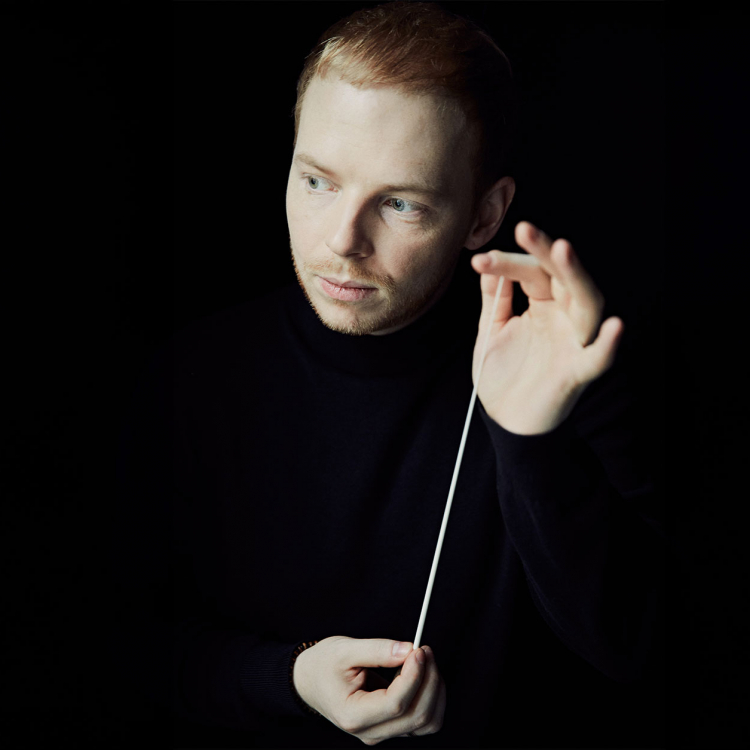
As a conductor we see Dmitry Matvienko, winner of the prestigious Malko Competition 2021. Initially trained as a singer and choir conductor, now a celebrated young talent resident in Denmark with a rocket career. He is newly appointed chief conductor of the Aarhus Symphony Orchestra.
An August evening filled with desire and anticipation.
Listen
Get to know the classical pieces.
Programme
Peter Tchaikovsky (1840-1893)
Piano Concerto No. 1
Allegro non troppo e molto maestoso.
Andantino semplice
Allegro con fuoco
Notice how this concert begins: it's the horns that lead, then the piano accompanies the grand melody in the strings. Switched roles in other words. When the piano then takes over the melody in the second round, it is embellished to hold it together helpfully, but then the pianist slips away into a cadence and leaves the melody. Rightly so, because the theme is better suited to a legato instrument like the violin, or why not a trumpet (how would it not shine over the strings)? A rhythmic scherzo section with odd accents then alternates with a slowly yearning theme in this expansive first movement. The Andantino – with a whimsical opening that insidiously lures the listener into a two-beat rhythm when it is actually a quiet three-beat lullaby – contains a fast, unruly prestissimo that pokes its nose at its quiet neighbour.
The closing allegro, "with fire", blazes hot in a Ukrainian folk dance with virtuosic runs. It may be interesting to note that the concert is neither opened nor closed by the piano. The entire work is characterized by a colorful orchestration and constantly changing and inventive rhythms (including a regular shuffle in the first movement). This cornerstone of the repertoire was once about to meet an untimely death. "Badly composed and unplayable," exclaimed the angry Nikolai Rubinstein (celebrated pianist and composer) when Tchaikovsky played the concerto for him in 1875 - he was advised to cut out large parts and rework the rest. Tchaikovsky respectfully ignored it, and we should be very grateful for that!
Stefan Nävermyr
Intermission25 min
Alexander von Zemlinsky (1871–1942)
Die Seejungfrau
1.Sehr mäßig bewegt
2.Sehr bewegt, rauschend
3.Sehr gedehnt, mit schmerzvollem Ausdruck
In this story, the symphony orchestra is as key to setting the mood as in a movie about outer space. The mermaid longs to reach the surface; the sea witch lurks in the depths, and the mermaid’s love for the prince is so strong that she sacrifices first her entire watery world, then her fish tail, and ultimately her very life for love. Unrequited love may have been a motivating factor for both Hans Christian Andersen and for Zemlinsky in the creation of this story. The Danish storyteller was in love with Swedish opera singer Jenny Lind, a love she never returned. And if she had, he most likely would have been terrified. As far as we know, Andersen never had a love affair with a woman.
Far more than depicting the story’s narrative, the music portrays the mermaid’s longing, vision of death, love, loneliness and suffering. Life went on for Zemlinsky after his separation from Alma Schindler. He had two marriages and emigrated to the US to escape the Nazis. Sadly, he was never successful there, as he had a stroke before managing to become established in his new home country. He died three years later. The music was first performed in its entirety in 1984.
KATARINA A KARLSSON
Thursday, 22 August 2024: The event ends at approx. 21.30
Participants
The Gothenburg Symphony was formed in 1905 and today consists of 109 musicians. The orchestra's base is Göteborgs Konserthus, the funk gem at Götaplatsen that has gathered music lovers since 1935. Since the 2017-2018 season, Santtu-Matias Rouvali has been Chief conductor of the Gothenburg Symphony. Since the 2019-2020 season, Barbara Hannigan is Principal guest conductor. We are also a proud partner of Barbara Hannigan's Equilibrium mentoring program focusing on young singers at the start of their careers.
Wilhelm Stenhammar was the orchestra's chief conductor from 1907 to 1922. He gave the orchestra a strong Nordic profile and invited colleagues Carl Nielsen and Jean Sibelius to the orchestra. Under the direction of conductor Neeme Järvi from 1982-2004, the orchestra made a series of international tours as well as a hundred disc recordings and established themselves among Europe's leading orchestras. In 1996, the Swedish Riksdag appointed the Gothenburg Symphony as Sweden's National Orchestra.
In recent decades, the orchestra has had prominent chief conductors such as Mario Venzago and Gustavo Dudamel, following Kent Nagano as Principal Guest conductor. Anna-Karin Larsson is CEO and artistic director, Gustavo Dudamel honorary conductor and Neeme Järvi chief conductor emeritus. The orchestra's owner is the Västra Götaland Region.
The Gothenburg Symphony works regularly with conductors such as Herbert Blomstedt, Joana Carneiro, Jukka-Pekka Saraste, Christian Zacharias and Anja Bihlmaier.
Dmitry Matvienko won the 2021 edition of the prestigious Malko competition for young conductors. In August 2024 he starts his tenure as Chief Conductor of the Aarhus Symphony Orchestra
He is a trained chorister and chorus master and studied choral conducting at St. Petersburg Conservatory. He studied conducting at the Moscow Conservatory and has taken master classes and assisted for, among others, Teodor Currentzis and Vasily Petrenko. He has also been musical assistant to Vladimir Jurowski in a new production of The Nose and a new production of War and Peace at the Bavarian State Opera and made his Italian operatic debut at the Teatro dell' Opera in Rome with Janécek's From the House of the Dead.
In recent seasons, he has conducted prestigious orchestras in Italy as well as in Scandinavia and Australia. During the 2023-24 season, he has guested, among others, Danish Radio Symphony Orchestra, Orchester Philharmonique de Montecarlo, Arctic Philharmonic, Helsingborg Symphony Orchestra, Tonkünstler Wien and Aarhus Symphony Orchestra. He made his US debut with Dallas Symphony and his Japan debut with Tokyo Symphony.
In 2024-2025, he is expected to return to Adelaide Symphony, Arctic Philharmonic and Aarhus Symphony Orchestra and, in addition to the Gothenburg Symphony, he will also make his debut with the Orchestra del Maggio Musicale Fiorentino and Orchestra Toscanini. He also makes his Austrian and German opera debut at Deutsche Oper am Rhein and at Theater an der Wien.
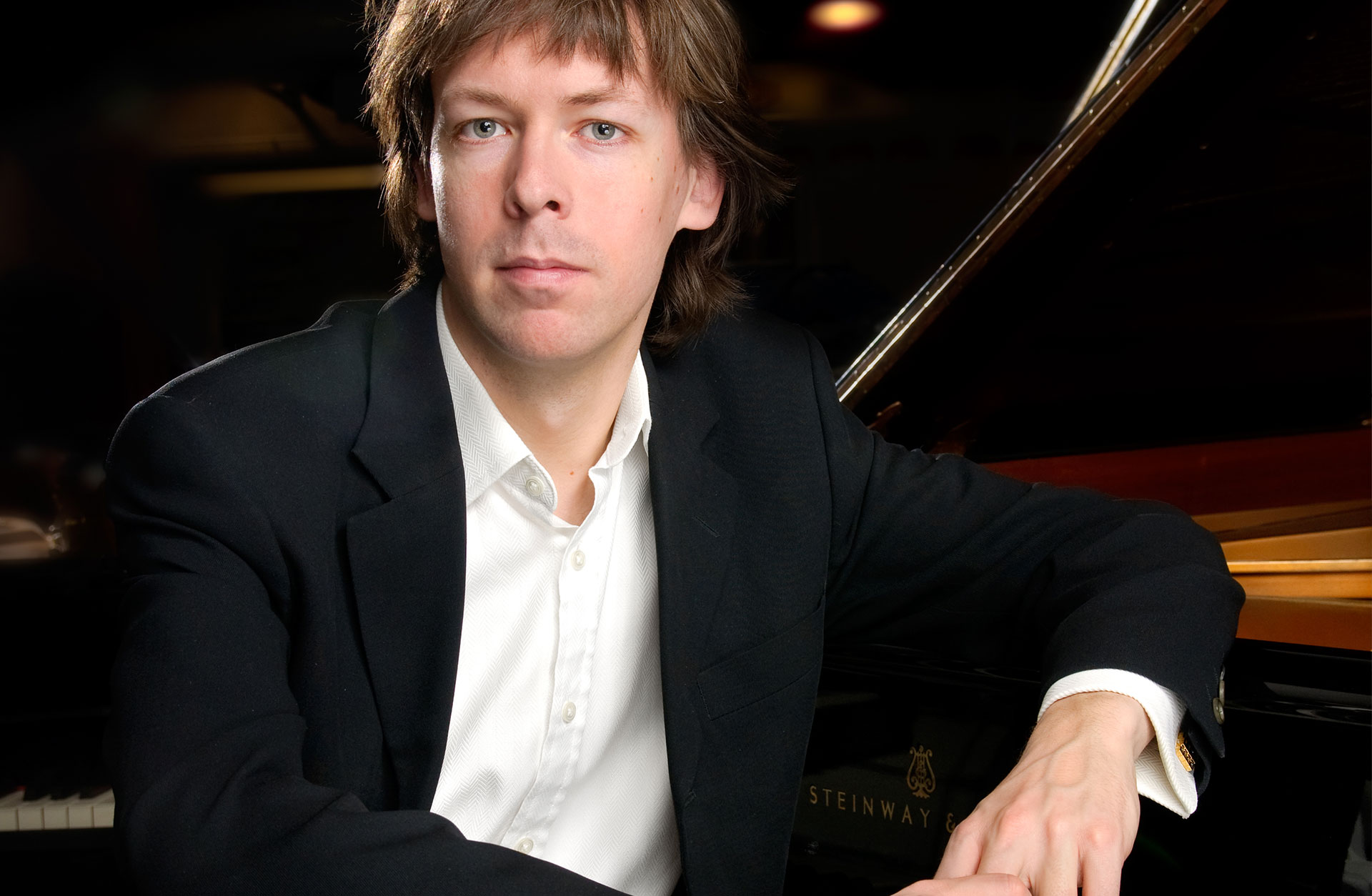
Swedish pianist Martin Sturfält enjoys an international career as a concerto soloist, chamber musician and recording artist. Born near Katrineholm in Sweden in 1979, Martin Sturfält began giving regular concerts at the age of 11, and has since performed extensively throughout Europe, as well as in Asia. Highlights have included solo and chamber music recitals at London’s Purcell Room, Barbican Hall, Royal Festival Hall and Wigmore Hall, the Concertgebouw in Amsterdam and the Palais des Beaux-Arts in Brussels.
Martin Sturfält has appeared with Bavarian Radio Symphony, the NHK Orchestra, the Hallé Orchestra and all Swedish orchestras, among others. He is collaborating with conductors such as Herbert Blomstedt, Sir Mark Elder, Thomas Dausgaard, Andrew Manze, Peter Oundijan and Vassily Sinaisky. Martin Sturfält won first prizes in Yamaha competitions both 1999 and 2002, as well as the 2002 Malmö Nordic ‘Blüthner’ Piano Competition, the 2004 John Ogdon Prize, and the 2005 Terence Judd Award.
After 9 years in London, he now lives in the Swedish countryside, where his non-musical spare time activities include bee-keeping and gardening. Among his disc recordings, Stenhammar's solo work stands out, which received great international attention. “Sturfält’s recording is the most significant tribute to Stenhammar’s absolute understanding of the piano’s voice”, wrote the Independent Sunday.
Martin Sturfält last visited the Gothenburg Symphony in 2016 when he played Wilhelm Stenhammar's Piano Concerto No. 2.


 031-726 53 00
 biljett@gso.se