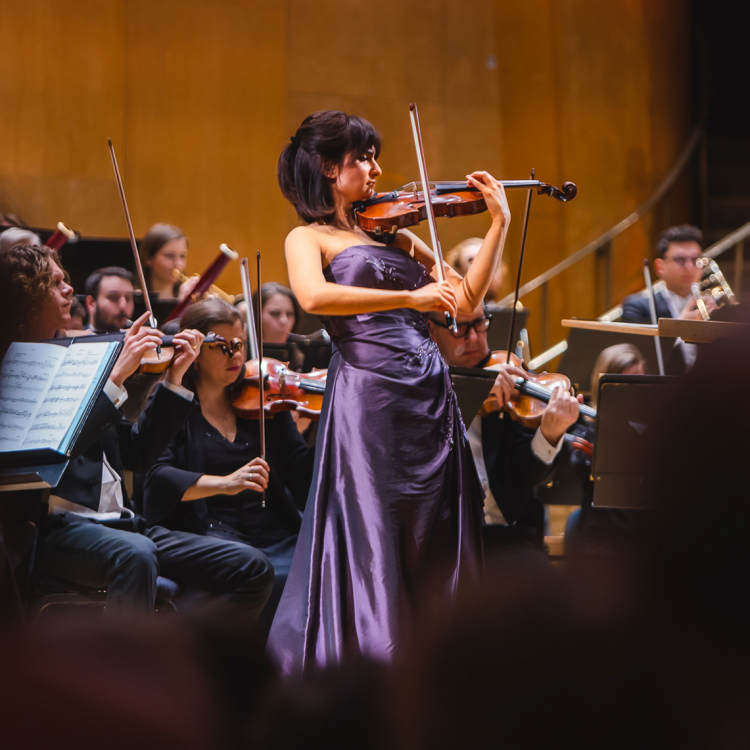
Event has already taken place. A lively musical journey with the Gothenburg Symphony Orchestra; Santtu-Matias Rouvali, conductor; and Ava Bahari, violin.
Concert length: 2 h incl. intermission
Stage: Stora salen
390-550 SEKStudent 195-275 SEK
Young up to 29 195-275 SEK
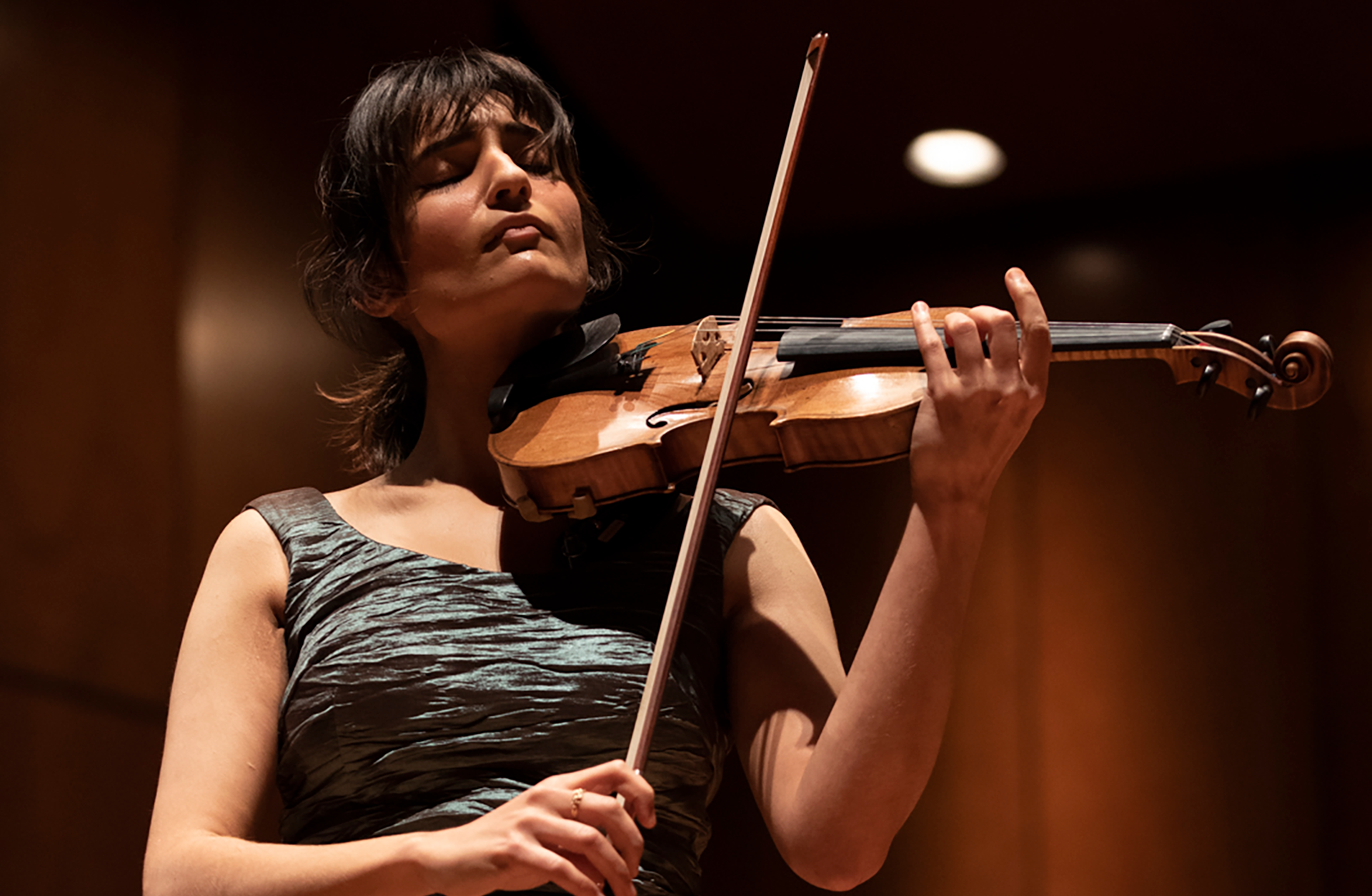
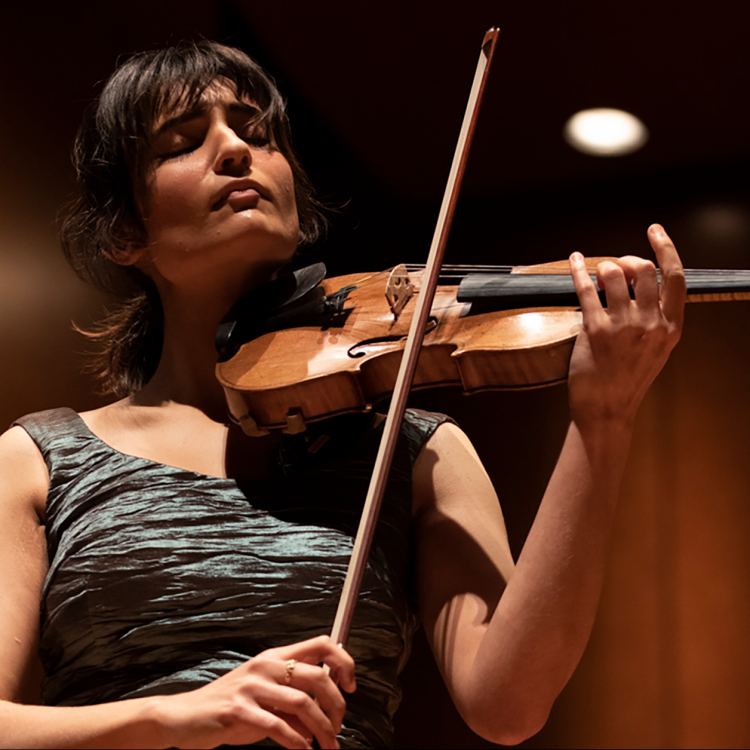
Join the Symphony Orchestra on a lively journey through the music of Nielsen and Sibelius. Ava Bahari, Gothenburg’s luminous international star, is the soloist in Sibelius’ Violin Concerto, one of the most beloved masterpieces.
The sweet beginning becomes moody quite quickly, with tightly winding melodies handled by Ava Bahari with lightning-fast technique and heartfelt playing. Jean Sibelius’ Violin Concerto is one of the most frequently performed works for violin. Sibelius completed the work in 1904 and was himself an extremely skilled violinist. He revoked and revised the symphony, which was performed again the following year.
In 1919, Carl Nielsen composed music for a production of Aladdin. The original music was revised into a shorter orchestral suite. The Oriental Festival March begins with timpani, trumpets and sweeping strings before the popular dream movement takes over.
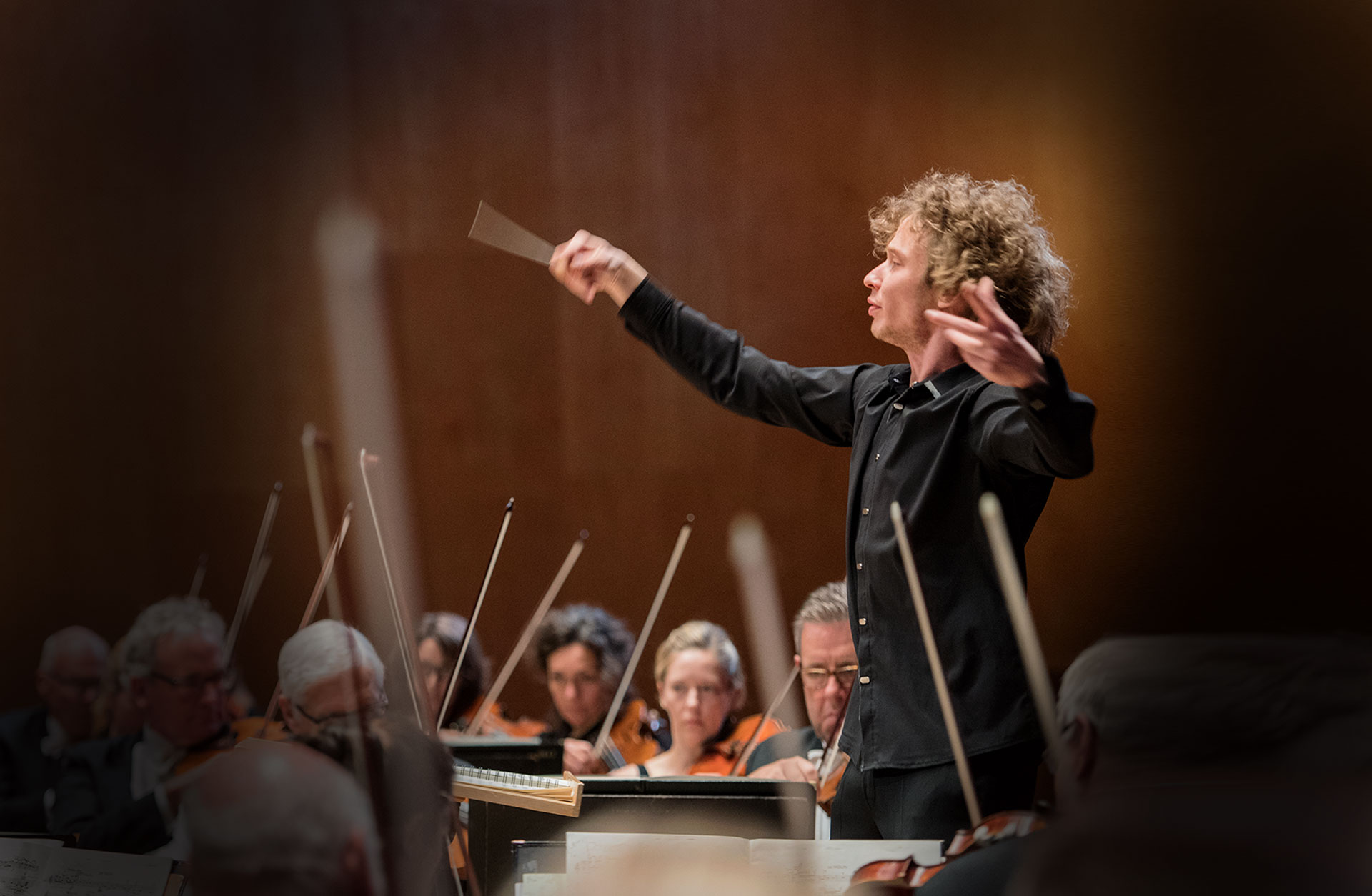
Nielsen’s second symphony is called “The Four Temperaments” and begins hotly, before transitioning into a calmer tempo. A hauntingly beautiful movement comes next, ultimately concluding in a more hopeful emotional place. Nielsen conducted the symphony many times in Gothenburg. This evening, Gothenburg Symphony Orchestra is led by chief conductor Santtu-Matias Rouvali.
Listen
Get to know the music
Introduction to the concert
Take a seat in the Great Hall onehourbefore the concertbegins and learnmoreabout the musicyouwillsoonexperience! Youwill get the storiesbehind the music, knowledgeof the composers and ownreflectionsabout the classicalpieces. The introductionlast for about 30 minutes, it is free and freeseating in the hall. Welcome!
Programme
Carl Nielsen (1865-1931)
Aladdin Suite
Just like his colleague Sibelius, who was exactly the same age, Nielsen liked and often wrote stage music for various dramas. There was music for 15 plays. Many consisted of only hinted vignettes for a few instruments, while some became very extensive orchestral works. Aladdin by Adam Oehlenschlæger was a youth drama written as early as 1805.
The motif was of course taken from the Eastern fairy tale collection One Thousand and One Nights. In the years after the outbreak of the First World War, the theater management had been looking for something really big and festive, because that was what was needed in these times of war. But nothing was decided until just before the holidays in 1918 when Nielsen received an order for incidental music for the drama, so it was rushed as usual, as the ballet episodes had to start rehearsing immediately at the start of the season.
"I have a knife on my throat from the theater, which is already starting to ask for clean script... but I don't have a note of clean script and probably a third of the composition is finished. It is also terrible that you take on work at a time when you should be resting ", he wrote in a letter.
Although the show was split into two theater nights, large parts of the music had to be cut. Nielsen felt badly treated and finally did not want to show his name on the poster. Fortunately, he saved the best sections for an often played concert suite Op 34, filled with oriental fervor and with a typical Nielsen touch. In the pompous oriental party march we find all the splendor that only the East can muster. But he said that "of course the Eastern world has also required time to get used to". But he managed to create his own oriental tone, not least evident in the heavily advancing Oriental party march, in an elusive Morning Mist dance, a graceful Hindu dance, a humorous Chinese dance and an African dance.
Jean Sibelius (1865–1957)
Violin Concerto Op 47
The violin concerto was written between the second and third symphonies in the summer of 1903 at the Järnefelt family's farm in Lojo. It was first performed in February 1904 with the composer as conductor and Victor Novácek as soloist. The performance was not a great success and Sibelius found that he was not entirely satisfied with certain sections. He therefore revised the concert in the summer of 1905, and the new premiere was conducted by Richard Strauss himself in Berlin.
Over the brooding D minor harmonies of the orchestra, the violin sings a melody that turns out to be the main theme, and it is also taken up by the deep woodwinds before leading to a broad violin cadence. The first movement then develops in a freely treated sonata form, which gives it an almost rhapsodic character. The violin part is brilliant, the music dramatic, the orchestra engaging. This grand movement is also longer than the next two combined.
The slow movement begins with a wistful woodwind phrase and it also echoes with the other wind players. Even the violin's song theme is sad and serious. The whole set is characterized by a sublime simplicity. The closing allegro has been called a "polonese for polar bears" and is a rondo with only two themes. The first is presented by the violin and the second by the orchestra. The music is very virtuose and even if the soloist dominates, the orchestral part never becomes uninteresting.
Intermission25 min
Carl Nielsen (1865-1931)
Symfoni No. 4 "The Four Temperaments"
When Carl Nielsen in the years 1918-1920 periodically substituted for Wilhelm Stenhammar as conductor of the Gothenburg Symphony, he took the opportunity to perform his second symphony from 1902, called "The Four Temperaments". His impression of the orchestra at this time is touching: "Now I have had a rehearsal with the orchestra and it is a great artistic satisfaction to play with these people, for they follow my slightest cue and show me so much respect that I am almost embarrassed."
So how did the second symphony come about? The composer himself told its story: "I got the idea for the symphony The four temperaments many years ago in a village pub in Zealand, Denmark. When I was drinking a glass of beer with my wife and some friends, I observed a most comical picture hanging on the wall in an old gilt frame.The picture was divided into four fields, in which "temperaments" were presented with titles: the choleric, the phlegmatic, the melancholic, and the sanguine. The choleric sat on a horse. He had a long sword in his hand, with which he slashed wildly into the empty air. The eyes were staring, the hair was fluttering and his face gave an expression of anger and satanic hatred that made me burst out laughing.”
In the second movement, Nielsen describes a young man he met: "I have never seen him dance. He was too inactive for that, but he could swing his body in a slow waltz rhythm." The third movement depicts melancholy and there the musical material seems to have taken its own direction. Carl Nielsen speaks of "a strong outburst... after which the oboe comes with a small melancholy and sighing motif, which gradually develops and reaches a climax of lamentation and pain. "
In the closing movement, a self-righteous type is portrayed: "In the Allegro sanguineo, I have tried to portray the basic character of a man, who storms thoughtlessly forward in the belief that the whole world belongs to him".
The symphony went down well with both audiences and critics on February 18, 1920.
Wednesday, 5 February 2025: The event ends at approx. 21.30
Thursday, 6 February 2025: The event ends at approx. 21.30
Friday, 7 February 2025: The event ends at approx. 20.00
Participants
The Gothenburg Symphony was formed in 1905 and today consists of 109 musicians. The orchestra's base is Göteborgs Konserthus, the funk gem at Götaplatsen that has gathered music lovers since 1935. Since the 2017-2018 season, Santtu-Matias Rouvali has been Chief conductor of the Gothenburg Symphony. Since the 2019-2020 season, Barbara Hannigan is Principal guest conductor. We are also a proud partner of Barbara Hannigan's Equilibrium mentoring program focusing on young singers at the start of their careers.
Wilhelm Stenhammar was the orchestra's chief conductor from 1907 to 1922. He gave the orchestra a strong Nordic profile and invited colleagues Carl Nielsen and Jean Sibelius to the orchestra. Under the direction of conductor Neeme Järvi from 1982-2004, the orchestra made a series of international tours as well as a hundred disc recordings and established themselves among Europe's leading orchestras. In 1996, the Swedish Riksdag appointed the Gothenburg Symphony as Sweden's National Orchestra.
In recent decades, the orchestra has had prominent chief conductors such as Mario Venzago and Gustavo Dudamel, following Kent Nagano as Principal Guest conductor. Anna-Karin Larsson is CEO and artistic director, Gustavo Dudamel honorary conductor and Neeme Järvi chief conductor emeritus. The orchestra's owner is the Västra Götaland Region.
The Gothenburg Symphony works regularly with conductors such as Herbert Blomstedt, Joana Carneiro, Jukka-Pekka Saraste, Christian Zacharias and Anja Bihlmaier.
The 2024-2025 season is Santtu-Matias Rouvali’s final as a Chief Conductor of Gothenburg Symphony following a successful eight-year tenure. He continues as a Principal Conductor of Philharmonia Orchestra and a Honorary Conductor of Tampere Philharmonic Orchestra close to his home in Finland.
In 2023, Rouvali toured with the Gothenburg Symphony and violinist Arabella Steinbacher in Salzburg and Vienna. Concerts in Gothenburg in the 2023-2024 season included music by Boulanger, Saariaho, Tchaikovsky and Beethoven. He also led the Gothenburg Symphony in the European premiere of Julia Wolfe's choral drama Fire in My Mouth, as well as sold-out concerts with Stravinsky's Rite of Spring and Rachmaninoff's 2nd Piano Concerto.
Deepening his strong relationship with New York Philharmonic, summer 2024 marked Rouvali’s first appearance at Bravo! Vail Festival with the orchestra and soloists Jean-Yves Thibaudet and Augustin Hadelich. The summer also saw Rouvali and Philharmonia Orchestra continue their residency in Mikkeli, Finland, and return to Edinburgh International Festival, performing Verdi’s Messa da Requiem.
Throughout this season and last, he continues his relationships with top-level orchestras and soloists across Europe, including Munich Philharmonic, Berliner Philharmoniker, Orchestre Philharmonique de Radio France, Deutsches Symphonie-Orchester Berlin, Orchestra dell'Accademia Nazionale di Santa Cecilia, Royal Concertgebouw Orchestra, and he returns to North America for concerts with New York Philharmonic. This season, he also appears with Chicago Symphony Orchestra and Tonhalle-Orchester Zürich.
Rouvali works with many international soloists including Bruce Liu, Lisa Batiashvili, Seong-Jin Cho, Nicola Benedetti, Jean-Yves Thibaudet, Nemanja Radulovic, Stephen Hough, Augustin Hadelich, Nikolai Lugansky, Christian Tetzlaff, Gil Shaham, Baiba Skride and Ava Bahari.
Rouvali’s end of tenure with Gothenburg Symphony is marked by a tour to Germany and Czech Republic, followed up by a celebration concert in Gothenburg. He completes his Sibelius Cycle recording with Alpha Classics, the previous releases of which have been highly acclaimed with awards including Gramophone Editor’s Choice award, the Choc de Classica, a prize from the German Record Critics, the prestigious French Diapason d’Or ‘Découverte’, and Radio Classique’s ‘TROPHÉE’.
Rouvali also has an extensive record production with Philharmonia Records. Another prominent CD – Beethoven’s Triple Concerto with Benjamin Grosvenor, Nicola Benedetti and Sheku Kanneh-Mason – was released on Decca in May 2024.
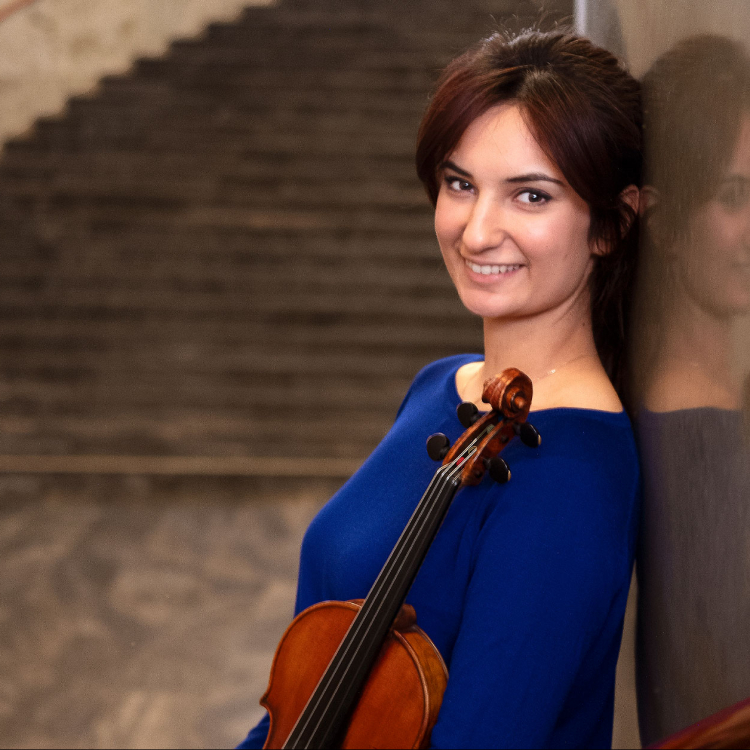
The violinist Ava Bahari is Artist in Residence at Gothenburg Symphony Orchestra for Season 2024-2025. She gave her first solo concert at age eight in the Gothenburg Concert Hall. She studied at the Oslo Music Academy's Young Artist Program under the tutelage of Prof. Terje Moe Hansen and 2011 to 2015, she continued her studies with Prof. Per Enoksson in Gothenburg Symphony.
Ava Bahari has studied Bachelor and Master at the Hochschule für Musik Hanns Eisler Berlin under the guidance of Prof. Kolja Blacher and received her Diploma in May 2024. In 2021, she also completed a degree at the Accademia Stauffer in Cremona, Italy. Ava Bahari has received numerous awards including 3rd Prize at the Premio Paganini Competition in Genova, 4th Prize at the Concours International Tibor Varga in Sion in 2021, and 1st Prize at the Aurora Music Competition in Stockholm in 2019.
Bahari has worked with conductors such as Santtu-Matias Rouvali, Pekka Kuusisto and Ryan Bancroft and performed with esteemed orchestras such as the Royal Stockholm Philharmonic Orchestra, Gothenburg Symphony Orchestra, Teatro Carlo Felice Genova, Baden-Baden Philharmonie, Malmö Symphony Orchestra, The Philharmonia Orchestra, Tokyo Symphony Orchestra, Helsinki Philharmonic and BBC National Orchestra of Wales.
Some of her more notable recital performances include a Paganini recital at the Seoul Arts Center, a recital on the "Stauffer" Guarneri del Gesù 1734 in museo del Violino Cremona and a recital in Konzerthaus Berlin.
Ava Bahari has also received music and culture scholarships from Sten A Olsson's Foundation for Research and Culture, Royal Society of Science and Knowledge in Gothenburg and the Willinska Foundation.
With the Gothenburg Symphony, she made her soloist debut in January 2023 in Schönberg's violin concerto. She plays a 1694 Stradivarius Ovcharov on generous loan from Anders Sveaas Almennyttige Fond.
 031-726 53 00
 biljett@gso.se