Gothenburg Symphony Orchestra plays in Rudolfinum Dvorak Hall at the Prague Spring Festival together with chief conductor Santtu-Matias Rouvali and pianist Jan Lisiecki.
Programme
Bedrich Smetana (1824-1884)
Haakon Jarl Op 16
The Czech national composer Bedrich Smetana, who celebrated his 200th birthday last year, had close ties to Gothenburg. Between 1856 and 1861 he worked in the city as a conductor, pianist and teacher. He developed the city's musical life, founded a music school and composed several works, including three symphonic poems – Wallenstein's Camp, Rickard III and Haakon Jarl, which was the last work Smetana wrote before returning to Prague.
After a trip to Weimar, where Smetana was fascinated by the way Franz Liszt transformed literary works into music, Smetana decided to broaden his library with works that would suit a Scandinavian audience. Haakon Jarl is based on a tragedy by the Danish playwright Adam Oehlenschläger. The story takes place in Viking-age Norway, where the ruler, also known as Håkon Sigurdsson, fights against the advance of Christianity.
Smetana's Haakon Jarl offers drama from the first note. Dark, doom-laden themes reflect Haakon's ruthless rule, while bright hymn-like melodies depict the budding faith in a new era. There is much emotion and theatricality as a Nordic legend comes to life in Smetana's romantic tone.
Jörgen Wade
Frédéric Chopin (1810–1849)
Piano Concerto No. 1
Allegro maestoso
Romanze - Largetto
Rondo – Vivace
Chopin's piano concerto in E minor was published in 1833, and "the second" in F minor in 1836 (although he had already composed it at age 19). Both reflect his fondness for Bellini's operas, especially Norma, whose ornaments he adapted and personified. The main theme is introduced by the orchestra at considerable length, adding to the tension. Once the piano enters, glowing lyrical ornaments follow. Chopin was sometimes criticized for focusing more on the strength of the piano than on the qualities of the orchestra, but this probably contributed to his success with audiences.
The second movement is slow and caressing. Chopin wrote under the composition: "I am using muted strings - I wonder how they will sound?" He described the largetto as having "a romantic, calm and rather melancholic character ... a kind of moonlight dream on a beautiful spring night." The main theme of the rondo in E major has been likened to a polka or krakowiac (also a dance). Chopin modulates to A major, and before the refreshing final clip, he moves into E flat, then B flat in the section's return.
The Piano Concerto in E minor was first performed in Warsaw in 1830 with Chopin as soloist, shortly before he left his homeland for Paris and never returned.
Intermission25 min
Bela Bartók (1881-1945)
Concerto for Orchestra
Introduzione
Gioco delle coppie
Elegia
Intermezzo interrotto
Finale
When this music was written in 1943, Bela Bartók had two years left to live. He had come to the United States fleeing a Europe at war and clawed his way through a few lean years in New York. The honorary doctorate at Harvard provided no income. In addition, he became increasingly ill, what previously appeared to be tuberculosis turned out to be leukemia. But he continued to compose as always. Work was his life - and pleasure too, if you will. Like a child, he rested by doing other things.
He was first and foremost a music ethnologist, that is, a recorder and collector of folk music. And it was among other things this immeasurable library, more than 13,000 melodies, he was so keen to save the Second World War. Countless trips in Hungary, Romania, Bulgaria, Slovakia and Turkey were made with a phonograph as a memory aid. In between, he composed, on top of that a whole lot of teaching as income and change, and of course an extensive activity as a concert pianist in many countries. In addition, he was interested in collecting plants, beetles, learning new languages. Palestrina's music was always on the piano and he never traveled without his thumbed score of Stravinsky's The Rite of Spring under his arm. Is there a diagnosis for this? we would ask today.
The music Bela Bartók wrote was highly influenced by all the music he saw and heard on his collecting trips, but in the later works you can also hear how fascinated he was by the Baroque masters. The concerto for orchestra was commissioned by the Sergei Koussevitsky Music Foundation. Bartók himself has described the music as a journey from austerity via an ominous song to a life-affirming ending. Like Mozart, he composed incredibly quickly, he couldn't get an idea out of his head until the next one appeared. With such a cacophony within, it is no wonder that throughout his life he sought out quiet places.
Bartok himself saw the collection of folk music as his greatest and most important deed for more than one reason: "My own idea is the brotherhood of peoples, brotherhood despite all wars and conflicts. I try - as best I can - to serve that idea in my music: therefore I reject no influences, whether Slovak, Romanian, Arabic, or from other sources." (Bartók, 1931)
KATARINA A KARLSSON
Friday, 23 May 2025: The event ends at approx. 22.15
Participants
The Gothenburg Symphony was formed in 1905 and today consists of 109 musicians. The orchestra's base is Göteborgs Konserthus, the funk gem at Götaplatsen that has gathered music lovers since 1935. Since the 2017-2018 season, Santtu-Matias Rouvali has been Chief conductor of the Gothenburg Symphony. Since the 2019-2020 season, Barbara Hannigan is Principal guest conductor. We are also a proud partner of Barbara Hannigan's Equilibrium mentoring program focusing on young singers at the start of their careers.
Wilhelm Stenhammar was the orchestra's chief conductor from 1907 to 1922. He gave the orchestra a strong Nordic profile and invited colleagues Carl Nielsen and Jean Sibelius to the orchestra. Under the direction of conductor Neeme Järvi from 1982-2004, the orchestra made a series of international tours as well as a hundred disc recordings and established themselves among Europe's leading orchestras. In 1996, the Swedish Riksdag appointed the Gothenburg Symphony as Sweden's National Orchestra.
In recent decades, the orchestra has had prominent chief conductors such as Mario Venzago and Gustavo Dudamel, following Kent Nagano as Principal Guest conductor. Anna-Karin Larsson is CEO and artistic director, Gustavo Dudamel honorary conductor and Neeme Järvi chief conductor emeritus. The orchestra's owner is the Västra Götaland Region.
The Gothenburg Symphony works regularly with conductors such as Herbert Blomstedt, Joana Carneiro, Jukka-Pekka Saraste, Christian Zacharias and Anja Bihlmaier.
The 2024-2025 season is Santtu-Matias Rouvali’s final as a Chief Conductor of Gothenburg Symphony following a successful eight-year tenure. He continues as a Principal Conductor of Philharmonia Orchestra and a Honorary Conductor of Tampere Philharmonic Orchestra close to his home in Finland.
In 2023, Rouvali toured with the Gothenburg Symphony and violinist Arabella Steinbacher in Salzburg and Vienna. Concerts in Gothenburg in the 2023-2024 season included music by Boulanger, Saariaho, Tchaikovsky and Beethoven. He also led the Gothenburg Symphony in the European premiere of Julia Wolfe's choral drama Fire in My Mouth, as well as sold-out concerts with Stravinsky's Rite of Spring and Rachmaninoff's 2nd Piano Concerto.
Deepening his strong relationship with New York Philharmonic, summer 2024 marked Rouvali’s first appearance at Bravo! Vail Festival with the orchestra and soloists Jean-Yves Thibaudet and Augustin Hadelich. The summer also saw Rouvali and Philharmonia Orchestra continue their residency in Mikkeli, Finland, and return to Edinburgh International Festival, performing Verdi’s Messa da Requiem.
Throughout this season and last, he continues his relationships with top-level orchestras and soloists across Europe, including Munich Philharmonic, Berliner Philharmoniker, Orchestre Philharmonique de Radio France, Deutsches Symphonie-Orchester Berlin, Orchestra dell'Accademia Nazionale di Santa Cecilia, Royal Concertgebouw Orchestra, and he returns to North America for concerts with New York Philharmonic. This season, he also appears with Chicago Symphony Orchestra and Tonhalle-Orchester Zürich.
Rouvali works with many international soloists including Bruce Liu, Lisa Batiashvili, Seong-Jin Cho, Nicola Benedetti, Jean-Yves Thibaudet, Nemanja Radulovic, Stephen Hough, Augustin Hadelich, Nikolai Lugansky, Christian Tetzlaff, Gil Shaham, Baiba Skride and Ava Bahari.
Rouvali’s end of tenure with Gothenburg Symphony is marked by a tour to Germany and Czech Republic, followed up by a celebration concert in Gothenburg. He completes his Sibelius Cycle recording with Alpha Classics, the previous releases of which have been highly acclaimed with awards including Gramophone Editor’s Choice award, the Choc de Classica, a prize from the German Record Critics, the prestigious French Diapason d’Or ‘Découverte’, and Radio Classique’s ‘TROPHÉE’.
Rouvali also has an extensive record production with Philharmonia Records. Another prominent CD – Beethoven’s Triple Concerto with Benjamin Grosvenor, Nicola Benedetti and Sheku Kanneh-Mason – was released on Decca in May 2024.
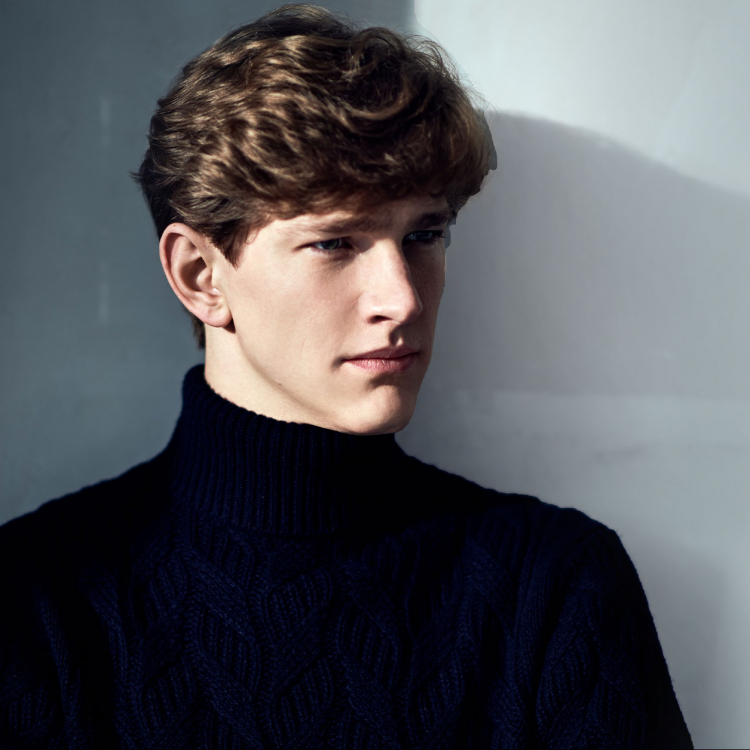
The Canadian pianist Jan Lisiecki has been on the world's biggest stages for almost two decades. This season he returns to the Boston Symphony, London Philharmonic, Munich Philharmonic, Pittsburgh Symphony and Seattle Symphony. He leads the Academy of St Martin in the Fields on tour and is Artist in Residence at the Toronto Symphony Orchestra. He performs his acclaimed solo program at La Scala in Milan, Théâtre des Champs-Élysées in Paris, San Francisco's Herbst Theatre, BOZAR Brussels and Klavier-Festival Ruhr. A duo program WITH Mozart, Beethoven and Schumann together with Julia Fischer takes him to arenas all over Europe and the USA.
Jan Lisiecki got an exclusive recording contract with Deutsche Grammophon at the age of 15. His nine albums have been awarded the JUNO Award, ECHO Klassik, Gramophone Critics' Choice, Diapason d'Or and Edison Klassiek. At the age of 18, he received both the Leonard Bernstein Award and Gramophone's Young Artist Award. He visited the Gothenburg Symphony Orchestra for the first time as a 16-year-old. This time he accompanies the orchestra on tour to Stockholm, Prague and Stuttgart.
 031-726 53 00
 biljett@gso.se