Event has already taken place. Music drawn from the movies with the Gothenburg Symphony Orchestra, Santtu-Matias Rouvali conductor and Markus Lang double bass.
Concert length: 2 h incl. intermission
Stage: Stora salen
390-550 SEKStudent 195-275 SEK
Young up to 29 195-275 SEK
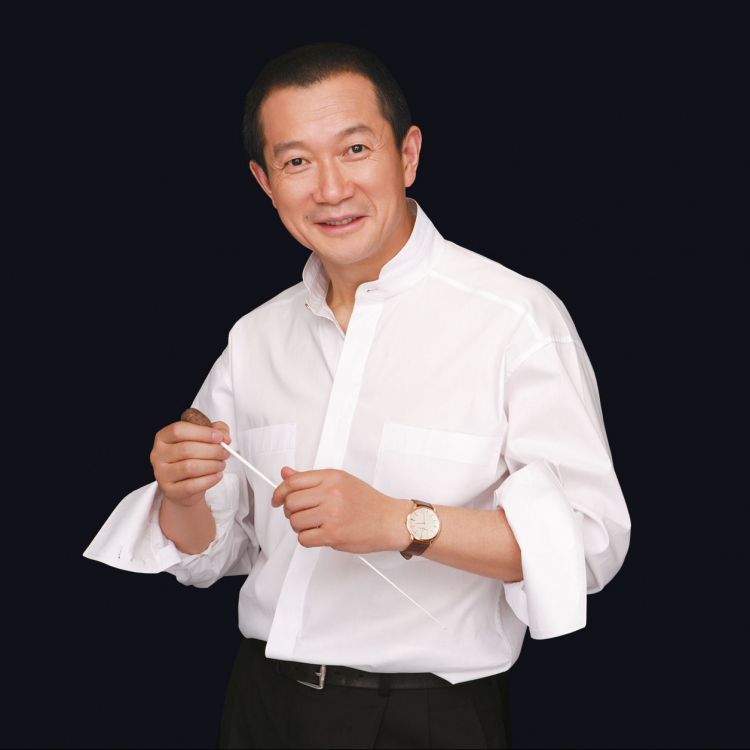
With music that is deeply linked to the world of cinema, Chinese Tan Dun is one of the world’s most played and popular composers. The music he composed for the film Hero (2002) reached millions of people all over the world. His music for the film Crouching Tiger, Hidden Dragon (2000) won an Academy Award for Best Original Score. His evocative double bass concerto is performed by the Gothenburg Symphony’s Markus Lang as soloist, giving voice to the soft and rhythmic expressions conveyed by the king of string instruments.
Austrian Hans Rott’s symphony is grand and marvellously beautiful. Listeners will easily be floored by the powerful introduction. As a composer, Rott never got to fulfil his career: he died of tuberculosis at the age of 25. But his music truly deserves a large audience. The orchestra is led by chief conductor Santtu-Matias Rouvali.
Introduction to the concert
Take a seat in the Great Hall onehourbefore the concertbegins and learnmoreabout the musicyouwillsoonexperience! Youwill get the storiesbehind the music, knowledgeof the composers and ownreflectionsabout the classicalpieces. The introductionlast for about 30 minutes, it is free and freeseating in the hall. Welcome!
After concert 25 October
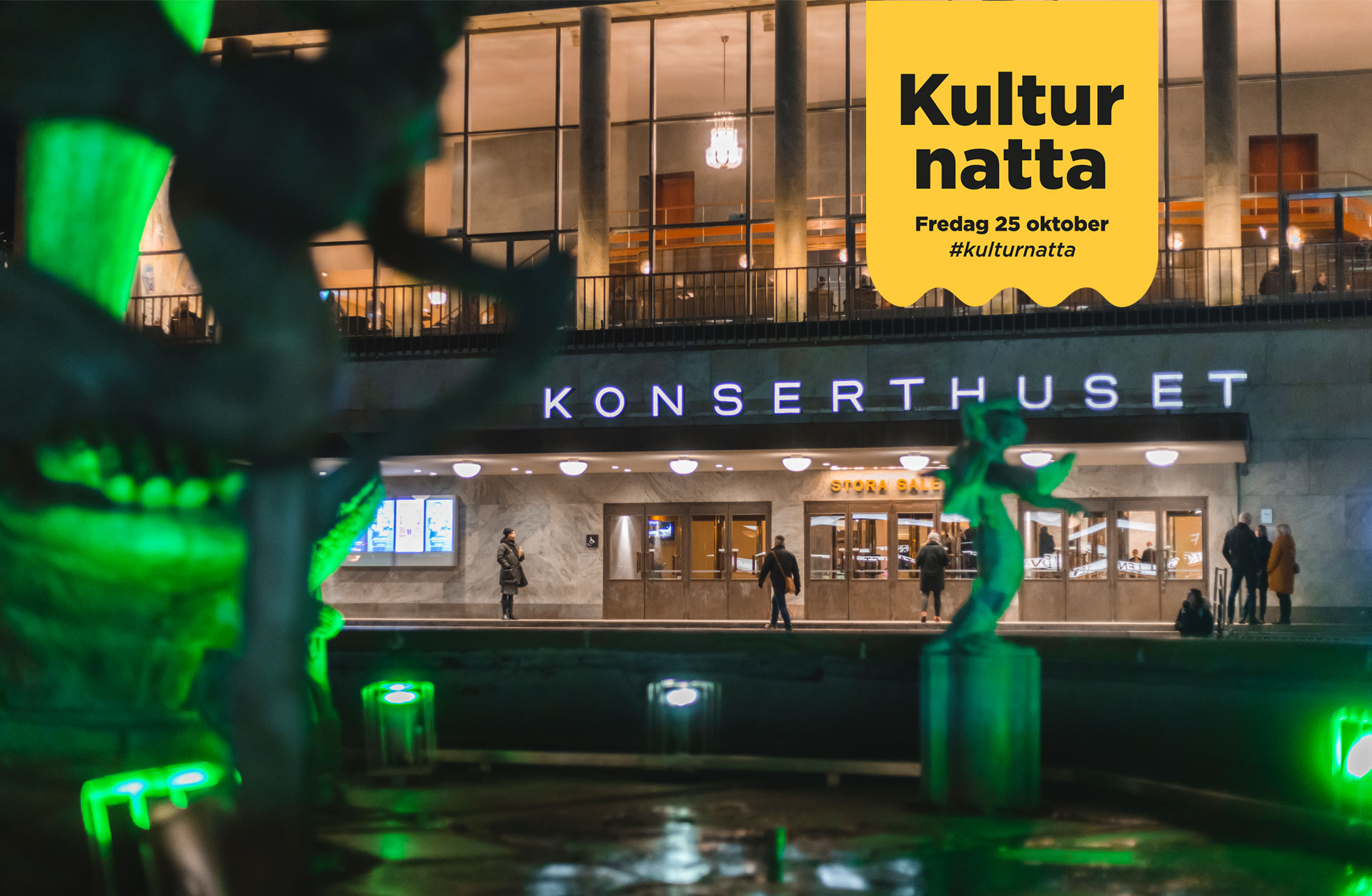
Right after the concert on Friday 25 October, you are invited to mingle in the Götaplats foyer while the autumn evening descends. The bars are open and musicians from the Gothenburg Symphony set the mood as the autumn evening descends. The event takes place in connection with Kulturnatta. Free entry, open until 23.00.
Listen
Get to know composer Tan Dun.
Lär känna de klassiska verken
Programme
Tan Dun (f 1957)
Wolf Totem
Largo melancolica - Allegro
Andante molto
Allegro vivace
Chinese-American composer Tan Dun was awarded both a Grammy and an Academy Award for Best Motion Picture Score for Crouching Tiger, Hidden Dragon (2000). His music is steeped in Western and East Asian influences, often incorporating audiovisual elements and instruments created from organic materials such as paper, water and stone.
When Tan Dun started to work on a new concert, he had just read the book Wolf Totem by Jiang Rong (2004). The book depicts the dying culture of the Mongols, the ancestors of the Mongol Horde that once terrorized the world, and the parallel annihilation of their sacred animal: the Mongolian wolf. Wolf Totem resonated deeply with Tan Dun's fascination with the spirits of nature and the sounds and customs of the ancient cultures along the Silk Road. At the same time, the book is a scathing social commentary on the dangers of China's increasing economic growth. The reading experience inspired Tan Dun, and resulted in a double bass concerto of the same name. Wolf Totem is divided into three different sets.
The first movement begins calmly and melancholic, then expands as percussion, woodwinds, brass and strings depict how wolves and horses roam the Mongolian plains. The melodies move sleeplessly across the orchestra, while a lone contrabass – the wolf – rushes ever faster forward. In the second movement, a lone wolf who misses his family and home is heard. Here the double bass shines in soft and expressive melodies. In the third and final movement, we again meet the galloping horses on the plains. The double bass is allowed to alternate between huge leaps and pulsating tones, finally culminating in a mighty climax.
Wolf Totem premiered on 29 January 2015 at the Concertgebouw Orchestra in Amsterdam with double bassist Dominic Seldis as soloist.
Intermission25 min
Hans Rott (1858-1884)
Symphony No.1
Alla breve
Adagio: sehr langsam
Scherzo: frisch und lebhaft
Sehr langsam, belebt
Hans Rott was born in Vienna in 1858 and for a few years was organist at the Piarist church in the same city. After that, he seems to have had no employment. At the Vienna Conservatory he became Anton Bruckner's favorite pupil on the organ and he left the organ class in 1877 with the highest grade. He was diligent and composed songs, a string quartet and a string quintet. With the first movement of his future E major symphony, he participated in 1878 in the conservatory's annual and compulsory composition competition. Rott's symphony was rejected, while Gustav Mahler received first prize with his piano quintet.
While Mahler celebrated, yet another setback was added to Rott's career. He sought scholarships in vain and failed to interest the conductor Hans Richter in his works. In 1880 he sought out Brahms to ask for advice, but was politely turned down. In his symphony, Rott alludes to Brahms' first symphony in the finale, while the first movement had been laughed at for its dependence on Wagner. He had thus attached himself to the two opposite poles of the music debate at the time, and made himself impossible in both camps. He was admitted to a mental hospital and the doctors' diagnosis was "hallucinatory madness, persecutory mania". No recovery was expected. Physical suffering continued and on 25 June 1884 he died of TB, aged 26, without any of his work being printed.
In 1900, Mahler borrowed the score for the E major symphony to study during the summer holidays. He was deeply impressed and deeply lamented what music had lost in Rott - he who, without exaggeration, was the creator of the "new symphony", as he put it. That Mahler himself was influenced by Rott's symphony is beyond all doubt. One can find references in many of Mahler's symphonies. The scherzo in particular bears a striking resemblance to Mahler's tonality - and one must then remember that Rott completed his only symphony in 1880, eight years before Mahler's first symphony.
It is written for a normal Brahms orchestra, but makes great demands on the orchestra both through its length and its extraordinarily difficult parts. The symphony was first performed on March 4, 1989 by the Cincinnati Symphony Orchestra, more than 100 years after its completion.
Stig Jacobsson
Thursday, 24 October 2024: The event ends at approx. 21.30
Friday, 25 October 2024: The event ends at approx. 20.00
Participants
The Gothenburg Symphony was formed in 1905 and today consists of 109 musicians. The orchestra's base is Göteborgs Konserthus, the funk gem at Götaplatsen that has gathered music lovers since 1935. Since the 2017-2018 season, Santtu-Matias Rouvali has been Chief conductor of the Gothenburg Symphony. Since the 2019-2020 season, Barbara Hannigan is Principal guest conductor. We are also a proud partner of Barbara Hannigan's Equilibrium mentoring program focusing on young singers at the start of their careers.
Wilhelm Stenhammar was the orchestra's chief conductor from 1907 to 1922. He gave the orchestra a strong Nordic profile and invited colleagues Carl Nielsen and Jean Sibelius to the orchestra. Under the direction of conductor Neeme Järvi from 1982-2004, the orchestra made a series of international tours as well as a hundred disc recordings and established themselves among Europe's leading orchestras. In 1996, the Swedish Riksdag appointed the Gothenburg Symphony as Sweden's National Orchestra.
In recent decades, the orchestra has had prominent chief conductors such as Mario Venzago and Gustavo Dudamel, following Kent Nagano as Principal Guest conductor. Anna-Karin Larsson is CEO and artistic director, Gustavo Dudamel honorary conductor and Neeme Järvi chief conductor emeritus. The orchestra's owner is the Västra Götaland Region.
The Gothenburg Symphony works regularly with conductors such as Herbert Blomstedt, Joana Carneiro, Jukka-Pekka Saraste, Christian Zacharias and Anja Bihlmaier.
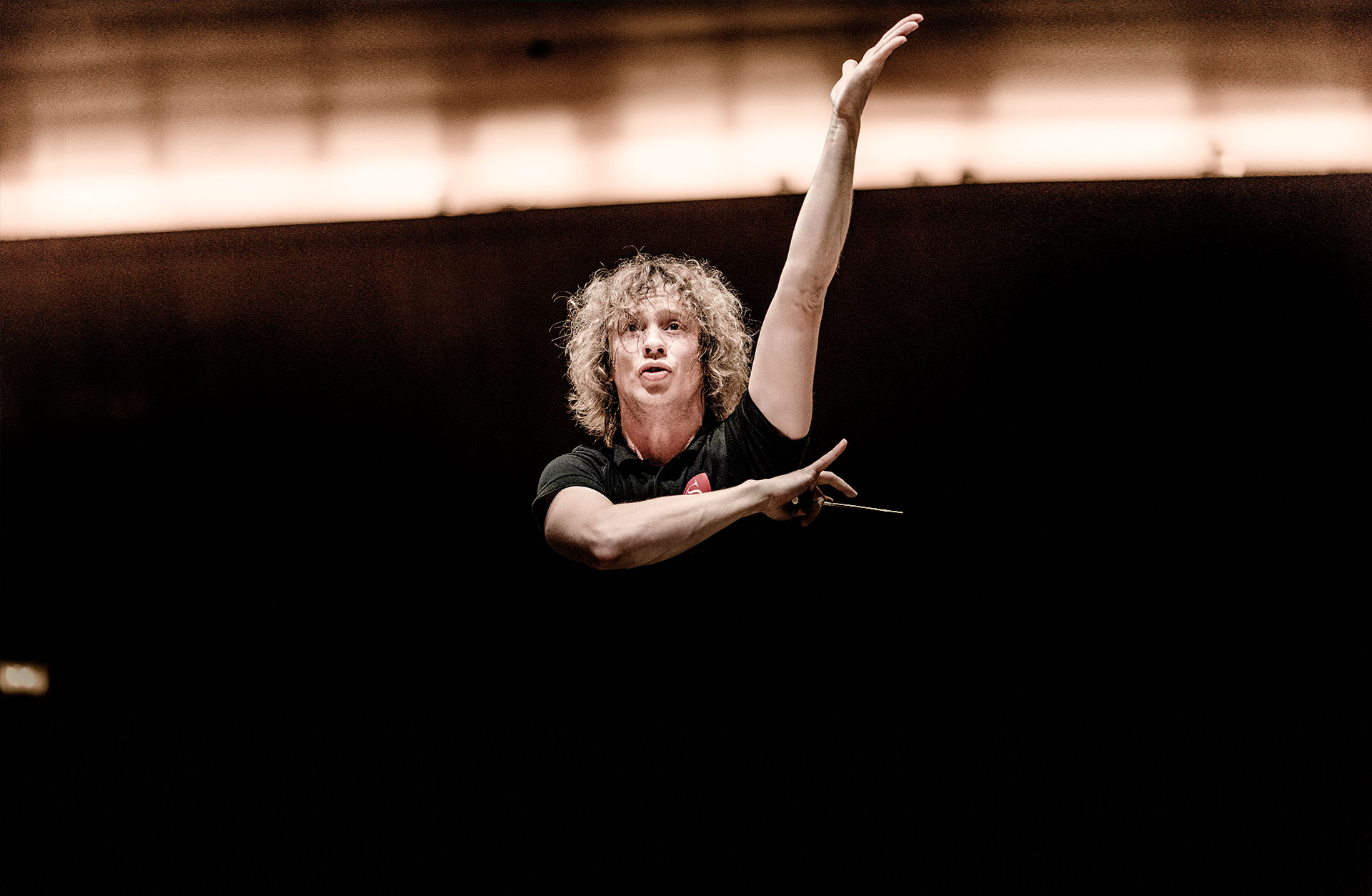
The 2024-2025 season is Santtu-Matias Rouvali’s final as a Chief Conductor of Gothenburg Symphony following a successful eight-year tenure. He continues as a Principal Conductor of Philharmonia Orchestra and a Honorary Conductor of Tampere Philharmonic Orchestra close to his home in Finland.
In 2023, Rouvali toured with the Gothenburg Symphony and violinist Arabella Steinbacher in Salzburg and Vienna. Concerts in Gothenburg in the 2023-2024 season included music by Boulanger, Saariaho, Tchaikovsky and Beethoven. He also led the Gothenburg Symphony in the European premiere of Julia Wolfe's choral drama Fire in My Mouth, as well as sold-out concerts with Stravinsky's Rite of Spring and Rachmaninoff's 2nd Piano Concerto.
Deepening his strong relationship with New York Philharmonic, summer 2024 marked Rouvali’s first appearance at Bravo! Vail Festival with the orchestra and soloists Jean-Yves Thibaudet and Augustin Hadelich. The summer also saw Rouvali and Philharmonia Orchestra continue their residency in Mikkeli, Finland, and return to Edinburgh International Festival, performing Verdi’s Messa da Requiem.
Throughout this season and last, he continues his relationships with top-level orchestras and soloists across Europe, including Munich Philharmonic, Berliner Philharmoniker, Orchestre Philharmonique de Radio France, Deutsches Symphonie-Orchester Berlin, Orchestra dell'Accademia Nazionale di Santa Cecilia, Royal Concertgebouw Orchestra, and he returns to North America for concerts with New York Philharmonic. This season, he also appears with Chicago Symphony Orchestra and Tonhalle-Orchester Zürich.
Rouvali works with many international soloists including Bruce Liu, Lisa Batiashvili, Seong-Jin Cho, Nicola Benedetti, Jean-Yves Thibaudet, Nemanja Radulovic, Stephen Hough, Augustin Hadelich, Nikolai Lugansky, Christian Tetzlaff, Gil Shaham, Baiba Skride and Ava Bahari.
Rouvali’s end of tenure with Gothenburg Symphony is marked by a tour to Germany and Czech Republic, followed up by a celebration concert in Gothenburg. He completes his Sibelius Cycle recording with Alpha Classics, the previous releases of which have been highly acclaimed with awards including Gramophone Editor’s Choice award, the Choc de Classica, a prize from the German Record Critics, the prestigious French Diapason d’Or ‘Découverte’, and Radio Classique’s ‘TROPHÉE’.
Rouvali also has an extensive record production with Philharmonia Records. Another prominent CD – Beethoven’s Triple Concerto with Benjamin Grosvenor, Nicola Benedetti and Sheku Kanneh-Mason – was released on Decca in May 2024.
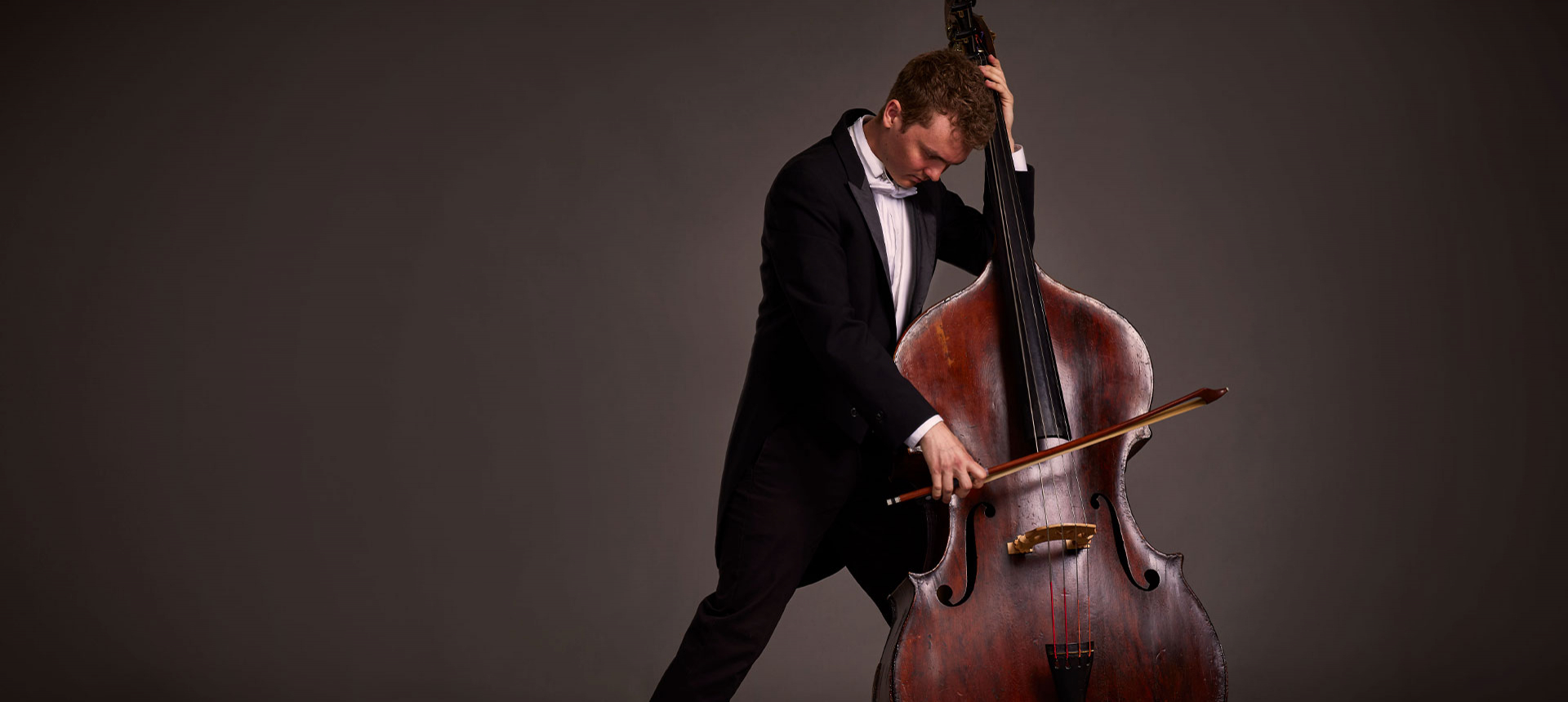
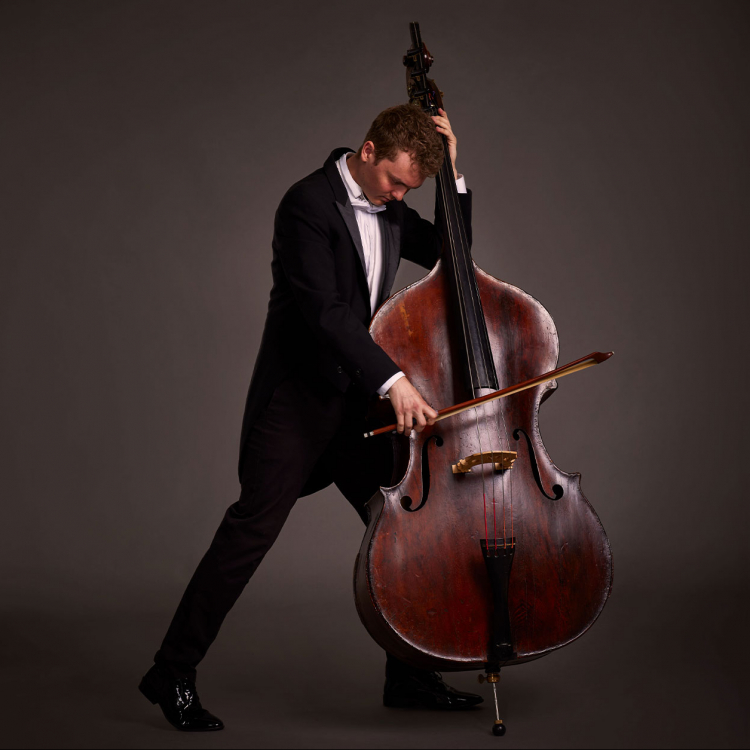
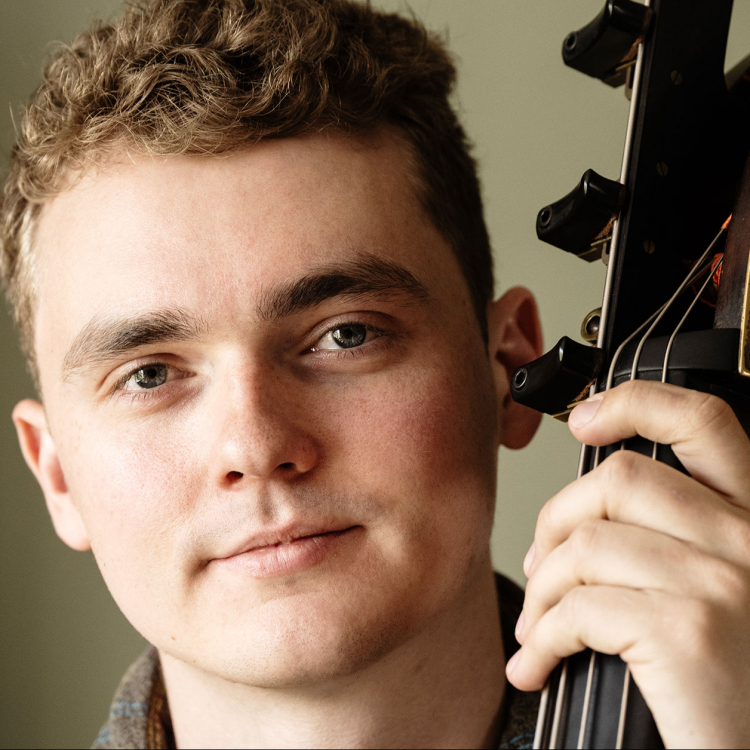
Since 2022, Markus Lang has held the position of principal double bass at the Gothenburg Symphony. He has also appeared as principal double bassist with orchestras such as the Royal Philharmonic Orchestra in Stockholm and the Oslo Philharmonic Orchestra and played with the Philadelphia Orchestra.
Markus Lang is a graduate of the Juilliard School and the Curtis Institute of Music, where he studied with Hal Robinson, Joseph Conyers, Edgar Meyer and Albert Laszlo. During his time at Juilliard, he was very active in historical performance practice and toured Scandinavia and New Zealand with the school's early music ensemble, Juilliard 415.
His versatility and interests extend to contemporary music, where he explores compositions that showcase the double bass's diversity of colors and capabilities. For GSOplay, Markus Lang has recorded Kaija Saariaho's work Folia for double bass and electronics.
Markus Lang was born into a musical family and traveled as a child between New Jersey and the family's summer home in Viitasaari, Finland. He has spent several summers at prestigious festivals, including the Verbier Festival, the Music Academy of the West and the Lucerne Festival Academy. Markus Lang has the privilege of playing on a rare English double bass by George Panormo, generously lent by the Gothenburg Symphony.
 031-726 53 00
 biljett@gso.se