Finland is big on music, there is no doubt about that in this star-studded evening. 23-year-old conducting prodigy Tarmo Peltokoski conducts Esa-Pekka Salonen’s challenging cello concert with Senja Rummukainen as soloist. As a conclusion, we hear Shostakovich’s 11th symphony.
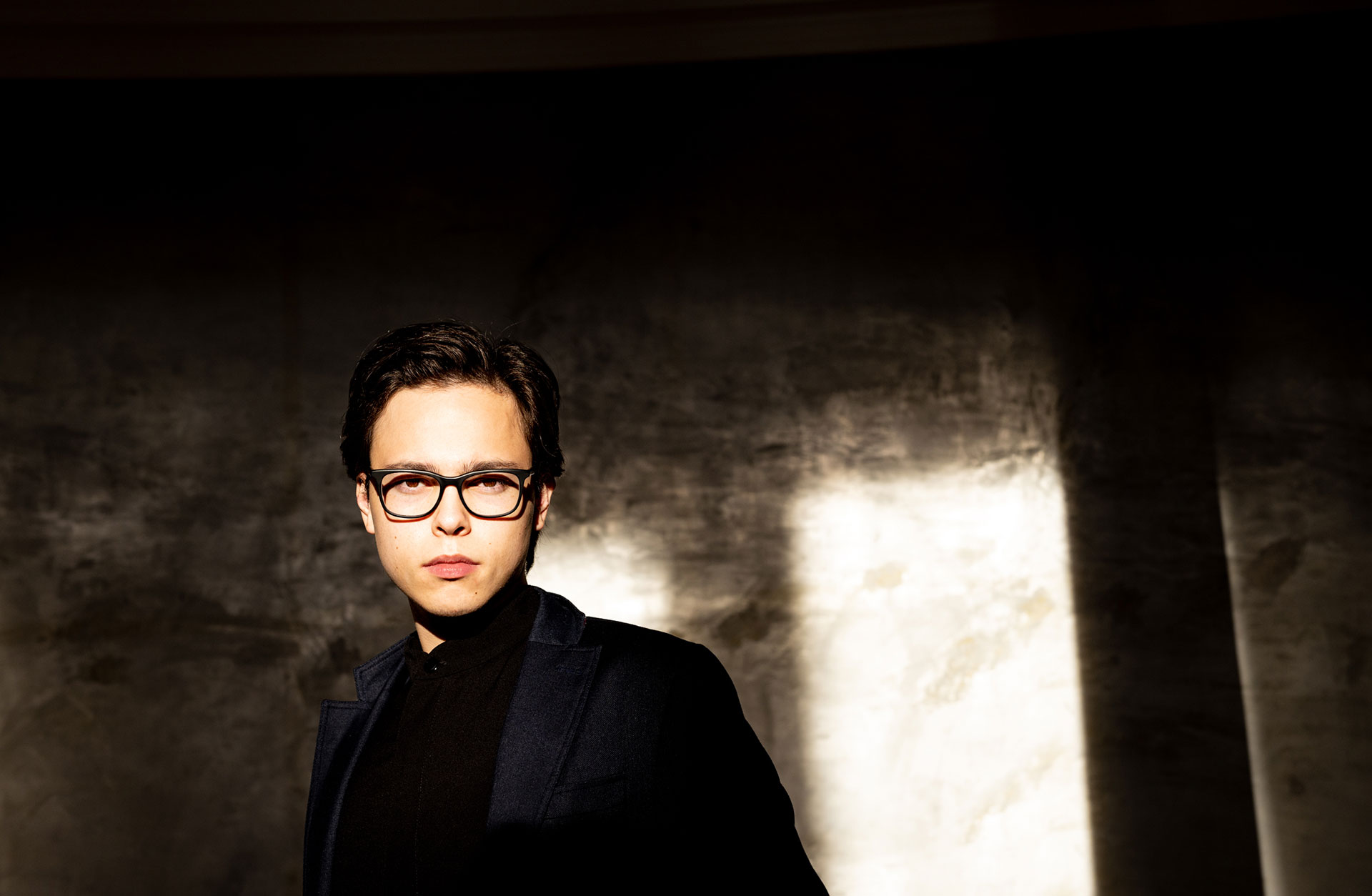
The Gothenburg public gets a chance to see a rare talented conductor when Tarmo Peltokoski is back in Gothenburg’s Concert Hall. The pandemic years became his springboard when orchestras hired young conductors. After only two visits to the Bremen Chamber Philharmonic, Tarmo Peltokoski was appointed first guest conductor, their first in 42 years.
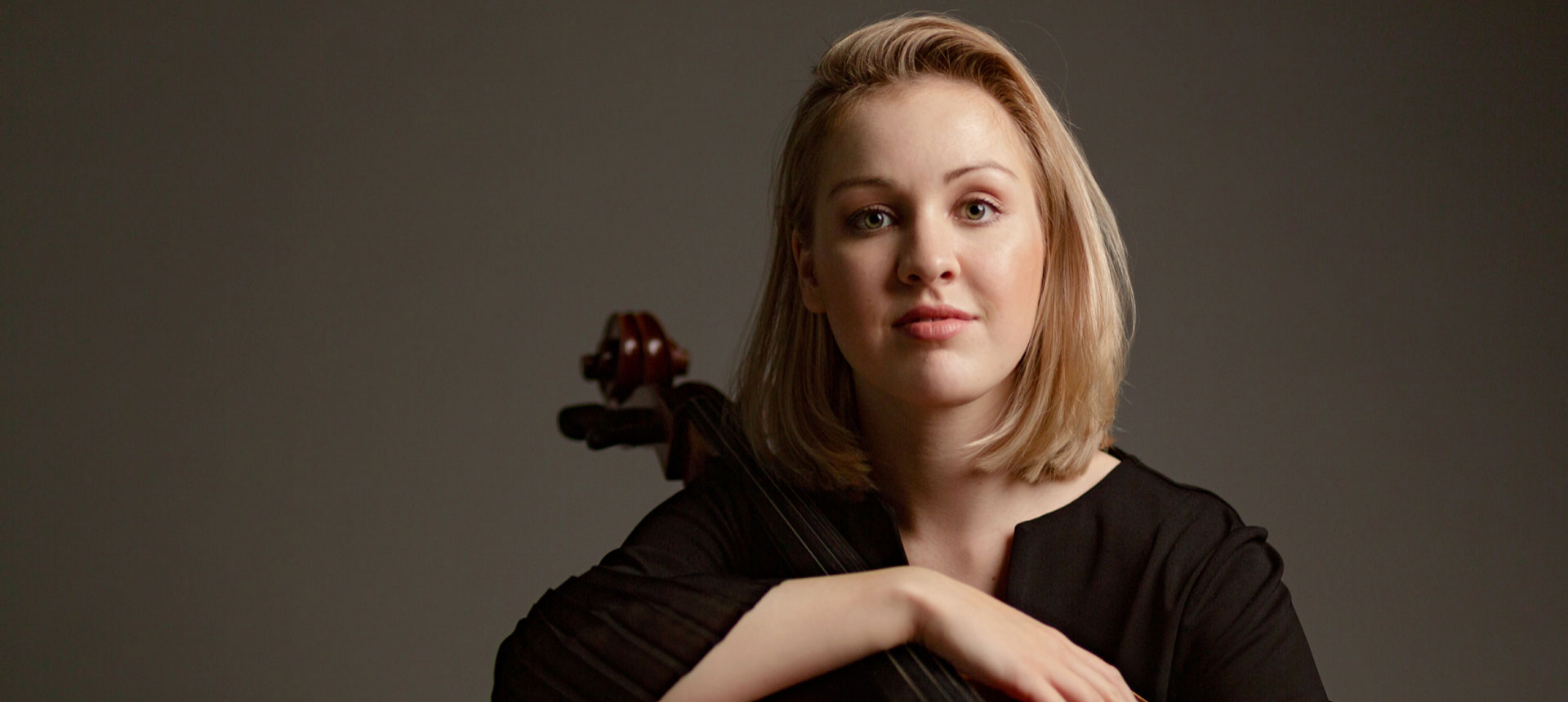
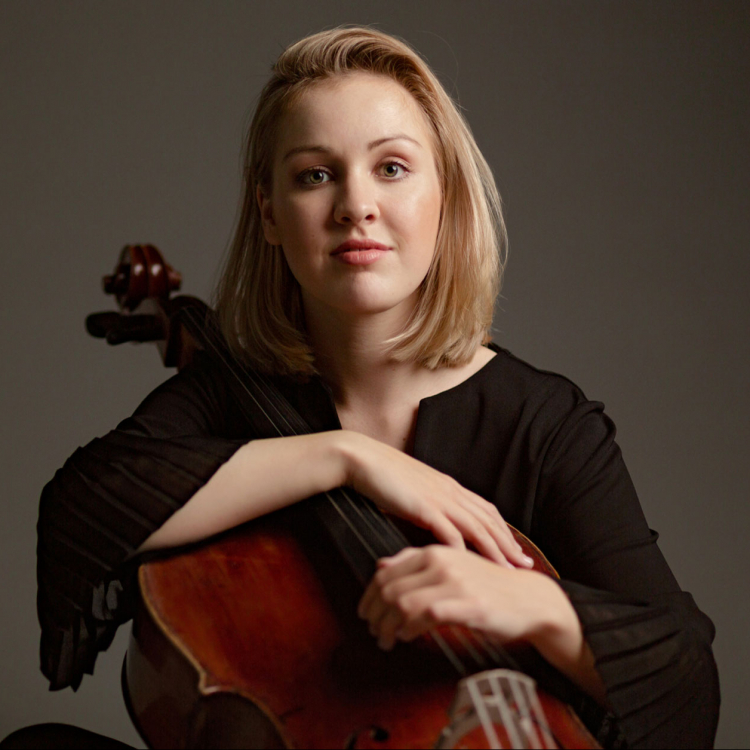
Esa-Pekka Salonen has been one of his teachers, and now he tackles his mentor’s cello concerto, originally written for the world cellist Yo-Yo Ma and accompanied by electro effects. Tonight it is Senja Rummukainen who is the soloist in this cross-border concert.
To conclude, we hear Shostakovich’s heartbreaking 11th Symphony. It was dedicated to the thousands of innocent people who were gunned down in front of the Winter Palace in Moscow during the first revolution in 1905. In the symphony, the song “Welcome the Free Word of Liberty” is cited, among others. A salute and a warning from the 1950s about what tyrants can do and how only the truth can change.
Listen
Get to know the classical pieces.
Introduction to the concert
Take a seat in the Great Hall one hour before the concert begins and learn more about the music you will soon experience! You will get the stories behind the music, knowledge of the composers and own reflections about the classical pieces. The introduction last for about 30 minutes, it is free and free seating in the hall. Warm welcome!
Programme
Esa-Pekka Salonen (b. 1958)
Cello Concerto
Esa-Pekka Salonen is probably one of the most famous and even popular conductors for the Swedish audience. Despite his jobs as chief conductor of major symphony orchestras in the USA, he has been leading the Baltic Sea Festival in Stockholm for many years. During his successful career, he has worked with the best, such as cellist Yo-Yo Ma, for whom he wrote his cello concerto in 2017. The concerto demands the utmost from the soloist. Seeing what is physically possible to play at all was one of the driving forces behind Salonen. In his own comments, he has written adjectives that show what is expected of the cellist: acrobatic, surreal, chaotic, cosmic. Even the silence, the pauses, are something that a virtuoso can fill in a different way than others, says Salonen.
Space is another metaphor you can use about the music, with its comets, nebulae and beauty. The orchestra sometimes weaves masses of sound around the cello, sometimes sends it out on its own adventures where it collides with or travels together with other instruments in the asteroid belt. Or with yourself! The soloist is looped electronically and functions as its own satellite.
Katarina A Karlsson
Intermission25 min
Dmitri Shostakovitch (1906-1975)
Symphony no. 11 g minor Op 103 “The year 1905”
The Palace square (Adagio)
The 9th of January (Allegro - Adagio)
Memory Eternal (Adagio)
Alarm bell (Allegro non troppo - Adagio - Allegro)
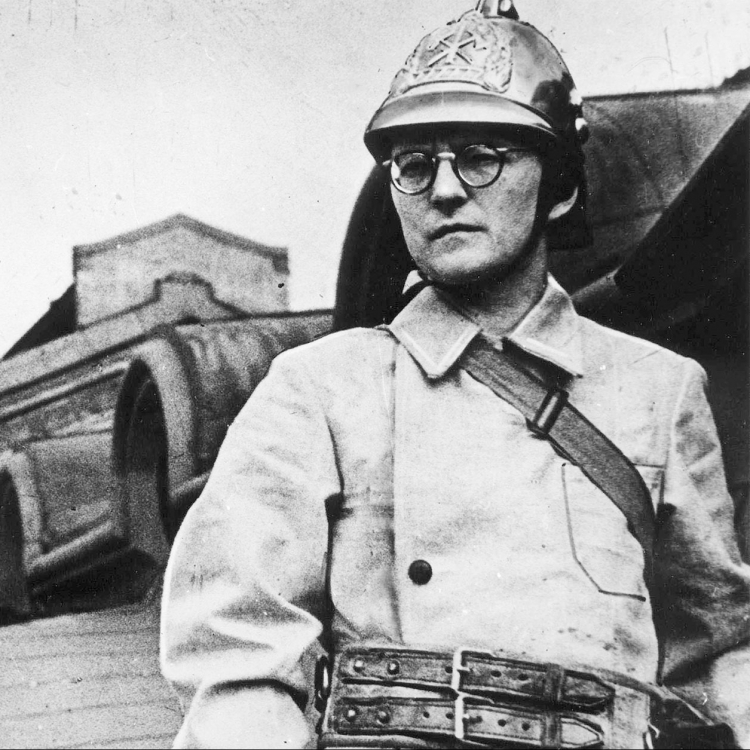
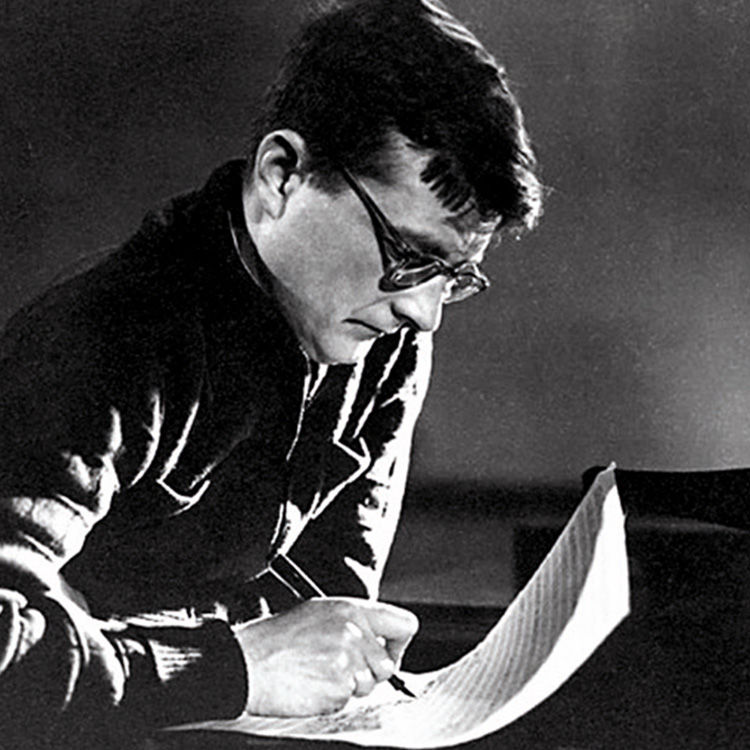
Shostakovich's Symphony No. 11 is a large sounding fresco that tells the story of the events surrounding the failed Russian Revolution of 1905. Shostakovich recounts in his memoirs:
“In 1905, a number of murdered children were transported on a sled. The boys had been sitting in the trees to watch the soldiers and they shot them - out of hand, for fun. Then they loaded them onto the sled and drove them away. A sled with children's bodies. And the dead children smiled. They had been killed so suddenly that they never had time to be afraid. A boy had been maimed by bayonets. As they unloaded him, the crowd shouted for weapons. No one knew what to do, but they had lost patience. I think that a lot repeats itself in Russian history ... I want to press this repetition in the eleventh symphony. I wrote it in 1957 and it deals with contemporary events, even though it was called "The Year 1905". It is about the people who stop believing, because the cup of evil has run over. This is how my childhood impressions and my adult life have met.”
Shostakovich's memoirs have sometimes been questioned. It is still frightening that this story is still relevant today.
The first movement is a long, very quiet adagio, depicting the calm before the storm on the grand plain outside the Winter Palace in St. Petersburg. It is winter, an hour or so before dawn. Behind the calm there is a fateful anxiety, and one hears coordinated trumpets with the double meaning of waking up the workers (even though it is Sunday), and of suggesting that something important is in the works: a peaceful demonstration is being planned. They want to make the Tsar aware of what a miserable life they lead. In the second part of the movement, the revolutionary song "Listen" and the folk song "The Prisoner" are cited - both with a strong symbolic charge.
January 9 is also called Bloody Sunday. The demonstrators are confronted by gendarmes. The snare drum is the signal to strike. They open fire into the mass of people. Mounted policemen strike wildly with their sabers. Over a thousand people are killed, over 5,000 are seriously injured. Immediately we come to the third movement, a tragic requiem for the fallen, and the revolutionary funeral march "You fell as victims" (to which Lenin was also buried) is combined with "Welcome to the free world". When the dead are buried, we enter the finale: Alarm.
So you can't trust the Tsar. The people have been welded together. They build barricades, organize strikes, demonstrate. A series of revolutionary songs is hinted at, and towards the end "Bare your Heads" is heard as a final reminder of the events, before the symphony ends in the midst of the ever-ongoing battle.
Stig Jacobsson
Friday, 16 February 2024: The event ends at approx. 20.10
Participants
The Gothenburg Symphony was formed in 1905 and today consists of 109 musicians. The orchestra's base is Göteborgs Konserthus, the funk gem at Götaplatsen that has gathered music lovers since 1935. Since the 2017-2018 season, Santtu-Matias Rouvali has been Chief conductor of the Gothenburg Symphony. Since the 2019-2020 season, Barbara Hannigan is Principal guest conductor. We are also a proud partner of Barbara Hannigan's Equilibrium mentoring program focusing on young singers at the start of their careers.
Wilhelm Stenhammar was the orchestra's chief conductor from 1907 to 1922. He gave the orchestra a strong Nordic profile and invited colleagues Carl Nielsen and Jean Sibelius to the orchestra. Under the direction of conductor Neeme Järvi from 1982-2004, the orchestra made a series of international tours as well as a hundred disc recordings and established themselves among Europe's leading orchestras. In 1996, the Swedish Riksdag appointed the Gothenburg Symphony as Sweden's National Orchestra.
In recent decades, the orchestra has had prominent chief conductors such as Mario Venzago and Gustavo Dudamel, following Kent Nagano as Principal Guest conductor. Sten Cranner is CEO and artistic director, Gustavo Dudamel honorary conductor and Neeme Järvi chief conductor emeritus. The orchestra's owner is the Västra Götaland Region.
The Gothenburg Symphony works regularly with conductors such as Herbert Blomstedt, Joana Carneiro, Jukka-Pekka Saraste, Christian Zacharias and Anja Bihlmaier.
The Finnish conductor Tarmo Peltokoski was appointed first guest conductor of the Deutsche Kammerphilharmonie Bremen in 2022. In the same year, he also took over as musical and artistic director of the Latvian National Symphony Orchestra. He is principal guest conductor of the Rotterdam Philharmonic Orchestra and music director of the Orchester National du Capitole de Toulouse.
In recent seasons, he has conducted the Hong Kong Philharmonic, Toronto Symphony Orchestra, RSB Berlin, Hallé, Konzerthausorchester Berlin, Düsseldorfer Symphoniker, Göteborgs Symfoniker, San Diego Symphony and Orchester national du Capitole de Toulouse and the Los Angeles Philharmonic at the Hollywood Bowl. He returned last year to the Rotterdam Philharmonic and made his debut with The National Symphony Orchestra in Washington, DC, both with Yuja Wang as soloist. In early 2024 he presents both Mahler's Fourth Symphony and a complete Prokofiev piano concerto cycle with Jan Lisiecki, both with The Deutsche Kammerphilharmonie Bremen.
He works with soloists such as Yuja Wang, Asmik Grigorian, Matthias Goerne, Jan Lisiecki, Julia Fischer, Golda Schultz, Martin Fröst, Janine Jansen, Leonidas Kavakos, Chen Reiss and Sol Gabetta.
Tarmo Peltokoski began his studies with professor emeritus Jorma Panula at the age of 14 and studied with Sakari Oramo at the Sibelius Academy. He has also been taught by Hannu Lintu, Jukka-Pekka Saraste and Esa-Pekka Salonen. He is also a celebrated pianist and studied piano at the Sibelius Academy with Antti Hotti. In 2022 he received the Lotto Prize at the Rheingau Musik Festival and in 2023 he received the OPUS Klassik for his recording with The Deutsche Kammerphilharmonie Bremen.
Senja Rummukainen won first prize in the national cello competition in Turku in 2014 and was a finalist in the international Guilhermina Suggia prize in Portugal. She also came 6th in the International Tchaikovsky Competition 2019. Rummukainen has performed as a soloist with orchestras such as the BBC Symphony Orchestra, the Mariinsky Theater Orchestra, the St Petersburg Philharmonic, the Krakow Philharmonic and the leading Finnish orchestras, such as the Finnish Radio Symphony Orchestra, the Helsinki Philharmonic Orchestra, the Tampere Philharmonic Orchestra, Tapiola Sinfonietta, Turku Philharmonic Orchestra and Ostrobothnia Chamber Orchestra. She has collaborated with conductors such as Sakari Oramo, Nicholas Collon, Klaus Mäkelä, Leif Segerstam, Dima Slobodeniouk and Jorma Panula.
As a chamber musician, Rummukainen is one of the most popular in Finland. She has been a regular guest at the major festivals and has also worked as one of the artistic directors of Kamarikesä Festival in Helsinki together with Johannes Piirto, Kasmir Uusitupa, Tami Pohjola and Riina Piirilä 2017-2021. In 2022 she took part in the Vevey Spring Classic Festival and played together with Janine Jansen, Nils Mönkemeyer, Daniel Müller-Schott and Francesco Piemontesi.
In the 2022-2023 season, Senja Rummukainen debuted as a soloist with the Stettin Philharmonic in Poland, with the Lahti Symphony Orchestra, the Pilsen Philharmonic and the Thüringen Philharmonic. She also returned to Tapiola Sinfonietta with Jukka-Pekka Saraste in Anna Clynes Dance. Among other things, she has studied at the Universität der Künste Berlin with professor Jens Peter Maintz and with Truls Mørk at the Norwegian Academy of Music. She plays a cello by Giovanni Grancino from 1698, generously loaned by the OP Art Foundation.
The concert is her debut with the Gothenburg Symphony.
London-based Ella Wahlström creates sound design for theatre, concert and musical and created the sound design for Esa-Pekka Salonen's cello concerto at the premiere in 2017 with Yo-Yo Ma and the Chicago Symphony Orchestra. She has worked with around 50 performances and was a sound operator at the theater Complicité's performance The Encounter, which was awarded a Tony Award. Ella Wahlström is educated at the Helsinki Pop & Jazz Conservatory and in Performance Sound at Rose Bruford College and has been an assistant to the sound designer Gareth Fry. She is also a board member of Association of Sound Designers in the UK.
 031-726 53 00
 biljett@gso.se