Göteborgs Konserthus
Mahler’s Resurrection Symphony
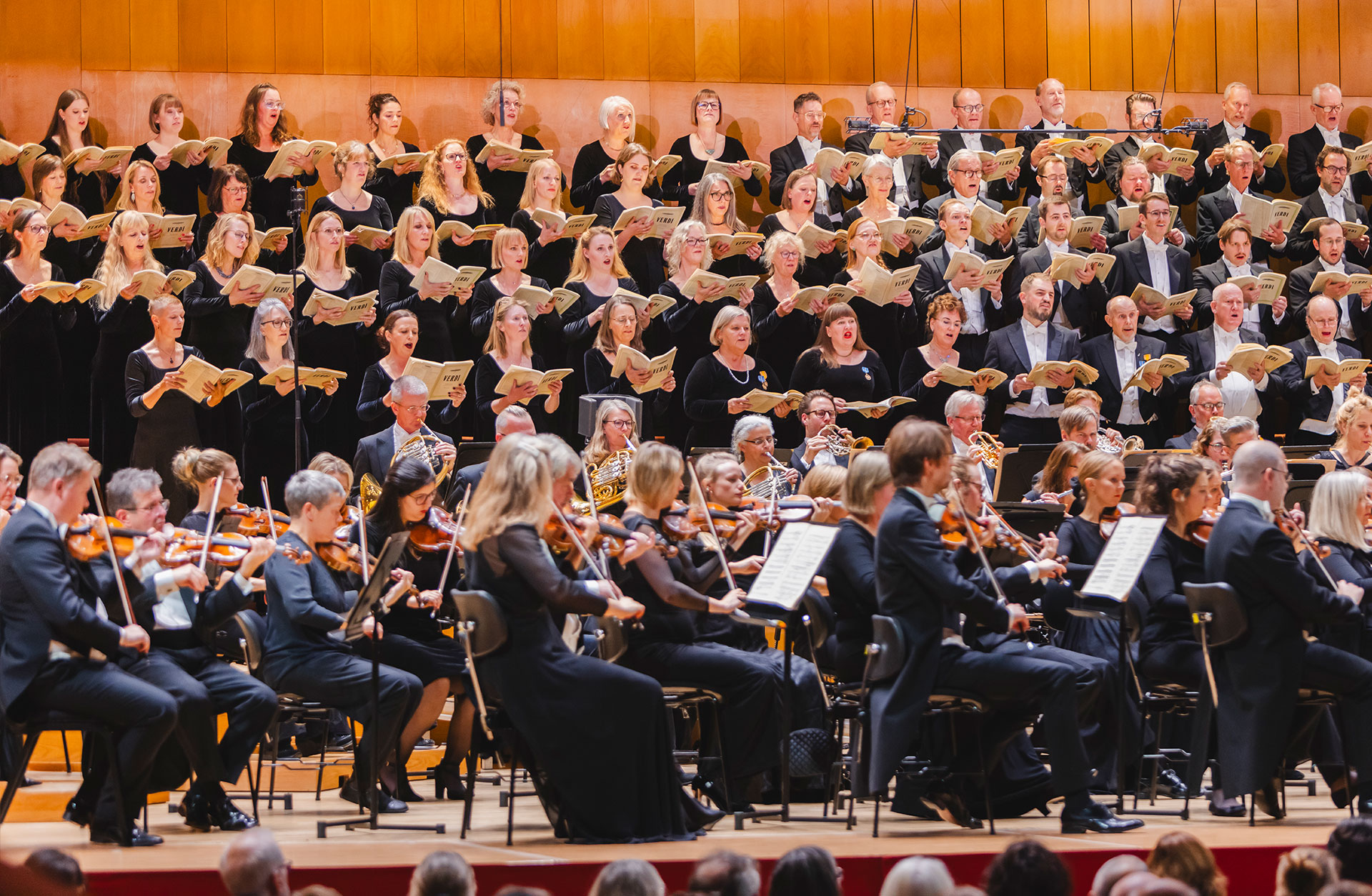
Event has already taken place. One of the greatest masterpieces in history with the Gothenburg Symphony Orchestra, Gothenburg Symphony Vocal Ensemble and Choir and singer soloists conducted by Andrés Orozco-Estrada.
Concert length: 1 h 30 min no intermission
Stage: Stora salen
390-550 SEKStudent 195-275 SEK
Young up to 29 195-275 SEK
Hear vocal soloists, choir and orchestra in one of the greatest masterpieces in history. Conductor Andrés Orozco-Estrada was a success in Gothenburg with Verdi’s Requiem in 2023. Now he returns with Mahler’s magnificent Symphony No. 2 about the battle between life and death.
Some people are obsessed with music – others are obsessed with Gustav Mahler. The Austrian master’s symphonies are in a league of its own – with pain, hope and nostalgia portrayed in unforgettable orchestral narratives mastered by few. Leonard Bernstein once said, “When Mahler is sad, it is a complete sadness; nothing can comfort him.”
In half of his symphonies, Mahler used the human voice as one of his most important instruments. “When the singer says the German word ewig, meaning forever, he sings it again over and over as if not wishing to let go of this beauty,” said Bernstein.
Symphony No. 2 has become known as the Resurrection Symphony, as death is ultimately defeated by light. Now you have the chance to hear this work when the Gothenburg Symphony Orchestra, Gothenburg Symphony Vocal Ensemble and Choir and soloists come together for 1.5 hours of pure love for humanity.
Listen
Get to know the music.
Introduction to the concert
Take a seat in the Great Hall onehourbefore the concertbegins and learnmoreabout the musicyouwillsoonexperience! Youwill get the storiesbehind the music, knowledgeof the composers and ownreflectionsabout the classicalpieces. The introductionlast for about 30 minutes, it is free and freeseating in the hall. Welcome!
Programme
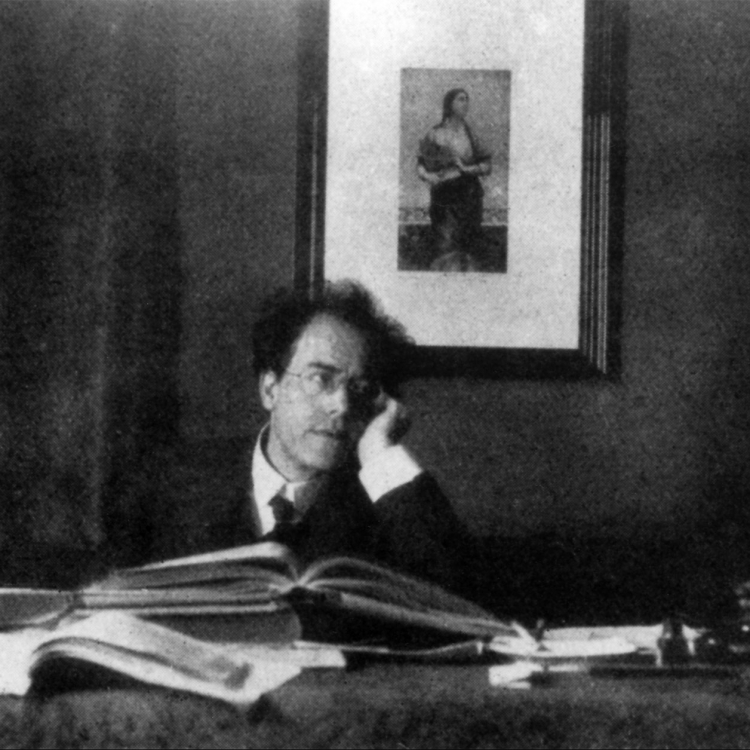
Gustav Mahler (1860-1911)
Symphony No 2 Resurrection
Gustav Mahler's second symphony is one of his most monumental and all-encompassing. It is music that embodies life itself and its most fundamental existential questions. A symphony where art and life coincide and perhaps that is why it hits us with such force.
Questions of metaphysics, cosmology, religious problems and existentialism fascinated Mahler. Thoughts about the meaning of life and the paradox of death constantly occupied him, and the second symphony from 1894 is a magnificent musical manifestation of ideas about life, death and rebirth. It is therefore called the Resurrection Symphony. To portray his visions of all the states and emotions of life, Mahler used soprano and alto soloists, a choir and a giant orchestra. Two dramatic outer movements enclose the more cheerful middle movements. The first movement is full of fate and loaded, dreamy and romantic, and gets a sharp contrast in the carefree andante of the second movement. The timpani start of the third movement abruptly breaks the pleasant mood. Uncertainty spreads and humour, feelings of triumph and seriousness replace each other.
In the fourth movement, Urlicht, we hear a raised, beautiful alto solo with text from the folk song collection Des Knaben Wunderhorn (The Boy's Enchanted Horn), which had literally struck Mahler. In the fifth and last movement, the choir enters and we are lifted towards a higher, heavenly sphere.
Thursday, 16 January 2025: The event ends at approx. 21.00
Friday, 17 January 2025: The event ends at approx. 19.30
Participants
The Gothenburg Symphony was formed in 1905 and today consists of 109 musicians. The orchestra's base is Göteborgs Konserthus, the funk gem at Götaplatsen that has gathered music lovers since 1935. Since the 2017-2018 season, Santtu-Matias Rouvali has been Chief conductor of the Gothenburg Symphony. Since the 2019-2020 season, Barbara Hannigan is Principal guest conductor. We are also a proud partner of Barbara Hannigan's Equilibrium mentoring program focusing on young singers at the start of their careers.
Wilhelm Stenhammar was the orchestra's chief conductor from 1907 to 1922. He gave the orchestra a strong Nordic profile and invited colleagues Carl Nielsen and Jean Sibelius to the orchestra. Under the direction of conductor Neeme Järvi from 1982-2004, the orchestra made a series of international tours as well as a hundred disc recordings and established themselves among Europe's leading orchestras. In 1996, the Swedish Riksdag appointed the Gothenburg Symphony as Sweden's National Orchestra.
In recent decades, the orchestra has had prominent chief conductors such as Mario Venzago and Gustavo Dudamel, following Kent Nagano as Principal Guest conductor. Anna-Karin Larsson is CEO and artistic director, Gustavo Dudamel honorary conductor and Neeme Järvi chief conductor emeritus. The orchestra's owner is the Västra Götaland Region.
The Gothenburg Symphony works regularly with conductors such as Herbert Blomstedt, Joana Carneiro, Jukka-Pekka Saraste, Christian Zacharias and Anja Bihlmaier.
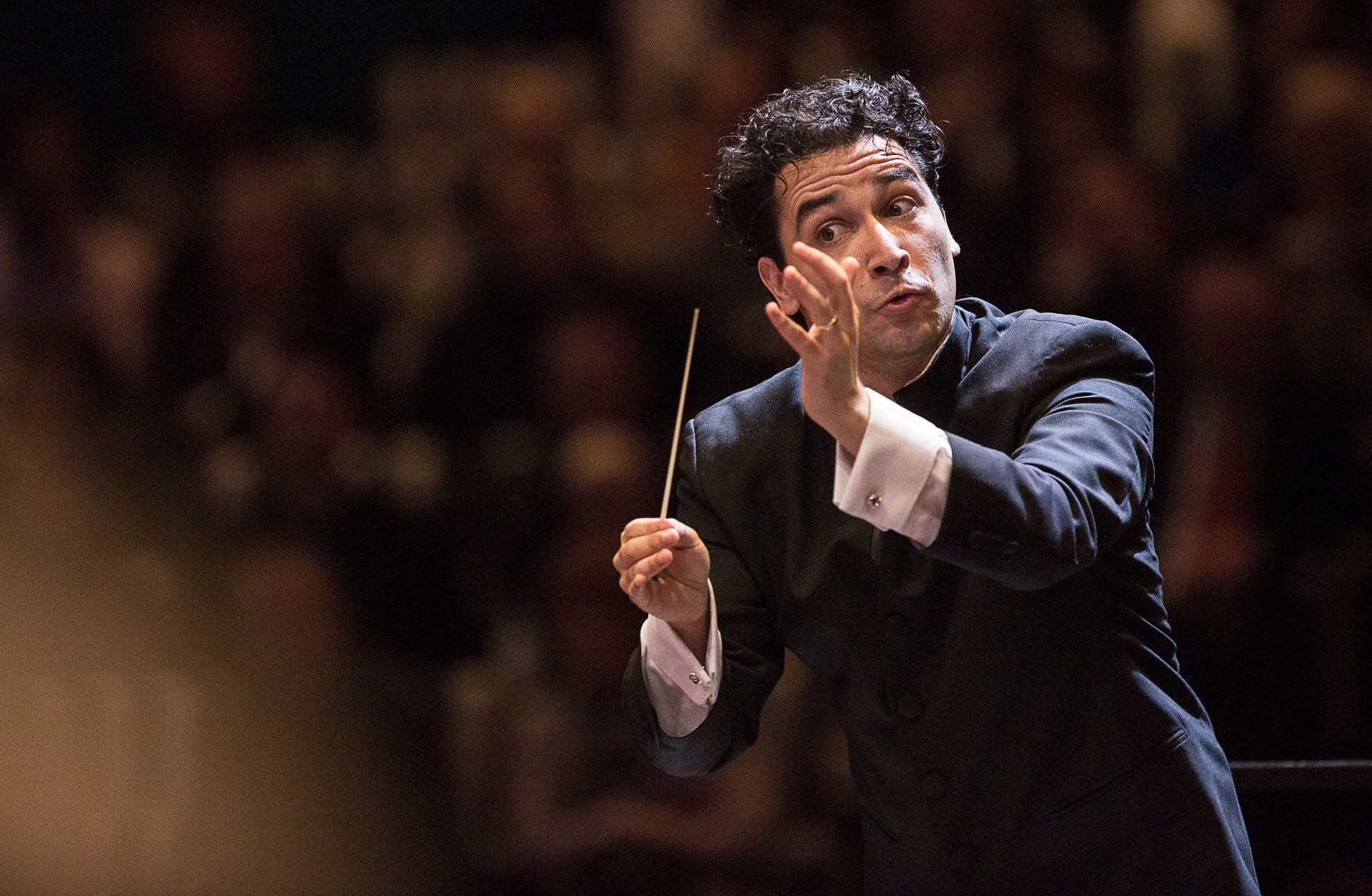
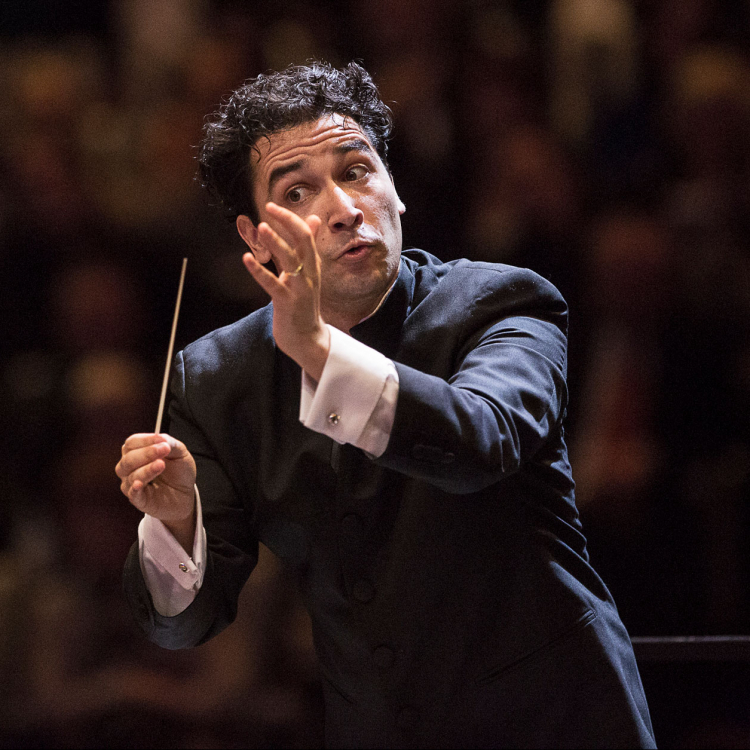
Andrés Orozco-Estrada is Chief conductor of the Italian Radio Symphony Orchestra. He is also appointed Music Director of the City of Cologne and the Gürzenich Orchestra from 2025-2026.
In the current season, Orozco-Estrada makes debuts at the Semperoper Dresden with The Marriage of Figaro, with the NHK Symphony Orchestra in Tokyo, the KBS Symphony Orchestra in Seoul and the Spanish National Orchestra in Madrid. He has been re-invited to the Royal Concertgebouw Orchestra, Chicago Symphony Orchestra, Staatskapelle Dresden, Orchester National de France, Bamberg Symphony Orchestra, Swedish Radio Symphony, Budapest Festival Orchestra, Rotterdam Philharmonic Orchestra, Munich Philharmonic Orchestra and the radio orchestras SWR, WDR and DSO Berlin. He also returns to the Sinfonieorchester Frankfurt where he was previously principal conductor, and to the Houston Symphony Orchestra (music director 2014-2022).
Andrés Orozco-Estrada was born in Medellín, Colombia and took his first conducting lessons at the age of 15. In 1997 he moved to Vienna, where he was accepted into Uroš Lajovic's conducting class at the famous Hochschule für Musik und Darstellende Kunst. Since 2022, Orozco-Estrada is professor of orchestral conducting at the same university.
Andrés Orozco-Estrada last visited the Gothenburg Symphony Orchestra in autumn 2023 when he conducted Verdi's Requiem.
Elizabeth Watts was a chorister at Norwich Cathedral and studied archeology before joining the Royal Academy of Music in London. Her disc recordings include lieder by Schubert and Strauss, Mozart arias with the Scottish Chamber Orchestra and Handel Brockes Passion with the Academy of Ancient Music. Highlights this season include Mahler's Symphony No. 4 with Jun Märkl in The Hague, Mozart and Beethoven with the Philharmonie Zuidnederland and Richard Egarr and Britten's War Requiem and Bach Matthew Passion with the Bach Choir, a piece she also performed at the Edinburgh International Festival 2024.
Opera is also an important part of her career, with roles such as the Countess in The Marriage of Figaro, Donna Elvira in Don Giovanni and Fiordiligi in Così fan tutte. Recently she performed Aspasia in Mitridate at Garsington Opera. Other highlights have been Strauss and Mahler with the Hong Kong Philharmonic Orchestra conducted by Vasily Petrenko, Ligeti Le Grand Macabre and the Britten Spring Symphony with the London Symphony Orchestra and Sir Simon Rattle as well as Vaughan Williams' A Sea Symphony with the Royal Philharmonic in Stockholm and Sakari Oramo.
Elizabeth Watts' many performances at the BBC Proms include Mahler Symphony No. 2 with the BBC Symphony Orchestra and Sakari Oramo, Schubert songs with the BBC Philharmonic and John Storgårds and Beethoven arias with the NDR Radio Philharmonic Orchestra conducted by Andrew Manze.
Scotland's Karen Cargill gave a critically acclaimed performance in Tristan and Isolde at the Glyndebourne Festival. This season she returns to Tristan and Isolde both with Yannick Nézet-Séguin and the Philadelphia Orchestra, and with Sir Simon Rattle and the Bayerischer Rundfunk Orchestra. She will also make her role debut as Brigitte in Die tote Stadt in concerts with the Boston Symphony Orchestra and Andris Nelsons. Karen Cargill returns to the Montreal Symphony Orchestra for Schoenberg's Gurrelieder with Rafael Payare, the San Francisco Symphony for Verdi's Requiem with Esa-Pekka Salonen, the Toronto Symphony for Mozart's Requiem with Jukka-Pekka Saraste, and the San Diego Symphony for Mahler Symphony No. 3 with Rafael Payare.
The past season included a tour with the Rotterdam Philharmonic and Yannick Nézet-Séguin, Bartók's Knights of Bluebeard with Karina Canellakis and the Boston Symphony, Mahler's Das Lied von der Erde with the Wiener Symphoniker and Robin Ticciati and Berlioz's Death of Cleopatra with the Scottish Chamber Orchestra and Maxim Emelyanychev .
She is patron of the National Girls' Choir of Scotland and was awarded an honorary doctorate from the Royal Conservatoire of Scotland in 2018.
The Gothenburg Symphony Vocal Ensemble (GSVE) was formed in 2016 and consists of 12 professional singers. The ensemble works both as part of the Gothenburg Symphony Choir in major symphonic works performed together with the Gothenburg Symphony, and as an independent ensemble under the direction of Katie Thomas.
GSVE is a group of experienced and versatile singers, who perform varied programs and explore a wide repertoire, from medieval music to newly commissioned works. The ensemble has previously collaborated with, among others, the Helsingborg Symphony Orchestra and the Barockakademin Göteborgs Symfoniker and performs regular vocal programs both in Gothenburg's Concert Hall and around the Västra Götaland region.
The choir was founded in 1917 by cousins Elsa and Wilhelm Stenhammar. Elsa Stenhammar was one of the driving forces in turn-of-the-century choir life in Gothenburg and became the choir's first rehearser. On December 8, 1917, the choir debuted in Beethoven's Choir Fantasy with Wilhelm Stenhammar as soloist at the grand piano. As the country's oldest symphonic choir, they were able to celebrate their 100th anniversary in 2017 with a big celebratory concert where Mozart and Brahms as well as Stenhammar, Elfrida Andrée and Björn & Benny were on the program.
The Gothenburg Symphony Choir is a non-profit association that is linked to the Gothenburg Symphony. The choir participates in concerts and performances under both the orchestra's and its own auspices. The music is mixed and the repertoire extensive. The Gothenburg Symphony Choir has participated in concerts in, among other places, the Royal Albert Hall and Canterbury Cathedral in England, as well as participated with the Gothenburg Symphony in the annual music festival in the Canary Islands and on a tour to China.
 031-726 53 00
 biljett@gso.se