Göteborgs Konserthus
Hasselblad Award Concert with Neeme Järvi
Event has already taken place. Join us in celebrating the winner of the world's biggest photography prize with music by Alfvén and Strauss' magnificent Also Sprach Zarathustra. Honorary conductor Neeme Järvi is back and celebrates with a unique festive concert together with Gothenburg Symphony in honor of Ingrid Pollard.
Concert length: 2 h 30 min incl. intermission
Stage: Stora salen
A legend is back. The Gothenburg Symphony has the honor to play a unique celebratory concert led by its honorary conductor Neeme Järvi. The world’s biggest photography prize – the Hasselblad Award – will be awarded to Ingrid Pollard in 2024 and she is celebrated with jubilant music, kettle-drums and birdsong. Get your ticket for a memorable evening where everyone is welcome.
The great camera pioneer and Gothenburg native Victor Hasselblad was not only fascinated by the moon, where his cameras traveled in the Apollo project. Even birds were captured by his sharp lens. As a greeting from Finnish forests, Einojuhani Rautavaara’s masterpiece Cantus Arcticus resounds with duets between wind instruments and recorded birdsong.
The evening reaches its festive climax when Hugo Alfvén’s parade suite sounds under the solid hand of Neeme Järvi. Alfvén’s equally irresistible Festspel opens the concert and as a finale, the Sea of Tranquility bathes in morning light as the sun rises in Also sprach Zarathustra by Richard Strauss; a piece that has become forever associated with space on film.
Experience a full evening with the Swedish National Orchestra that will be remembered.
Photographer Ingrid Pollard
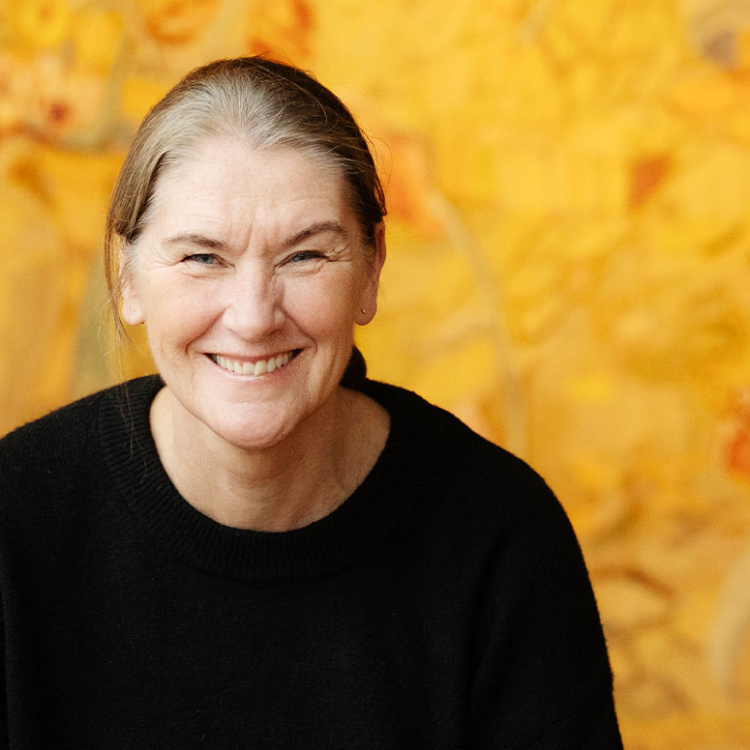
During the concert, award winner Ingrid Pollard will be present in the salon. In her four decades of practice Ingrid Pollard uses photography to question deeply engrained social and cultural constructs behind race, identity, community, and gender. Take the opportunity to see her pictures at Hasselblad Center October 12-January 19, the award winner’s first solo exhibition in Sweden.
Listen
Get to know the music.
Programme
Hugo Alfvén's Festspel was commissioned for the opening of the Dramatiska Teatern in Stockholm in 1908. The project occupied Alfvén's thoughts for some time without him being able to come up with a reasonable solution. He has said that he began to fear that he would not get anything done at all in time. But during a visit to the writer Verner von Heidenstam, inspiration suddenly appeared, and clattering fanfares and the festive polonaise rhythm resounded inside the composer. A day later, the entire piece was written down in good time before the theater opening. Tor Aulin conducted at Dramaten on 18 February 1908. Over time, the work has become official music for solemn occasions.
Einojuhani Rautavaara (1928–2016)
Cantus Arcticus, Concerto for Birds and Orchestra Op 61
The marsh
Melancholy
The swans are moving
Alongside Sibelius, Einojuhani Rautavaara is one of Finland's most famous and performed composers. With his eight operas and as many symphonies, ten solo concerts, lots of chamber music and songs, he has made a big impression on international music life. For many years, from the mid-1970s until 1990, he was also professor of composition at the Sibelius Academy and among the students were profiles such as Kalevi Aho, Olli Mustonen and Esa-Pekka Salonen.
Stylistically, Rautavaara went through several different phases, from experimenting with tone series in the 1960s, over neoclassicism and interest in folk music to land in a richly faceted romanticism, sometimes with features of mystery and nature lyricism.
His impressionistic painting Cantus Arcticus – concerto for birds and orchestra is one of his most performed works. It was written in 1972 for an academic celebration at the University of Oulu, Finland's northernmost university. Now he wanted to realize an idea: to include recorded birds from the area as part of the work. He knew the surroundings well and made the recordings himself, which were subsequently processed to a limited extent, including in the last movement where the sounds of the swans were multiplied to give the impression of becoming more and more numerous.
Together with the orchestra, the recorded birdsong creates a magical atmosphere of Nordic twilight. Cranes, swans and other birds form a kind of counterpoint that is imitated by woodwinds and brass. In order to give the musician and conductor a guide how to play the opening flute duet, Rautavaara has written in the score: "Think of autumn and Tchaikovsky".
Göran Persson
Hugo Alfvén (1872–1960)
Gustavus Adolphus, Suite
Vision - Intermezzo - In Emperor Ferdinand's chapel
Sarabande – Bourrée – Minuet – Elegy - Breitenfeld
For several decades, Hugo Alfvén was a recurring supplier of party and anniversary music. His strong position meant that the music itself became a marker of the significance of the party or anniversary. The opening music for the new theater Dramaten in 1908 resulted in the repertoire work Festspel. For the first celebration of Swedish Flag Day in 1916, he wrote the choral song Sveriges flagga (Flamma stolt mot dunkla skyar). And when the 300th anniversary of Gustav II Adolf's death was to be celebrated at the Royal Opera in 1932 with Ludvig Nordström's play We, it was a matter of course that Alfvén would compose the music.
The subject attracted him, he writes in his memoirs: "There must be reason to depict love as well as fights - both subjects are equally attractive to me."
And it was an exciting composition assignment for Alfvén. He was given the opportunity to portray, as he writes: "the heroic deeds of Swedish kings, but also the horrors of the slaughter, a Catholic mass so vivid that the incense still lingers in the nose; got to see heavenly visions, dance sarabands and minuets, pimp beer with happy bassoons and give expression to the innermost tenderness of the heart.”
After the anniversary performance, Nordström's play was immediately forgotten. Alfvén's music, on the other hand, has lived on, even if the suite is rarely performed in its entirety. Actually, Alfvén was indifferent to Nordström's text, but an exchange of lines, between Gustav II Adolf and the nun before the battle of Lützen, touched him. The king says "You are like someone I can never forget". Alfvén thought it sounded like a "raised voice, filled with tenderness", and it inspired him to write the movement that was named Elegi in the suite. It has become one of Alfvén's most loved and played pieces.
Göran Persson
Intermission25 min
Richard Strauss (1864-1949)
Also sprach Zarathustra
In October 1894, the 30-year-old Richard Strauss had become assistant to the chief conductor of the Munich Opera, Hermann Levi. He had to take on increasing responsibility, but absolutely did not want to give up his composing. He spent all his free time working on a new large symphonic poem "freely composed after Friedrich Nietzsche". It would turn out that it was so freely formed that the philosopher himself took a very negative view of Strauss's arrangement of the work. In August 1896 Levi resigned and Strauss was appointed the new principal conductor. By then, the composition Also sprach Zarathustra, "thus spoke Zarathustra", was already completed and the premiere took place on November 27 with the composer himself as conductor at a concert in Frankfurt.
The music is in no way a musical translation of Nietzsche's controversial theories about the superman. No, there is not much philosophizing here at all, the down-to-earth composer was a stranger to such things, but all the more he had been carried away by the book's vivid and epic language. Strauss saw the positive sides of the author's message: the demand for freedom, the longing for a better world, the power of action. The descriptions of nature were the most important source of inspiration.
The extensive orchestral poem is broken up into nine sections whose titles correspond to the names of chapters in the book (though not always in the same order). Between these there are only three general breaks, the rest go in one sweep. As a motto, he placed Nietzsche's "Ode to the Sun" with the call that "For too long we have dreamed of music, let us now wake up. We were sleepwalkers, let us now go out into the day…” The whole work begins with the sunrise: after long, grinding and very low Cs in double basses, contrabassoons and organ, the sun breaks out in the notes C, G and C2. This is probably the most glorious sunrise in the history of music. Its radiant power has long since been used in many different contexts that must have been foreign to Strauss. The music is used, among other things, as a theme in the science fiction film 2001 - A Space Odyssey.
The following parts have the titles: "about the inhabitants of the afterlife" with a leitmotif from the Gregorian sequence Credo in unum Deum, "I believe in One God", "about the great longing", "about the joy and the passions" where the oboe intones a mourning melody. It is the dreams of the youth that are buried, now there is no return to the ivory tower, "The Grave Song", "On Science" with a parodic, academic fugue, where all twelve notes of the chromatic scale are found, "The Convalescent", "Dance Song" with waltz-like rhythms, flowing colors and a prominent violin solo. "Song of the Night Wanderer" is a heart-wrenching farewell song where the description of nature returns in a reconciling C major in the basses. In music, C major is allowed to represent man and nature, while B major represents the universe – two keys that are very far apart. At the end of the piece, none of them emerge victorious from the fight.
Stig Jacobsson
Thursday, 10 October 2024: The event ends at approx. 22.00
Participants
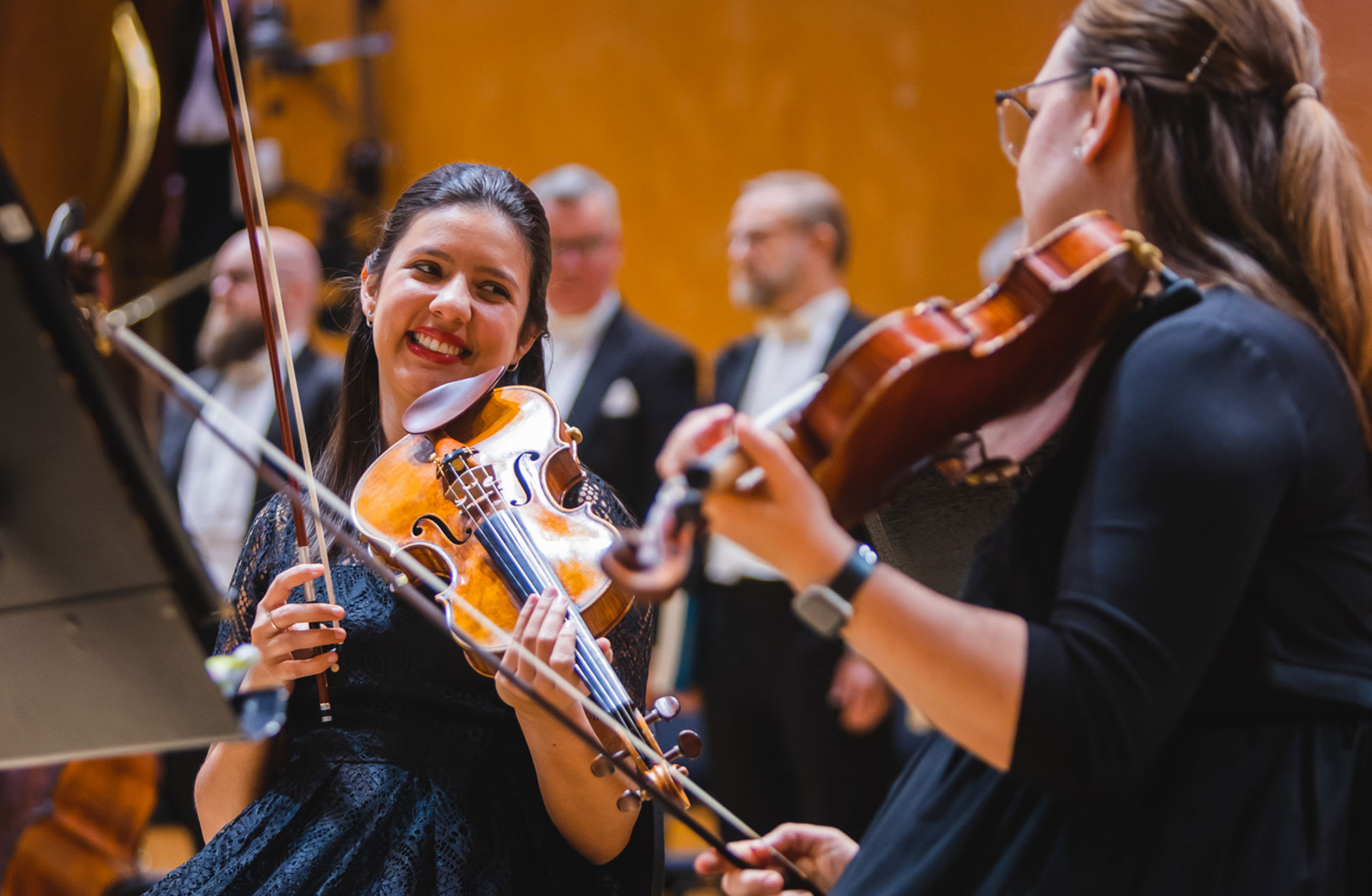
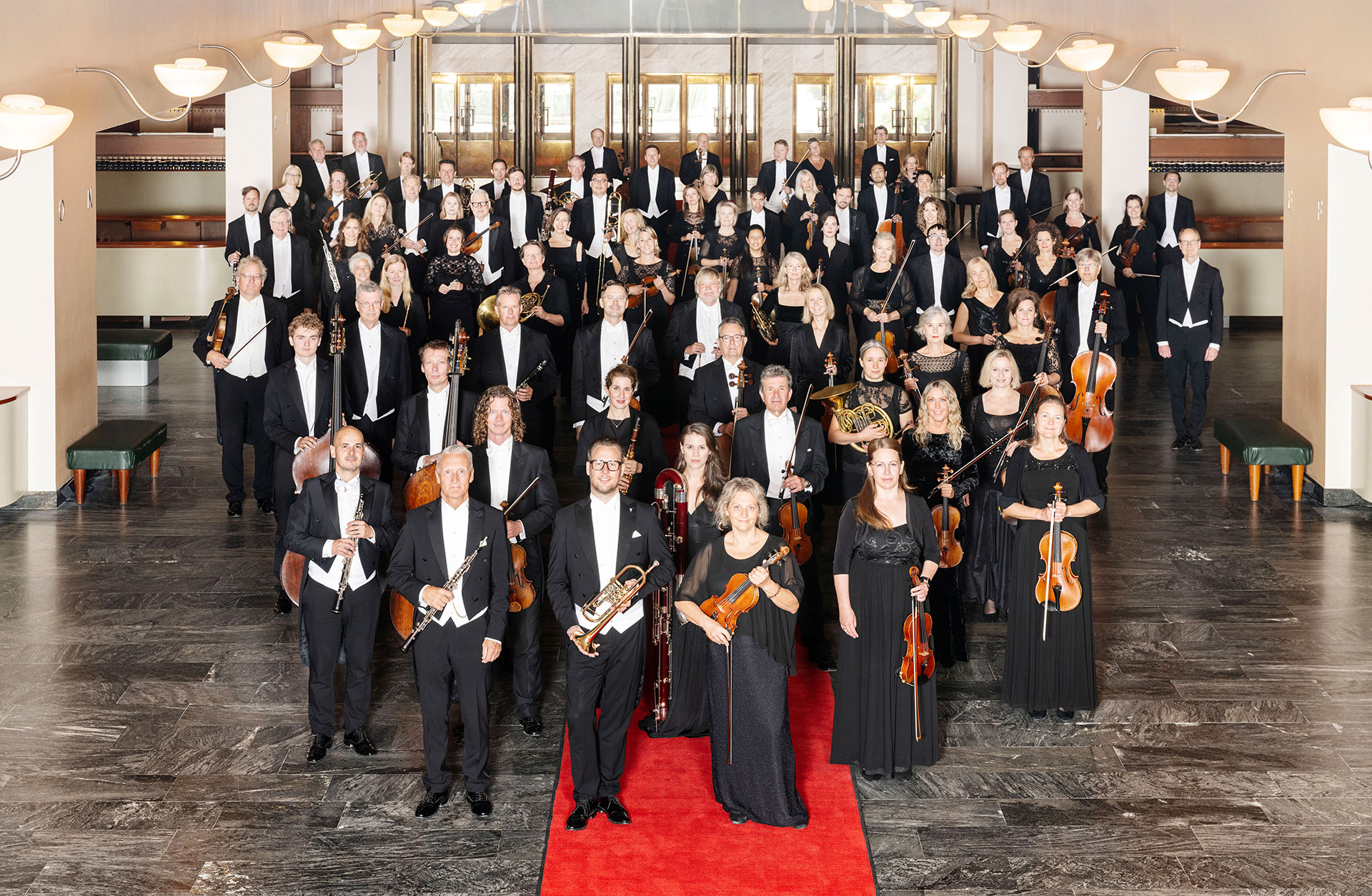
The Gothenburg Symphony was formed in 1905 and today consists of 109 musicians. The orchestra's base is Göteborgs Konserthus, the funk gem at Götaplatsen that has gathered music lovers since 1935. Since the 2017-2018 season, Santtu-Matias Rouvali has been Chief conductor of the Gothenburg Symphony. Since the 2019-2020 season, Barbara Hannigan is Principal guest conductor. We are also a proud partner of Barbara Hannigan's Equilibrium mentoring program focusing on young singers at the start of their careers.
Wilhelm Stenhammar was the orchestra's chief conductor from 1907 to 1922. He gave the orchestra a strong Nordic profile and invited colleagues Carl Nielsen and Jean Sibelius to the orchestra. Under the direction of conductor Neeme Järvi from 1982-2004, the orchestra made a series of international tours as well as a hundred disc recordings and established themselves among Europe's leading orchestras. In 1996, the Swedish Riksdag appointed the Gothenburg Symphony as Sweden's National Orchestra.
In recent decades, the orchestra has had prominent chief conductors such as Mario Venzago and Gustavo Dudamel, following Kent Nagano as Principal Guest conductor. Anna-Karin Larsson is CEO and artistic director, Gustavo Dudamel honorary conductor and Neeme Järvi chief conductor emeritus. The orchestra's owner is the Västra Götaland Region.
The Gothenburg Symphony works regularly with conductors such as Herbert Blomstedt, Joana Carneiro, Jukka-Pekka Saraste, Christian Zacharias and Anja Bihlmaier.
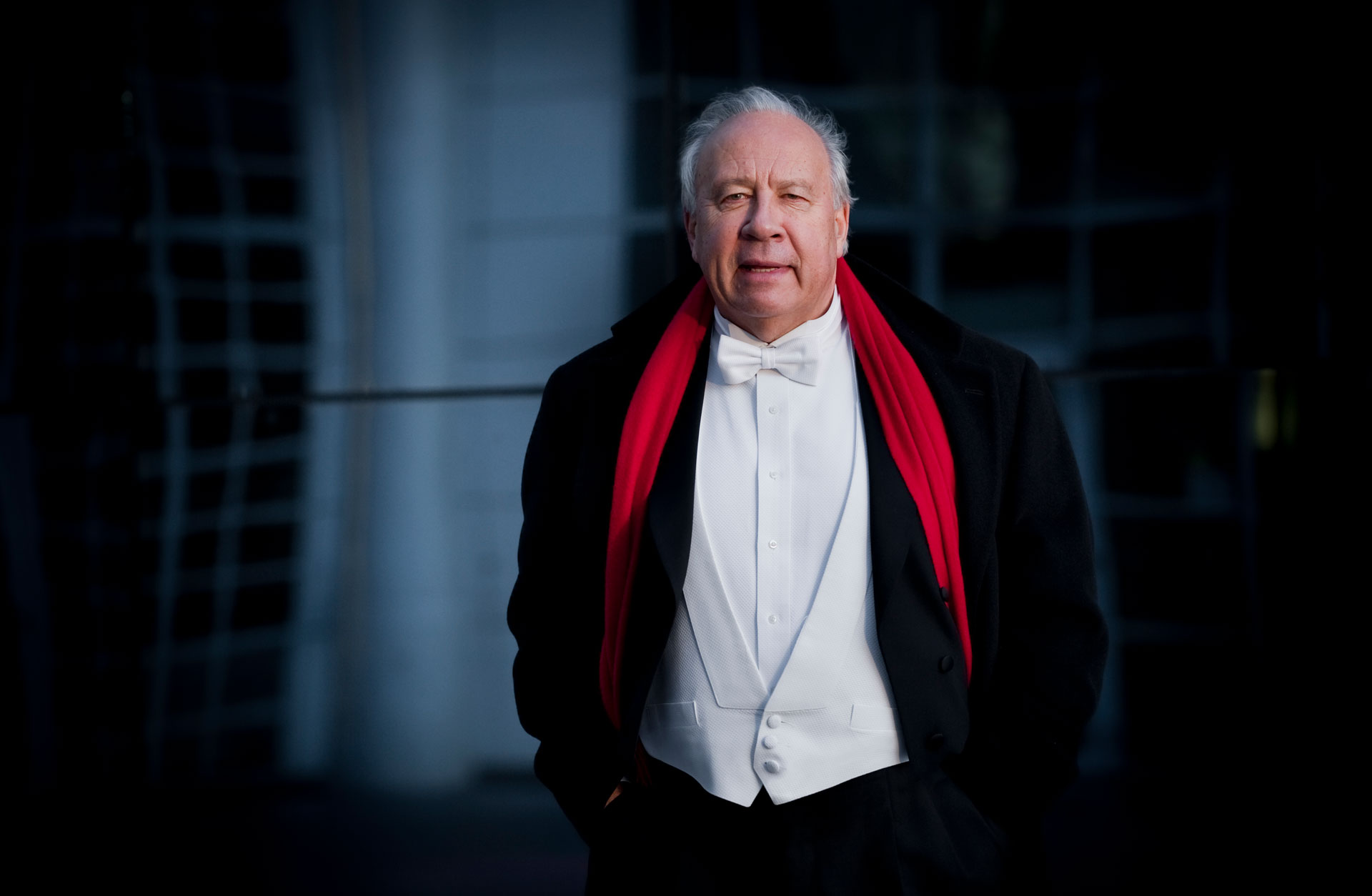
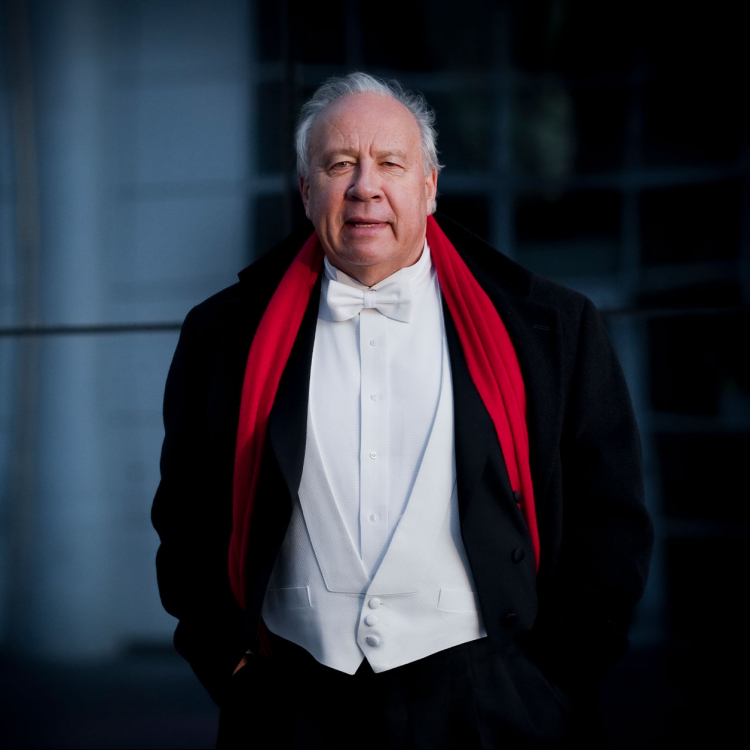
The Estonian-born conductor Neeme Järvi is the Gothenburg Symphony Orchestra's Principal Conductor Emeritus. He conducts many of the world's most prominent orchestras and works with soloists of the highest class. During his long career, he has made over 450 disc recordings. Under Neeme Järvi's direction from 1982-2004, the Gothenburg Symphony made a series of international tours and made around a hundred disc recordings and established itself among Europe's leading orchestras.
Neeme Järvi became chief conductor of the Residentie Orkest in 2005, artistic director of the Estonian National Symphony Orchestra in 2009 and music director of the New Jersey Symphony Orchestra in 2005. He has also been artistic director of the Orchester de la Suisse Romande. He holds the titles of Music Director Emeritus of the Detroit Symphony Orchestra and Conductor Laureate of the Royal Scottish National Orchestra.
Throughout his career, Neeme Järvi has been honored with international honors and awards. In Estonia, these include an honorary doctorate at the Estonian Academy of Music in Tallinn, and the Order of the National Coat of Arms from the President of the Republic of Estonia. He has also received the Commander of the Order of the North Star from King Karl XVI Gustaf.
He last appeared with the Gothenburg Symphony in 2018.
 031-726 53 00
 biljett@gso.se