Event has already taken place. Iconic music about a country in the making, with Gothenburg Symphony Orchestra, Barbara Hannigan conductor, Sofie Asplund soprano, Carolina Grinne cor anglais and Bengt Danielsson trumpet.
Concert length: 2 h incl. intermission
Stage: Stora salen
390-550 SEKStudent 195-275 SEK
Young up to 29 195-275 SEK
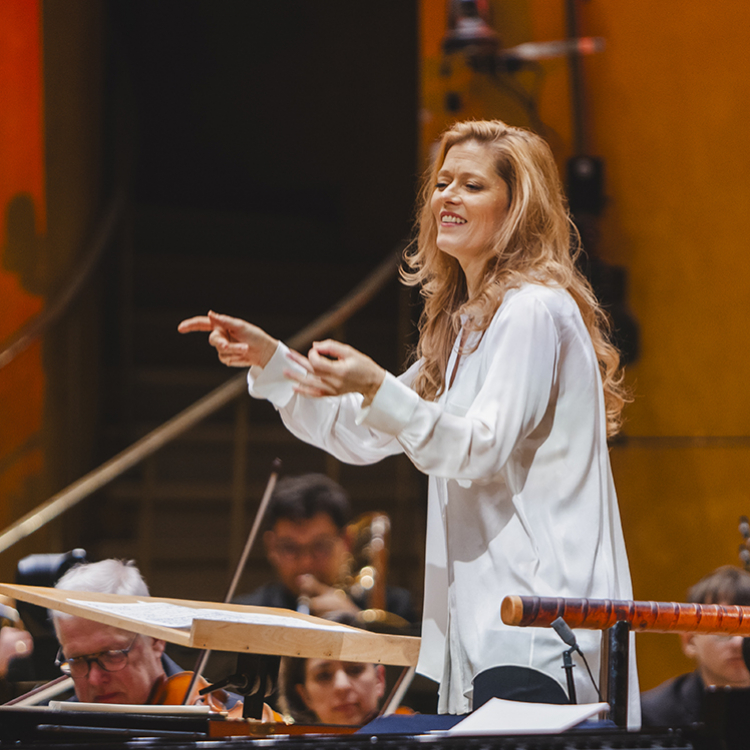
The incredible Barbara Hannigan is the Symphony Orchestra’s principal guest conductor. At this performance, she leads the orchestra through iconic music from the US – Gershwin’s drama Porgy and Bess, with melodies like Summertime and I Got Plenty O’ Nuttin’, in an arrangement for symphony orchestra. We also hear Samuel Barber’s atmospheric Knoxville: Summer of 1915, for soprano and orchestra. The soloist is Sofie Asplund, acclaimed for performances internationally and with GöteborgsOperan and the Royal Swedish Opera.
Like Barber’s Knoxville, in Three Places in New England, Charles Ives presents an image of American life in the early twentieth century. It is also one of his most played and popular works. In Copland’s Quiet City, we travel instead through a major city in the 1940s, filled with nostalgia and feverish energy. The piece is written for string orchestra, cor anglais and trumpet and as soloists we see Carolina Grinne and Bengt Danielsson from the Gothenburg Symphony.
Listen
Get to know the music
Introduction to the concert
Take a seat in the Great Hall onehourbefore the concertbegins and learnmoreabout the musicyouwillsoonexperience! Youwill get the storiesbehind the music, knowledgeof the composers and ownreflectionsabout the classicalpieces. The introductionlast for about 30 minutes, it is free and freeseating in the hall. Welcome!
Programme
Charles Ives (1874-1954)
From the Steeples and the Mountains
Charles Ives is in many ways the prototype of the American composer - unbound by European conventions, and always ready to go his own way. He is regarded as America's first musical genius, and represents the direction that in interwar America is called "the ultra-modern".
Already in his early compositions, he shows evidence of a great appetite for experimentation, and From the Steeples and the Mountains (1901-1902) is no exception. The inspiration for the work derives from a real event, when during a Sunday walk in the mountains he heard the bells of four different churches ringing at the same time in different tempos and keys. He then musically depicted the cacophony of sounds echoing in the mountains. This shows a future characteristic of his artistry - the impulse to imitate what he heard, and to convey the impression of the sound to the listeners.
It begins almost imperceptibly, with distant bells. The brass instruments join, tentatively at first, then increase in contrapuntal intensity and volume. The music finally reaches its climax, then quickly fades away, leaving only an echo behind.
Andreas Konvicka
Aaron Copland (1900-1990)
Quiet City
Brooklyn-born Aaron Copland is the American composer who, with his music, most embodied the country's spirit and landscape. In the late 1930s he wrote the score for Quiet City, a play by Irwin Shaw. It is about a young musician, who expresses his and others' feelings through his trumpet. The piece was withdrawn for revision before the premiere, and Copland was persuaded by friends to instead use parts of the thematic material for an orchestral piece in 1940. He partially reworked the score, adding a solo English horn for balance, accompanied by strings.
The idea was to reflect the main character, who had abandoned his Jewish identity and his poetic ambitions in order to achieve material success. The composite character is exposed directly in the trumpet's opening theme, which with repeated notes symbolizes nervous hallucinations. An achingly beautiful melody takes over, where the English horn is added and begins a dialogue. The strings accompany, evoking a dream-like sense of solitude. A lyrical part follows in the form of a lullaby, which finally leads to the recapitulation of the opening trumpet motif and return to the opening theme in a moving finale.
Andreas Konvicka
Charles Ives (1874-1954)
Three Places in New England
In this orchestral work, Charles Ives lets his home regions be depicted in tones. New England consists of the northeastern states of the United States, and is often associated with picturesque coastal communities but also metropolitan areas such as Boston.
The three places we meet are two historical memorial sites; one a monument in Boston Common park that pays tribute to the fallen in the Civil War. The other in Redding, Connecticut, where the Revolutionary War took place. The third location is the Housatonic River where Ives spent his honeymoon.
The work is popular for its many borrowings from well-known pieces. Everything from folk songs to marches and even Wagner is quoted. The aim is to paint a fairly patriotic portrait of turn-of-the-century American ideals. The work was finished in 1914, but the premiere did not take place until New York in 1930.
Intermission25 min
Samuel Barber (1910-1981)
Knoxville: Summer of 1915
Samuel Barber spoke and read several languages, and had a strong interest in literature ranging from medieval to modernism. Knoxville: Summer of 1915 was written in 1947 for soprano and orchestra, and the text is taken from the contemporary poet and writer James Agee (1909-1955). His dreamlike story describes an evening in the American South, told from a child's point of view, but conveyed in an adult's voice.
Barber conceived the piece as a lyrical rhapsody, and Agee's text was a perfect match with its clear rhythmic pattern, which could be imitated musically in a natural vocal line. Barber also felt drawn to the story, as there were similarities between the author's childhood memories and his own.
The child's train of thought, with its sudden shifts of emotional concentration, is reflected throughout the work in the subtle changes in the character of the music. A little boy lies in the grass outside his home, listening to the sounds around him. Knoxville's bustling evening activity picks up, and he hears the metallic screech of a passing streetcar. It fades away, and we return to the boy thinking of the sorrows of mortal life, saying his evening prayer while looking up at the sky: "May God bless my people, my uncle, my aunt, my mother, my good father..."
Andreas Konvicka
George Gershwin (1898-1937)
Porgy and Bess - Symphonic picture for orchestra
Porgy and Bess: A Symphonic Picture (1942) is an orchestral medley arranged by George Gershwin's good friend and assistant, Russell Bennett. The suite contains the most famous songs from Gershwin's 1935 opera Porgy and Bess.
The opera depicts the lives of the poor black settlers in the Catfish Row neighborhood of Charleston, South Carolina, around 1870. Here, the crippled Porgy falls in love with the abandoned Bess, but Crown, Bess's husband, does everything to prevent their happiness. The drama is also about resilience and a society's hope for a better future, despite the experience of the cruel opposite.
The music reflects Gershwin's jazz roots in New York, but is also based on the traditions of the American South, such as blues, worship songs, work songs and spirituals. Gershwin further developed the music, blending these influences with arias and recitatives from the European operatic tradition.
The suite contains a string of well-known hits, such as Summertime, I Got Plenty O' Nuttin', Bess, You Is My Woman Now and It Ain't Necessarily So.
Thursday, 19 September 2024: The event ends at approx. 21.30
Friday, 20 September 2024: The event ends at approx. 20.00
Participants
The Gothenburg Symphony was formed in 1905 and today consists of 109 musicians. The orchestra's base is Göteborgs Konserthus, the funk gem at Götaplatsen that has gathered music lovers since 1935. Since the 2017-2018 season, Santtu-Matias Rouvali has been Chief conductor of the Gothenburg Symphony. Since the 2019-2020 season, Barbara Hannigan is Principal guest conductor. We are also a proud partner of Barbara Hannigan's Equilibrium mentoring program focusing on young singers at the start of their careers.
Wilhelm Stenhammar was the orchestra's chief conductor from 1907 to 1922. He gave the orchestra a strong Nordic profile and invited colleagues Carl Nielsen and Jean Sibelius to the orchestra. Under the direction of conductor Neeme Järvi from 1982-2004, the orchestra made a series of international tours as well as a hundred disc recordings and established themselves among Europe's leading orchestras. In 1996, the Swedish Riksdag appointed the Gothenburg Symphony as Sweden's National Orchestra.
In recent decades, the orchestra has had prominent chief conductors such as Mario Venzago and Gustavo Dudamel, following Kent Nagano as Principal Guest conductor. Anna-Karin Larsson is CEO and artistic director, Gustavo Dudamel honorary conductor and Neeme Järvi chief conductor emeritus. The orchestra's owner is the Västra Götaland Region.
The Gothenburg Symphony works regularly with conductors such as Herbert Blomstedt, Joana Carneiro, Jukka-Pekka Saraste, Christian Zacharias and Anja Bihlmaier.
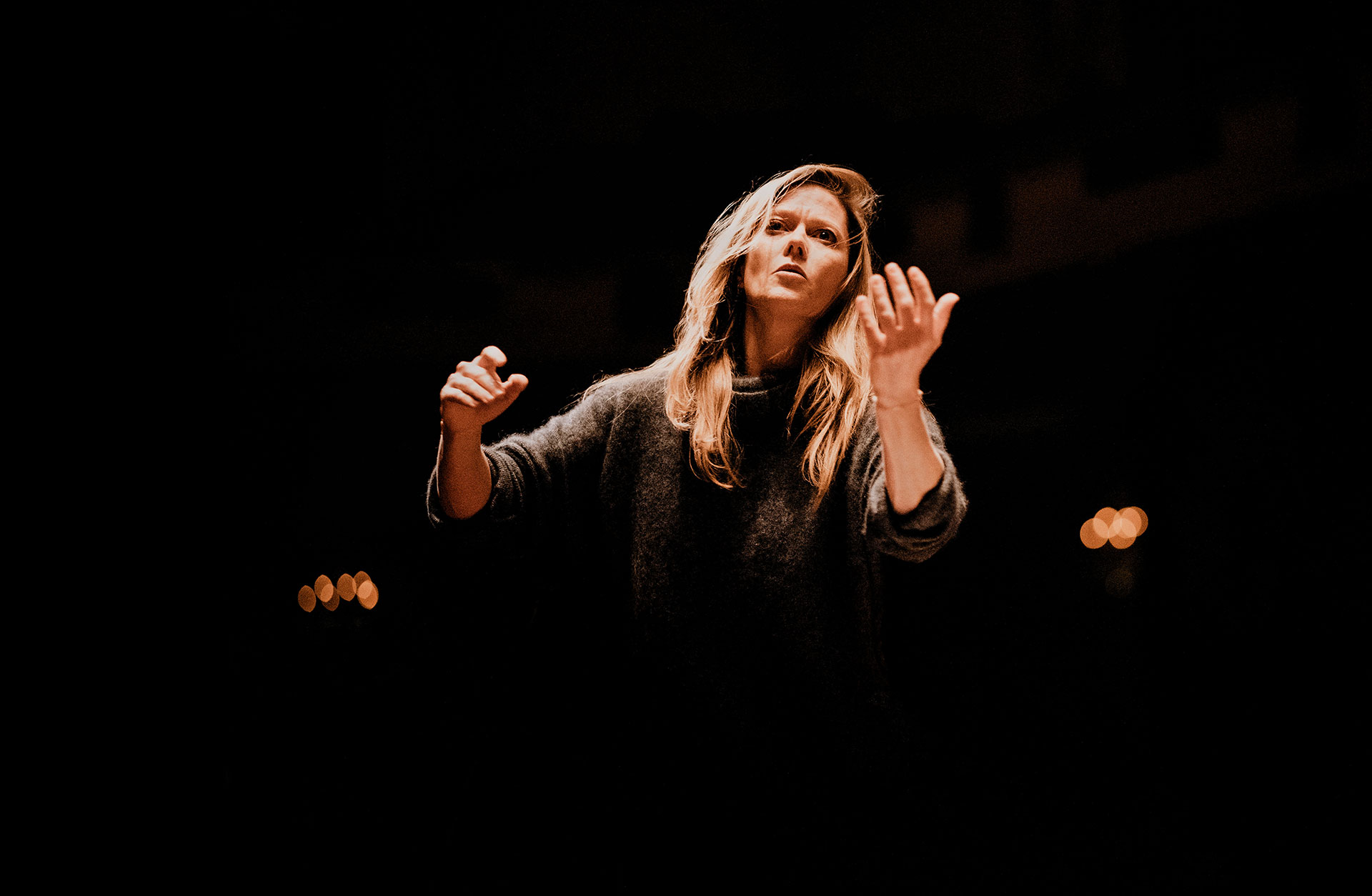
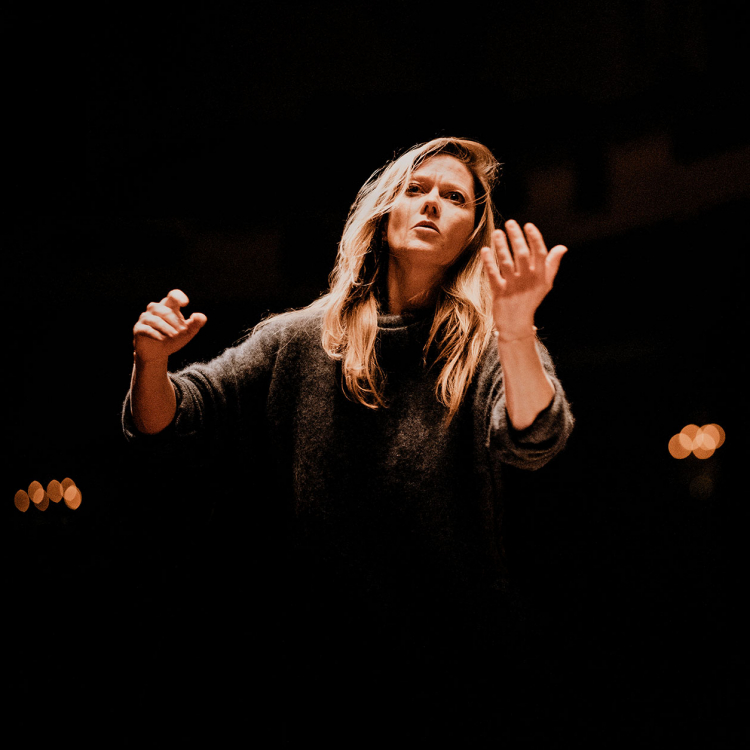
Soprano and conductor Barbara Hannigan is Principal Guest Conductor of the Gothenburg Symphony since 2019. Embodying music with an unparalleled dramatic sensibility, Barbara Hannigan is an artist at the forefront of creation. Her artistic colleagues include John Zorn, Krszysztof Warlikowski, Simon Rattle, Sasha Waltz, Kent Nagano, Vladimir Jurowski, Andreas Kriegenburg, Andris Nelsons, Esa Pekka Salonen, Christoph Marthaler, Antonio Pappano, Katie Mitchell, and Kirill Petrenko. The late conductor and pianist Reinbert de Leeuw has been an extraordinary influence and inspiration on her development as a musician.
The Grammy Award winning Canadian musician has shown a profound commitment to the music of our time and has given the world première performances of nearly 100 new creations. Hannigan has collaborated extensively with composers including Boulez, Zorn, Dutilleux, Ligeti, di Castri, Stockhausen, Khayam, Sciarrino, Barry, Dusapin, Dean, Benjamin and Abrahamsen. A passionate musician of unique and courageous choices, Hannigan is renowned for creating innovative orchestral programs, combining new and older repertoire.
In recent years she has been conducting world class orchestras including the Concertgebouw and Cleveland Orchestras, Montreal Symphony, Rome's Accademmia Nazionale di Santa Cecilia, has ongoing relationships with festivals including Aix en Provence and Spoleto, and has had starring soprano roles on opera stages including London's Covent Garden, Teatro San Carlo in Naples, Paris Opera's Palais Garnier, New York's Lincoln Center, and the opera houses of Berlin, Hamburg and Munich.
The past few seasons have brought a new presentation of Poulenc's opera La Voix Humaine, and recent world premieres include Golfam Khayam's I am not a tale to be told with Iceland Symphony Orchestra, John Zorn's Split the Lark and Star Catcher, Zosha di Castri's In the Half Light with the Toronto and Montreal Symphony Orchestras, new works by Sandström and Sciarrino, and a project with pianists Katia and Marielle Labeque inspired by the life and music of Hildegard von Bingen with new music from David Chalmin and Bryce Dessner.
The 2024-2025 season brings return conducting engagements to Gothenburg Symphony, London Symphony, Munich Philharmonic, Orchestre Philharmonique de Radio France, Danish Radio Symphony Orchestra, Iceland Symphony, l'Orchestre de Chambre de Lausanne and Kollegium Musicum WInterthur. She holds several principal guest and associate artist positions, and in 2026 will take the helm of Iceland Symphony Orchestra as their chief conductor and artistic director.
Barbara’s commitment to the younger generation of musicians led her to create the mentoring initiatives Equilibrium Young Artists (2017), and Momentum: our Future Now (2020), both initiatives offering both guidance and performing opportunities to young professional artists. She was recently named the Reinbert de Leeuw Professor of Music at London's Royal Academy of Music and has been visiting professor at the Juilliard School in New York.
On record, Barbara Hannigan’s fruitful relationship with Alpha Classics began in 2017 with the release of Crazy Girl Crazy, winning a Grammy and a Juno. More critically-acclaimed recordings followed, including Vienna: fin de siècle with pianist Reinbert de Leeuw, La Passione featuring works by Nono, Haydn and Grisey and Infinite Voyage, joining her colleagues of the Emerson String Quartet. In 2024 she released the ecstatic vocal works of Messiaen with pianist Bertrand Chamayou and a live recording of John Zorn’s compositions with pianist Stephen Gosling.
Barbara Hannigan resides in Finistère, on the northwest coast of France.
Since her debut in 2014 at Gothenburg Opera, Sofie Asplund has sung roles such as Zerlina in Don Giovanni, Susanna in The Marriage of Figaro, Zerbinetta in Ariadne on Naxos, Musetta in La Bohème, Aminta in Die schweigsame Frau, Skogsfågeln in Siegfried, Greta in Hansel and Gretel and Gilda in Rigoletto. At Gothenburg Opera, Sofie Asplund has also sung the musical roles of Maria in West Side Story and Christine Daaé in The Phantom of the Opera, a role she has also performed at the Finnish National Opera.
Sofie Asplund has been a recurring guest at the Royal Opera with roles such as Zerbinetta in Ariadne on Naxos, Constance in The Carmelite Sisters, Zerlina in Don Giovanni, Susanna and Barbarina in The Marriage of Figaro, Olga Sukarev in Fedora and Oscar in the Masquerade Ball. She has performed at Gothenburg Concert Hall, Malmö Live, Stockholm Concert Hall and Berwaldhallen. In 2022, she was awarded the medal of the Order of the White Rose of Finland by the President of Finland for her artistic efforts as an opera singer. In 2018, Sofie Asplund was awarded the Sten A Olsson cultural scholarship and was named the winner of the Hjördis Schymberg competition. She is also an Anders Wall and Birgit Nilsson scholarship recipient and has received scholarships from, among others, the Royal Academy of Music, the friends of the Drottningholm Theater, Gehrman's music publishing house and the Royal Opera.
 031-726 53 00
 biljett@gso.se