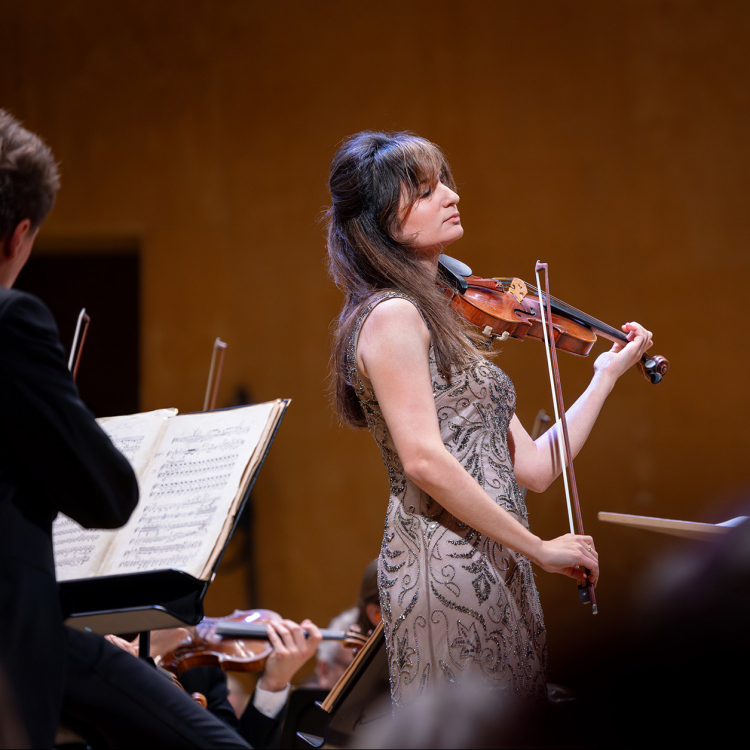
Event has already taken place. The beautiful and powerful Double Concerto by Brahms, with Gothenburg’s own supernova Ava Bahari and cellist Andreas Brantelid. Pekka Kuusisto also leads the Gothenburg Symphony Orchestra in Louise Farrenc’s romantic symphony No. 3.
Concert length: 2 h incl. intermission
Stage: Stora salen
400-560 SEKStudent 200-280 SEK
Young up to 29 200-280 SEK
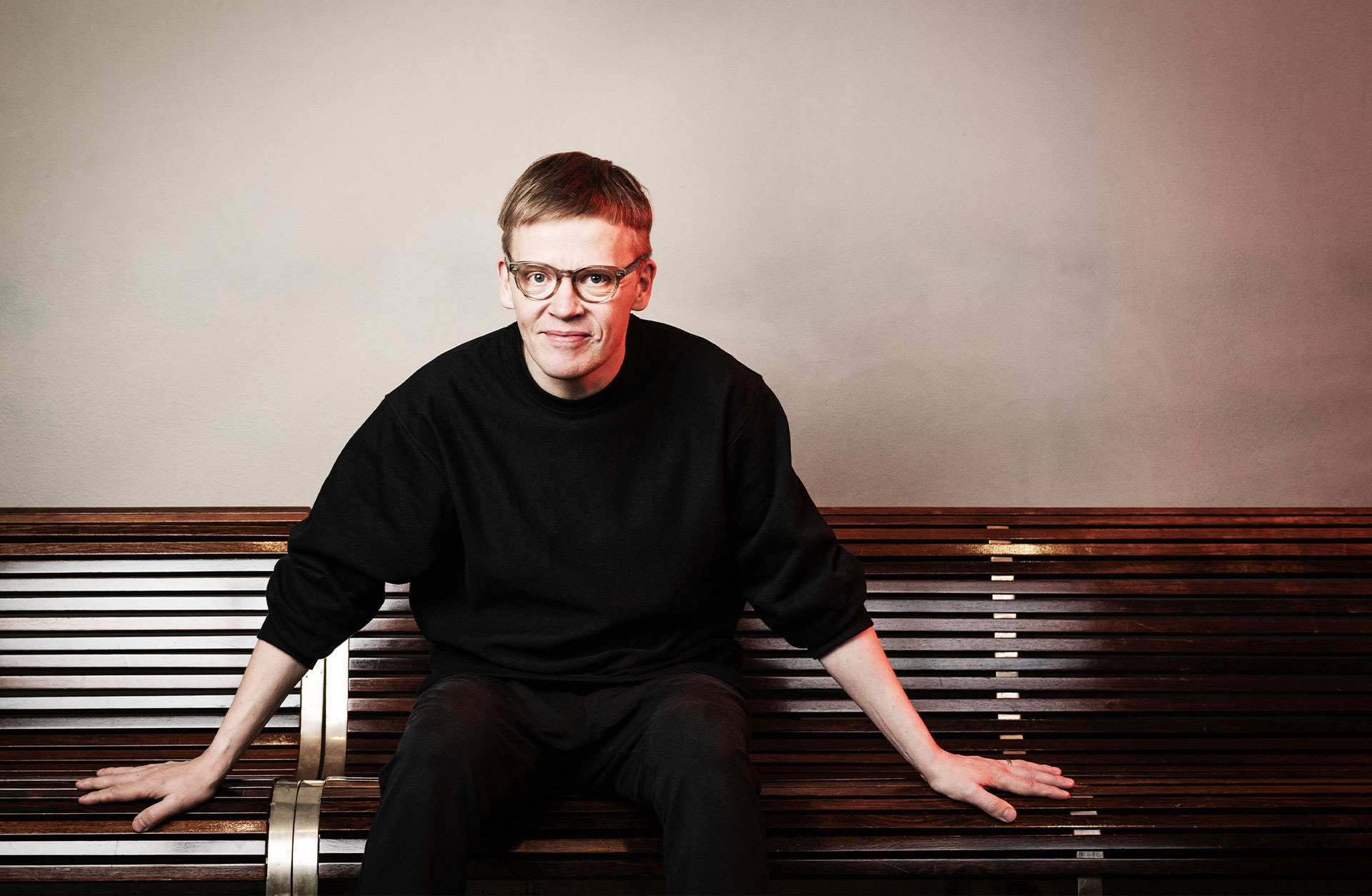
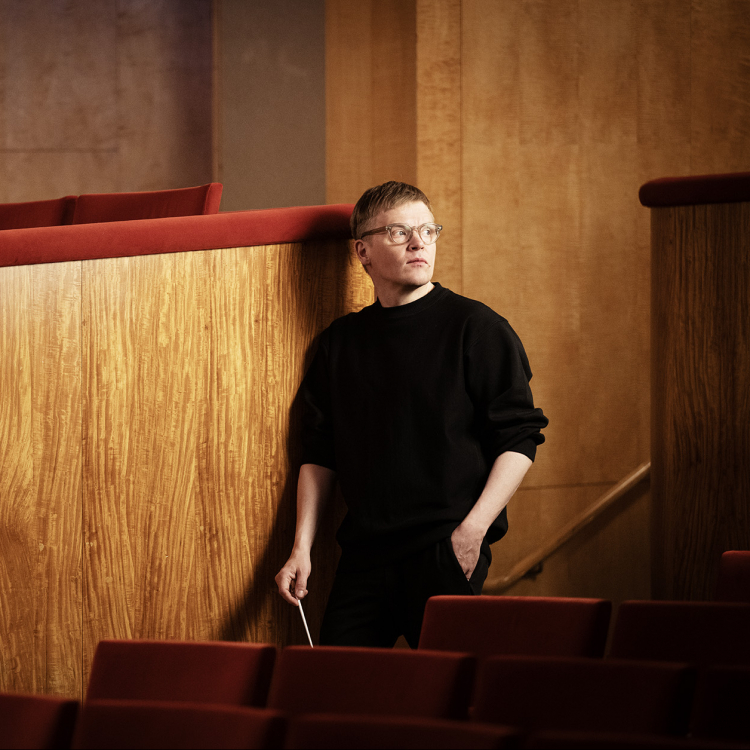
With warmth we hand over the baton to Pekka Kuusisto, who now enters the role as Principal Guest Conductor of the Gothenburg Symphony. He leads the orchestra in Louise Farrenc’s romantic symphony No. 3.
And what could be more beautiful than a violin concerto by Brahms? A double concerto with violin by Brahms, of course. This evening, Gothenburg’s own supernova Ava Bahari is accompanied by cellist Andreas Brantelid. Together with conductor Pekka Kuusisto, they constitute a spectacular trio that is taking Romantic music into the future.
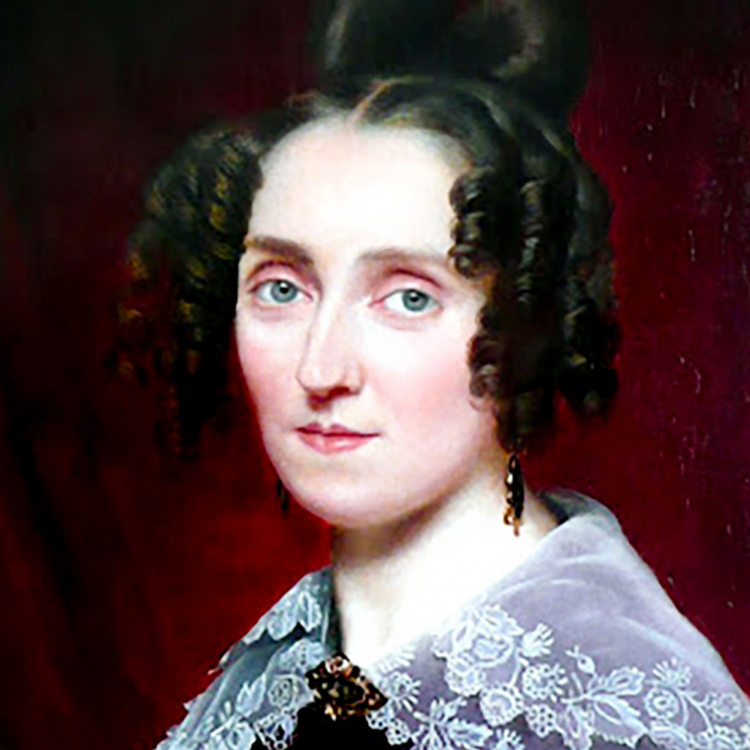
Pianist and composer Louise Farrenc was a supernova of nineteenth-century Paris. She composed three irresistible symphonies, charming chamber music and fashionable piano pieces that later fell into obscurity. She has been rediscovered in recent years and several recordings have been made of her lush music. 2025 marks the 150-year-anniversary of Farrenc’s death.
As an opening number, we hear the fast-paced rhapsody that secured Romanian George Enescu’s place on the music map. The inviting melodies of the clarinet and flute are captured by the orchestra, becoming a wild dance at the village pub.
World-renowned Finnish violinist Pekka Kuusisto is new Principal Guest Conductor of the Gothenburg Symphony Orchestra for the 2025–2026 season. As a violinist, he has become known as a charismatic and genre-crossing musician who offers audiences something extraordinary from the podium.
Introduction to the concert
Take a seat in the Great Hall one hour before the concert begins and learn more about the music you will soon experience! You will get the stories behind the music, knowledge of the composers and own reflections about the classical pieces. The introduction last for about 30 minutes, it is free and free seating in the hall. Welcome!
Programme
Not all composers write their most famous works when they are 19 years old. One who did was George Enescu with his two Romanian Rhapsodies from 1901. They accompanied him throughout his life. In his later years, he is said to have lamented how they overshadowed his other music.
Enescu came from Romania and was a bit of a master at everything he did. It has been said of his memory that he could recreate all of Beethoven's works if they were lost. He picked up the term rhapsody from Liszt's Hungarian Rhapsodies. It is a title that signals spontaneity, improvisation and movement. But also that different parts have been joined together.
In the rhapsodies, Enescu portrayed a romantic image of his homeland. The first begins with the folk song “Am un leu” which is said to have been the first Enescu learned at the age of 4. After the calm introduction, the piece bursts into lively dances. The piece depicts peasants stamping and hooting at an increasingly fast pace. It is an exotic dream image of a world that may have been – but is no longer.
Louise Farrenc (1804-1875)
Symphony No 3
Adagio - Allegro
Adagio cantabile
Scherzo. Vivace
Finale. Allegro
Louise Farrenc has a clear place in music history as one of the most prominent and remarkable female composers. She became the first woman to be appointed professor at the Paris Conservatory, and won the battle to receive the same high salary as her male colleagues.
Her third symphony now ends up on lists of the world's best symphonies, as updated list writers increasingly open their ears to female geniuses. The symphony carries, among other things, one of the most magnificent finales in the orchestral repertoire. She wrote the symphony in 1847, but it was not performed until two years later by the concert company at the Conservatory.
The first movement moves subtly from a soft introduction in the oboe part. Immediately, agitated strings and timpani fall in, an unexpected build-up in a short time. Farrenc trusts the listener to follow along on the journey, and complements the high energy with quotes from Beethoven. Sudden changes in dynamics heighten the tension. The second movement's adagio begins with a lyrical clarinet melody and forms a simple and elegant interlude, calm and unwavering.
The third movement's scherzo has forward momentum, momentum and tension that constantly bubbles beneath the surface, paused only during the central woodwind trio. The decisive unison strings that begin the final movement signal a return to a darker, bolder energy. Just as in Mozart's Symphony No. 40, passion and emotion emerge within the firm framework of classicism. With a power worthy of Romanticism, the finale concludes with three triumphant closing chords.
Intermission25 min
Allegro
Andante
Vivace non troppo
Johannes Brahms composed his Double Concerto for violin, cello and orchestra in the summer of 1887. It was his last work for orchestra and, despite being only 30 minutes long, is a truly magnificent work. Brahms himself called the work “entertaining” and a “joke” – words that a listener finds difficult to reconcile with such an intense and powerful concert.
The usual understanding of Brahms’ Double Concerto is that its serious appearance goes back to the conflict that arose between Brahms and his friend, the violinist Joseph Joachim, regarding an affair between Joachim’s wife and Brahms’ publisher. The concerto – which was premiered by Joachim and the cellist Robert Hausmann with Brahms conducting – is said to have been an outstretched hand after several years of silence. An emotional melody in the cello turns gently towards the violinist, and in the end the two are united.
The double concerto received mixed reviews. Some, such as Clara Schumann, considered it lacking in warmth. Today it stands as one of the last great concertos of the 19th century, dating back to Mozart and Beethoven – and a unique example of Brahms' late style of composition for full orchestra, in which he also uses the full range of the solo instruments.
Wednesday, 3 December 2025: The event ends at approx. 21.00
Thursday, 4 December 2025: The event ends at approx. 21.00
Participants
The Gothenburg Symphony was formed in 1905 and today consists of 109 musicians. The orchestra's base is Gothenburg Concert Hall at Götaplatsen that has gathered music lovers since 1935. Since the 2019-2020 season, Barbara Hannigan is Principal guest conductor. We are also a proud partner of Barbara Hannigan's Equilibrium mentoring program focusing on young singers at the start of their careers. The title Principal Guest Conductor is shared by Pekka Kuusisto from 2025.
Wilhelm Stenhammar was the orchestra's chief conductor from 1907 to 1922. He gave the orchestra a strong Nordic profile and invited colleagues Carl Nielsen and Jean Sibelius to the orchestra. Under the direction of conductor Neeme Järvi from 1982-2004, the orchestra made a series of international tours as well as a hundred disc recordings and established themselves among Europe's leading orchestras. In 1996, the Swedish Riksdag appointed the Gothenburg Symphony as Sweden's National Orchestra.
In recent decades, the orchestra has had prominent chief conductors such as Santtu-Matias Rouvali, Mario Venzago and Gustavo Dudamel, following Kent Nagano as Principal Guest conductor. Anna-Karin Larsson is CEO and artistic director, Gustavo Dudamel honorary conductor and Neeme Järvi chief conductor emeritus. The orchestra's owner is the Västra Götaland Region.
The Gothenburg Symphony works regularly with conductors such as Herbert Blomstedt, Joana Carneiro, Jukka-Pekka Saraste, Christian Zacharias and Anja Bihlmaier.
Violinist Pekka Kuusisto is known for his artistic freedom and innovative approach to repertoire. He is the artistic director of the Norwegian Chamber Orchestra and, since 2023, principal guest conductor and artistic partner of the Helsinki Philharmonic. He is also a partner with the Deutsche Kammerphilharmonie Bremen. Season 2025-2026 he joined as Principal Guest Conductor of the Gothenburg Symphony Orchestra. He has also been appointed as chief conductor of the Tokyo Metropolitan Symphony Orchestra from 2028.
In season 2024-2025 Kuusisto appeared with Helsinki Philharmonic and Gothenburg Symphony Orchestra as soloist and conductor, play-conducted the Norwegian Chamber Orchestra, Die Deutsche Kammerphilharmonie Bremen, Swedish Chamber Orchestra, Danish National Symphony Orchestra and the Scottish Chamber Orchestra. He conducted the Swedish Radio Symphony Orchestra, Lahti Sinfonia and Ostrobothninan Symphony as well as appeared soloist with Detroit Symphony Orchestra, the NSO Dublin, Brussels Philharmonic, Orchestre National de Lyon with André de Ridder, the NDR Elbphilharmonie Orchestra, Los Angeles Philharmonic and Boston Symphony Orchestra. Kuusisto continues his collaboration with Gabriel Kahane as Council following successful tours in the US and Australia.
Kuusisto gets involved across the entire artistic spectrum. He has collaborated with musicians such as Hauschka & Kosminen, Dutch neurologist Erik Scherder, electro pioneer Brian Crabtree, jazz trumpeter Arve Henriksen, juggler Jay Gilligan, accordionist Dermot Dunne and folk artist Sam Amidon.
In 2024, Kuusisto was featured in two releases on Sony – Bryce Dessner’s album SOLOS where he performed composer’s Ornament and Crime for solo violin, and on Anna Clyne’s and The Knights album Shorthand performing Prince of Clouds for two violins. In 2023, Kuusisto released an album for BIS as conductor in Jaakko Kuusisto's symphony, and one for Alba as violinist with Malin Broman and the Ostrobothnian Chamber Orchestra with works by Tarrodi, Byström, Larsson and Zinovjev. Composers who have written violin concertos for Kuusisto include Nico Muhly, Sebastian Fagerlund and Bryce Dessner.
Pekka Kuusisto plays an Antonio Stradivarius from 1695 on generous loan from Anders Sveaas Charitable Trust.
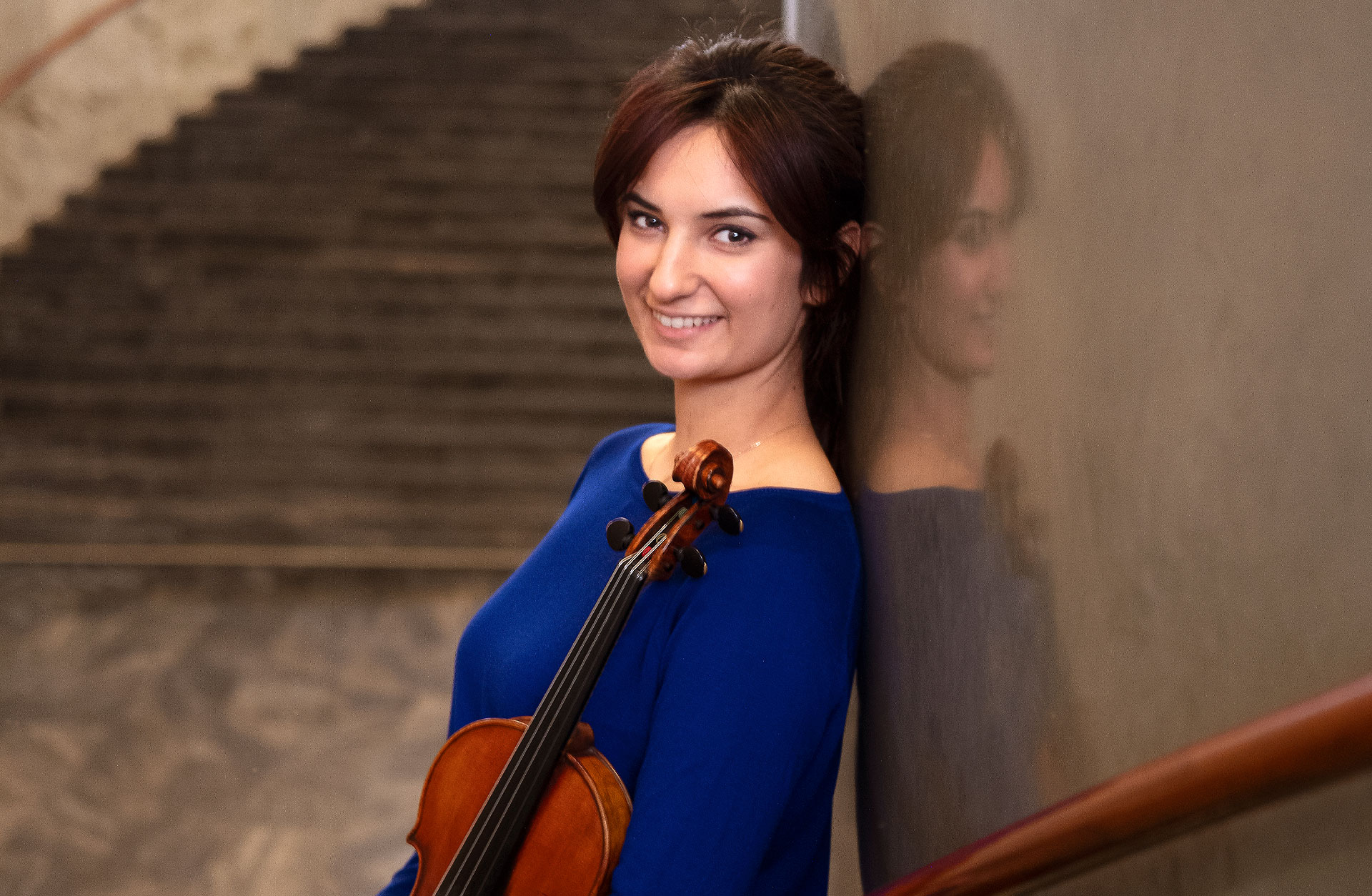
The violinist Ava Bahari is Artist in Residence at Gothenburg Symphony Orchestra for her second Season 2025-2026. She gave her first solo concert at age eight in the Gothenburg Concert Hall. She studied at the Oslo Music Academy's Young Artist Program under the tutelage of Prof. Terje Moe Hansen and 2011 to 2015, she continued her studies with Prof. Per Enoksson in Gothenburg Symphony.
Ava Bahari has studied Bachelor and Master at the Hochschule für Musik Hanns Eisler Berlin under the guidance of Prof. Kolja Blacher and received her Diploma in May 2024. In 2021, she also completed a degree at the Accademia Stauffer in Cremona, Italy. Ava Bahari has received numerous awards including 3rd Prize at the Premio Paganini Competition in Genova, 4th Prize at the Concours International Tibor Varga in Sion in 2021, and 1st Prize at the Aurora Music Competition in Stockholm in 2019.
Bahari has worked with conductors such as Santtu-Matias Rouvali, Pekka Kuusisto and Ryan Bancroft and performed with esteemed orchestras such as the Royal Stockholm Philharmonic Orchestra, Gothenburg Symphony Orchestra, Teatro Carlo Felice Genova, Baden-Baden Philharmonie, Malmö Symphony Orchestra, The Philharmonia Orchestra, Tokyo Symphony Orchestra, Helsinki Philharmonic and BBC National Orchestra of Wales.
Some of her more notable recital performances include a Paganini recital at the Seoul Arts Center, a recital on the "Stauffer" Guarneri del Gesù 1734 in museo del Violino Cremona and a recital in Konzerthaus Berlin.
Ava Bahari has also received music and culture scholarships from Sten A Olsson's Foundation for Research and Culture, Royal Society of Science and Knowledge in Gothenburg and the Willinska Foundation.
With the Gothenburg Symphony, she made her soloist debut in January 2023 in Schönberg's violin concerto. She plays a 1694 Stradivarius Ovcharov on generous loan from Anders Sveaas Almennyttige Fond.
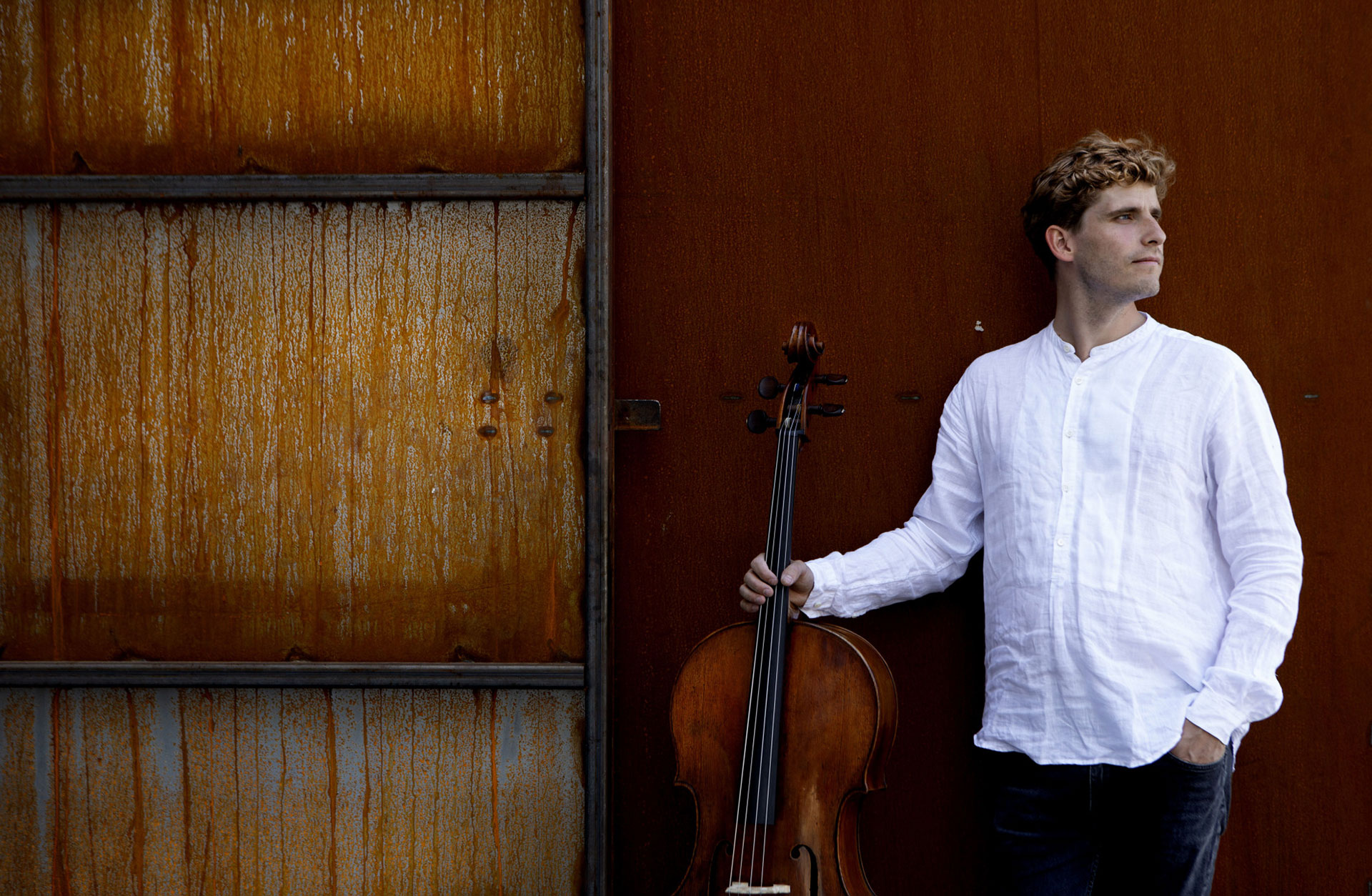
Andreas Brantelid was born in Copenhagen and made his soloist debut at the age of 14 in a performance with the Royal Danish Orchestra in Copenhagen. Today, he is one of the most sought-after performing artists from Scandinavia. Highlights include appearances with the London Philharmonic, City of Birmingham Symphony, BBC Symphony, and BBC Philharmonic Orchestras, Tonhalle Orchester Zurich, Mahler Chamber Orchestra and Brussels Philharmonic. He has worked with many distinguished conductors including Andris Nelsons, Esa-Pekka Salonen, Philippe Herreweghe, Vasily Petrenko, Thomas Dausgaard, Pablo Heras-Casado, Andrew Manze, Sakari Oramo, Jukka-Pekka Saraste, Robin Ticciati and Heinrich Schiff.
Among the musicians who inspired him are pianist Bengt Forsberg and violinist Nils-Erik Sparf, both of whom he has played with since 2002 in different formats. Andreas Brantelid has also collaborated with artists such as Daniel Barenboim, Gidon Kremer, Joshua Bell, Vadim Repin, Nikolaj Znaider, Lawrence Power and Paul Badura-Skoda. Recently he has formed a trio with Austrian violinist Benjamin Schmid and Norwegian pianist Christian Ihle Hadland. He also performs at festivals and has been a member of the Lincoln Center Chamber Music Society.
His debut disc of the Tchaikovsky, Schumann and Saint-Saëns cello concertos with the Danish National Symphony Orchestra was released by EMI in 2008. He released a much acclaimed CD with both Haydn Cello Concertos in 2021 with the period ensemble Concerto Copenhagen and his release 48 Strings from 2022 features music for 1, 2, 4 and 12 celli.
Andreas Brantelid won first prize in the 2006 Eurovison Young Musicians Competion and in the 2007 International Paulo Cello Competition. In 2015 he received the Carl Nielsen Prize in Copenhagen. He plays the 1707 ‘Boni-Hegar’ Stradivarius, which has been made available to him by generous support of Christen Sveaas.
 031-726 53 00
 biljett@gso.se